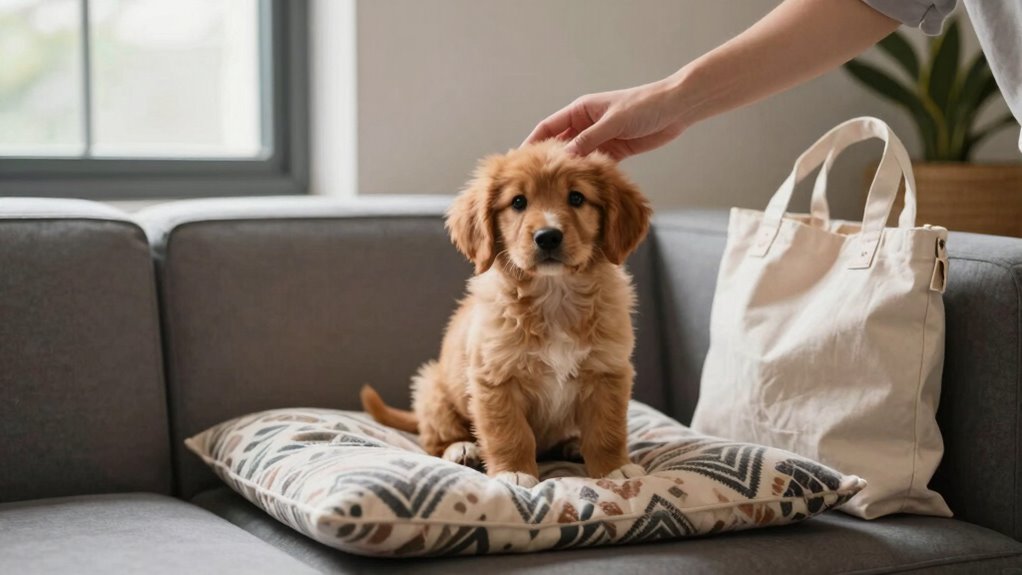

To stop carrying your puppy everywhere, start by gradually encouraging independence through crate training and positive reinforcement. Allow your puppy to explore on their own in safe environments and reward calm behavior when they walk beside you. Establish routines that promote confidence and avoid rushing to pick them up at signs of hesitation. Consistent practice helps build their social skills and confidence over time. Keep going, and you’ll discover even more effective ways to foster independence.

Get pet supplies delivered free with Prime
- Fast, free delivery on millions of items
- Prime Video, Amazon Music and more included
- Member-only deals all year
Key Takeaways
- Gradually introduce crate training to create a safe space and promote independence.
- Use positive reinforcement to encourage walking beside you and exploring on their own.
- Socialize your puppy regularly with controlled exposure to people, animals, and environments.
- Establish consistent routines and boundaries for walks and playtime to build confidence.
- Reduce constant carrying to foster confidence, independence, and healthy behavioral development.
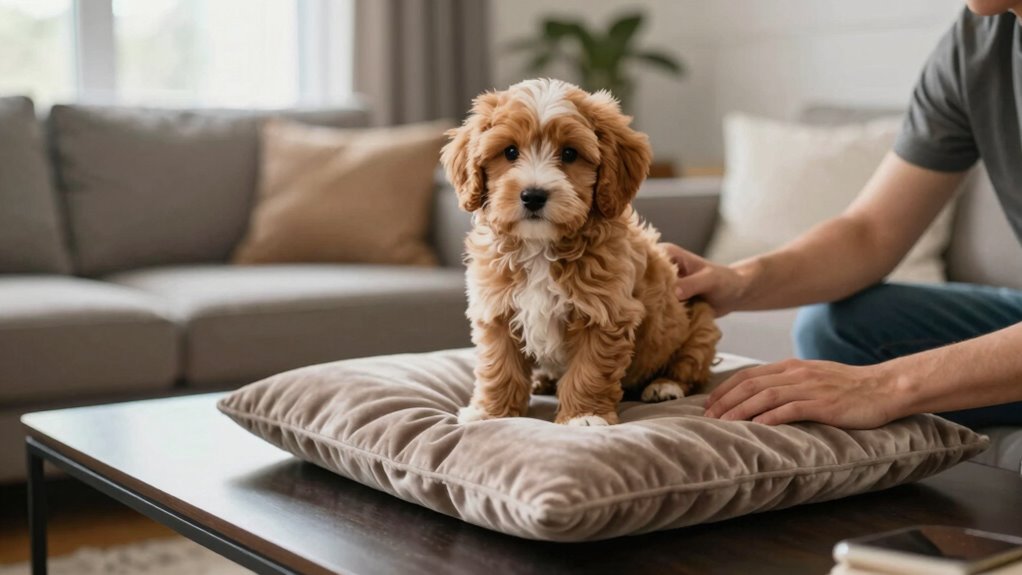
If you’ve been carrying your puppy everywhere, it’s time to reconsider that habit for both your pet’s development and your convenience. While it’s natural to want to protect and comfort your puppy, constantly holding them can hinder their growth and social skills. Instead, focus on helping your puppy become confident and independent by encouraging puppy socialization and crate training. These practices are key to fostering a well-adjusted dog and reducing your need to carry them constantly.
Carrying your puppy everywhere can hinder their growth; promote independence through socialization and crate training instead.
Puppy socialization is essential at this stage. It involves gradually exposing your puppy to different people, animals, environments, and sounds in a positive, controlled manner. When you carry your puppy everywhere, you limit their ability to explore their surroundings on their own, which can delay their social skills. Instead, start introducing your puppy to new experiences while allowing them to walk on their own leash or play with other dogs under supervision. This helps build their confidence and reduces anxiety when they encounter new situations later in life. Remember, socialization isn’t just about physical exposure; it’s about creating positive associations. When your puppy learns to navigate the world independently, they’ll feel more secure and less likely to seek constant comfort from being held. Additionally, providing opportunities for positive social experiences can significantly enhance their social competence. Incorporating proper socialization techniques can further ensure your puppy develops healthy, confident behaviors. Developing an understanding of dog behavior cues can also help you recognize when your puppy feels comfortable or overwhelmed during these interactions.
Crate training complements socialization efforts and is a powerful tool for helping your puppy gain independence. A crate becomes their safe space, not a punishment. By introducing your puppy to the crate gradually, you teach them that it’s a comfortable and secure environment. This process encourages them to settle down on their own and reduces the tendency to seek your constant physical presence. When your puppy is comfortable in their crate, they’re less likely to whine or bark when you’re not holding them, which means you won’t feel the need to carry them everywhere out of frustration or guilt. Over time, crate training helps your puppy learn to relax independently, making outings and daily routines easier for both of you.
Breaking the habit of carrying your puppy also involves establishing consistent routines and boundaries. Use positive reinforcement to encourage your puppy to walk beside you and explore on their own. When they stay calm and walk confidently, reward them with treats or praise. Be patient and consistent, and avoid rushing to pick them up at every sign of hesitation or fear. By fostering their independence through socialization and crate training, you’ll find that you no longer need to carry them everywhere. Instead, you’ll have a confident, well-adjusted puppy who’s happy exploring the world on their own terms, which benefits their development and makes your life a lot easier.
As an affiliate, we earn on qualifying purchases.
Frequently Asked Questions
When Is It Safe to Leave My Puppy Alone at Home?
You can start leaving your puppy alone at home once they’ve completed basic crate training and have adequate puppy socialization. Typically, puppies can handle short absences at around 8-10 weeks, gradually increasing as they become more comfortable. Make sure your puppy is familiar with their crate and has had positive socialization experiences. Always start with brief separations, then extend the time, so they learn to be alone without anxiety.
How Can I Help My Puppy Adjust to Being Independent?
Did you know 82% of dogs show signs of separation anxiety? To help your puppy adjust to independence, start with short periods apart, gradually increasing time. Use crate training as a safe space, making it inviting with treats and toys. Incorporate puppy socialization by exposing your pup to different environments and people. Consistent routines and positive reinforcement will build your puppy’s confidence and ease the shift into independence.
What Are Signs My Puppy Feels Stressed When Carried?
You’ll notice your puppy feels stressed when carried if it shows certain puppy body language, like tense muscles, tucked tail, or flattened ears. Look for stress signals such as heavy breathing, yawning, or avoiding eye contact. If your puppy exhibits these signs, it’s a clear indicator they’re uncomfortable. Paying attention to these cues helps you decide when to put them down, ensuring they feel safe and less stressed during handling.
Are There Specific Training Tools to Discourage Carrying?
A stitch in time saves nine, and using training aids can help you break the habit of carrying your puppy everywhere. Look for carrying alternatives like harnesses or backpacks designed for small dogs, which encourage your pup to be comfortable on the ground. Training aids, such as treat-dispensing toys or positive reinforcement tools, can also motivate your pup to stay put, making it easier for you to set boundaries and build independence.
How Long Should I Gradually Reduce Carrying Sessions?
You should gradually reduce carrying sessions over a few weeks, depending on your puppy’s comfort and development. Start by shortening each carrying duration, giving your puppy more opportunities to walk independently. This helps foster puppy independence and confidence. Keep the process consistent, and watch for signs of stress or discomfort. By slowly decreasing carrying time, your puppy learns to be more self-reliant while still feeling secure.
As an affiliate, we earn on qualifying purchases.
Conclusion
Remember, giving your puppy space to explore and grow builds confidence and independence. It’s tempting to carry them everywhere, but in doing so, you might hinder their development. Instead, gradually introduce them to new environments and encourage safe exploration. Isn’t it better to nurture a confident, well-adjusted pup rather than a constant cling-on? By setting boundaries now, you help your puppy become a happy, balanced dog for years to come.
As an affiliate, we earn on qualifying purchases.
independent puppy training guide
As an affiliate, we earn on qualifying purchases.
As an affiliate, we earn on qualifying purchases.
Fall Picks
fall essentials
As an affiliate, we earn on qualifying purchases.