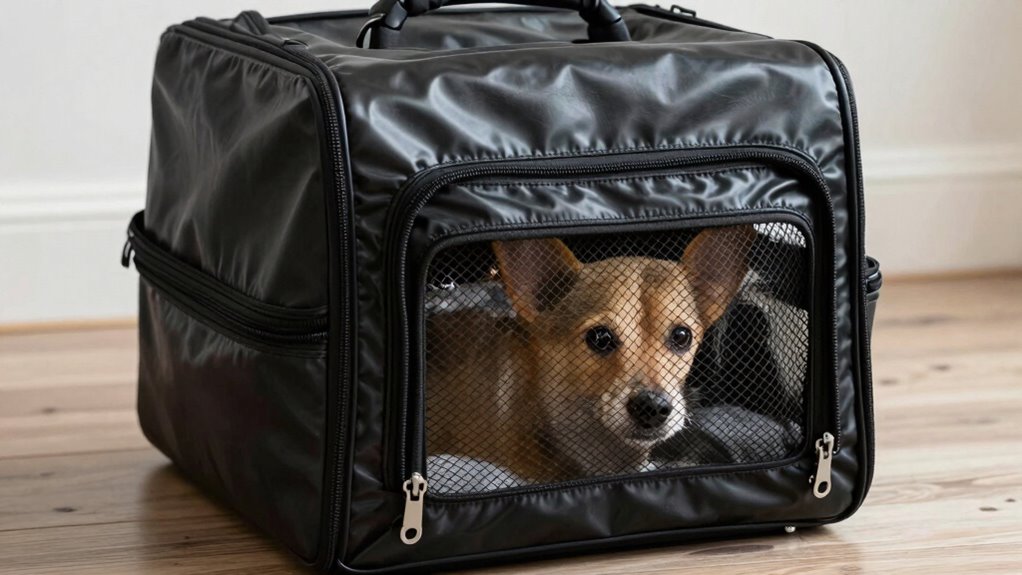

If your pet struggles to turn around or adopts an awkward postures seconds after you place them inside, the carrier is likely too small. Watch for signs like excessive panting, trembling, or resistance, which indicate discomfort or stress. Your pet should be able to lie down, stretch out, and move comfortably. If you notice these issues, it’s time to find a better fit. Keep going to discover key tips for choosing the right size and style.
Key Takeaways
- Pet struggles to turn around or lies in a stretched or cramped position inside the carrier.
- Excessive panting, whining, or trembling indicates discomfort and restricted space.
- Limbs pressed against the sides while lying down suggest insufficient room.
- Carrier walls cause the pet to resist or attempt to escape during placement.
- Pet shows signs of stress, such as resistance or agitation, when inside the carrier.

Choosing the right pet carrier is crucial for your pet’s comfort and safety, but many pet owners struggle to determine if their current carrier is too small. The key is to observe your pet’s behavior and physical cues during travel or when they’re inside the carrier. If your pet seems cramped, distressed, or tries to escape, it’s a clear sign the carrier isn’t providing enough space. Pet safety should always be your top priority, so guaranteeing your pet can move comfortably, breathe easily, and remain calm is essential.
One of the first things to check is whether your pet can turn around inside the carrier without difficulty. If they have to squeeze or force themselves, the carrier is likely too small. You should also see if your pet can comfortably lie down and stretch out without their limbs pressing against the sides. A proper fit allows your pet to adopt a natural resting position, which reduces stress during travel. Keep in mind that pets grow quickly, especially puppies and kittens, so what fits now might become too tight in a few months. Regularly reassess the carrier’s size, particularly if your pet is still growing.
Ensure your pet can comfortably turn, lie down, and stretch in their carrier for stress-free travel.
Another important aspect is to think about the carrier materials. The structure should be sturdy enough to withstand your pet’s movements and prevent accidental escapes. A well-made carrier with durable, secure materials helps maintain pet safety and ensures that the carrier remains intact under pressure. Look for carriers with high-quality plastic, metal vents, or reinforced fabrics, avoiding flimsy or easily breakable materials. A carrier that’s too small often uses cheap, lightweight materials that don’t provide adequate protection or ventilation, making your pet more vulnerable to injury or overheating. Additionally, proper ventilation is essential to keep your pet comfortable during travel and prevent overheating in confined spaces. Good ventilation can also help to regulate temperature inside the carrier, contributing to your pet’s overall comfort. Ensuring adequate ventilation can also help reduce anxiety by allowing your pet to feel less enclosed. Proper ventilation also helps to prevent odors, which can contribute to a more comfortable environment for your pet.
A well-ventilated carrier not only keeps your pet comfortable but can also prevent the buildup of harmful odors or moisture, contributing to a healthier environment inside the carrier. Finally, a carrier that’s too tiny can cause discomfort and anxiety, which might lead to resistance or panic during travel. If your pet appears visibly stressed — panting excessively, whining, or trembling — it’s a sign they’re cramped and uncomfortable. Providing enough space not only makes your pet feel secure but also contributes to their overall well-being. Remember, the right carrier should be a safe haven, not a source of discomfort.
As an affiliate, we earn on qualifying purchases.
Frequently Asked Questions
Can a Small Carrier Cause Stress for My Pet?
Yes, a small carrier can cause stress for your pet. When the carrier lacks proper ventilation, your pet may feel trapped and overheated, increasing anxiety. An ill-fitting carrier hampers pet comfort, making movement difficult and causing discomfort or claustrophobia. Make sure the carrier is well-ventilated and spacious enough for your pet to stand, turn around, and lie down comfortably. This reduces stress and keeps your pet calmer during travel.
How Long Can My Pet Stay Comfortable in a Small Carrier?
Your pet can stay comfortable in a small carrier for about 1-2 hours if it has good carrier ventilation and adequate carrier padding. Make sure the carrier isn’t too tight, allowing for some movement and breathability. Regularly check for signs of discomfort, like panting or whining. If your trip exceeds this time, give your pet breaks, add extra padding, and ensure proper ventilation to keep it calm and comfortable.
Are There Health Risks With Using an Undersized Carrier?
Using an undersized carrier can pose health risks, like stress or injury, especially if the carrier materials are uncomfortable or weak. Poor ventilation effectiveness can lead to overheating or suffocation, putting your pet at risk. Always choose a carrier with durable materials and good airflow, ensuring your pet feels safe and comfortable. If the carrier is too small, it can restrict movement and cause discomfort or breathing issues, so size matters for your pet’s health.
How Often Should I Check if My Pet Is Comfortable?
Think of your pet as a delicate songbird—check on them often to make sure they’re comfortable. You should peek every 10-15 minutes during travel, especially if you’re mindful of pet size considerations. Keep an eye on their breathing and demeanor, and guarantee carrier ventilation remains ideal. If your pet looks stressed or uncomfortable, adjust or stop to give them a break. Regular checks help keep your furry friend safe and happy.
What Are Signs My Pet Is Trying to Escape?
If your pet repeatedly scratches, bites, or tries to escape the carrier, it’s a sign they’re uncomfortable, impacting pet travel safety. Watch for frantic pacing, vocalizing, or pushing against the sides. An ill-fitting carrier, too small or poorly ventilated, can cause this distress. Make certain your carrier sizing is appropriate, providing enough space for your pet to stand, turn around, and lie down comfortably, reducing escape attempts and keeping your pet safe.
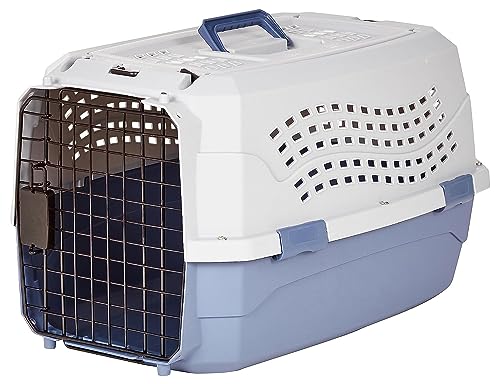
Amazon Basics Sturdy Portable 2-Door Top-Load Hard-Sided Pet Travel Carrier with Secure Ventilation, Handle, Front & Top Entry for Dogs, Cats, 22.8"L x 15"W x 13"H, Gray & Blue
- Two-Door Entry Design: Front and top entry for convenience
- Suitable for Medium Pets: Fits cats or dogs 12-20 lbs
- Sturdy Plastic Construction: Durable and secure for travel
As an affiliate, we earn on qualifying purchases.
As an affiliate, we earn on qualifying purchases.
Conclusion
If your pet struggles to turn around or looks cramped, it’s a clear sign the carrier’s too small. Remember, a comfortable space keeps your pet calm and secure during travel. Don’t settle for less—your furry friend deserves room to breathe and move. So, next time you pack, ask yourself: would I feel comfortable in this space? If not, it’s time to find a carrier that truly fits your pet’s needs.

PetMasion Extra Large Cat Carrier for 2 Cats, Collapsible Soft Sided Pet XL Crate for Large Mudium Big Cat 20lbs+, Car Travel Portable Bag for Long Trips Ride 24"x16.5"x16.5"
- Large Capacity and Size: Spacious 24” x 16.5” x 16.5” crate for large cats
- 2024 Upgraded Features: Waterproof liner, safety clips, dual handles
- Breathable and Comfortable: Five-sided mesh walls with cushioned interior
As an affiliate, we earn on qualifying purchases.
As an affiliate, we earn on qualifying purchases.
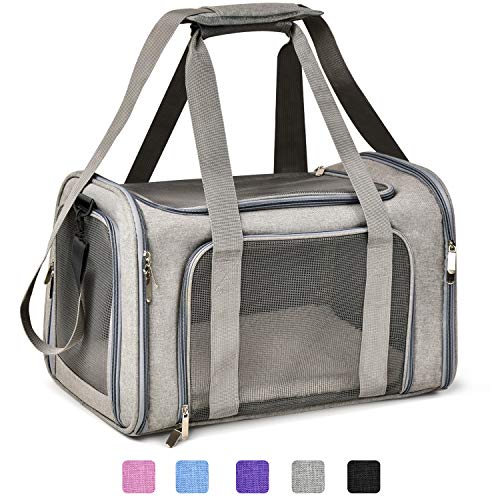
Henkelion Cat Carriers Dog Carrier Pet Carrier For Small / Medium Cats Dogs Puppies (Up To 15lbs), TSA Airline Approved Small Dog Carrier Soft Sided, Collapsible Waterproof Travel Puppy Carrier – Grey
- Airline Approved Design: Suitable for air travel with dual handles
- Secure and Convenient: Includes adjustable shoulder strap for hands-free carrying
- Durable and Lightweight: Made of sturdy polyester with four-side mesh for visibility
As an affiliate, we earn on qualifying purchases.
As an affiliate, we earn on qualifying purchases.