

To give your puppy confidence on walks, start in quiet, familiar areas and keep the leash loose, walking at a steady pace. Use treats and praise to reinforce calm behavior, and gradually introduce new sights, sounds, and people in short, positive encounters. Make routines consistent and maintain a relaxed attitude, which helps your puppy feel safe and curious. Keep exploring more tips to guarantee your puppy grows into a confident, well-adjusted dog.
Key Takeaways
- Start in quiet, familiar areas to build initial confidence and ensure positive experiences.
- Use treats and praise to reinforce calm, confident behavior during walks.
- Gradually introduce new stimuli and environments to boost curiosity and reduce shyness.
- Maintain a loose leash and steady pace, encouraging close proximity without pulling.
- Practice commands like “heel” or “easy” to establish leadership and promote calmness.
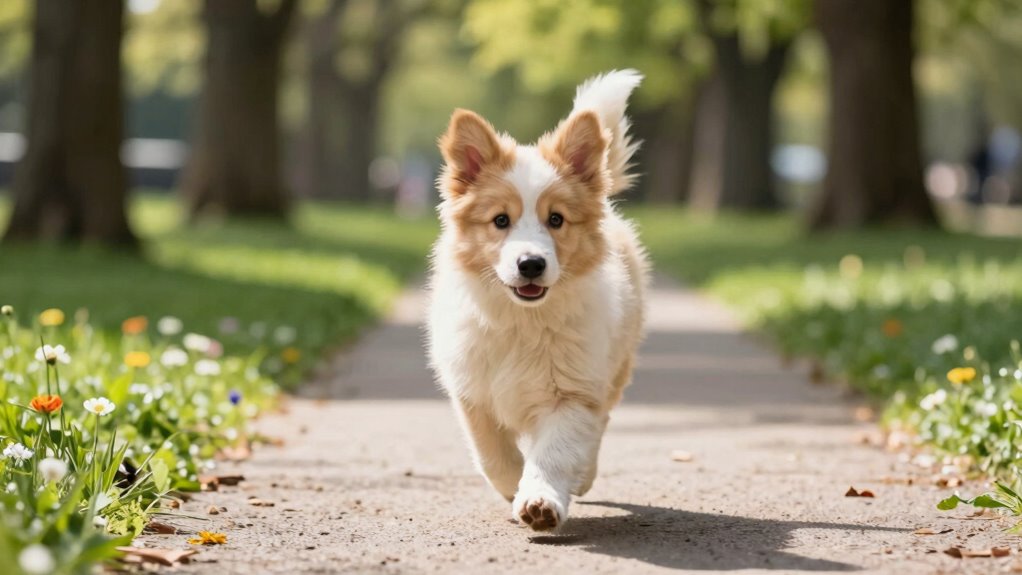
If your puppy tends to shy away or hesitate during walks, teaching them the confidence walk can make a big difference. This simple yet effective exercise helps your pup feel more secure and comfortable in new environments. To get started, focus on socialization techniques that expose your puppy gradually to different sights, sounds, and people. Positive experiences build their confidence, making walks less intimidating. Pair these outings with leash training to ensure your puppy stays calm and controlled. When your pup learns to walk politely on a leash, they’re less likely to pull or become overwhelmed, which boosts their confidence further.
Begin your confidence walk by choosing a quiet, familiar area where your puppy feels safe. Keep the leash loose, and walk at a steady pace, encouraging your pup to stay close without pulling. Use treats and praise to reinforce calm behavior, helping your puppy associate walking with positive feelings. As they become more comfortable, slowly introduce new stimuli—like other dogs or different textures—using socialization techniques. Keep these encounters short and positive, gradually increasing exposure to help your puppy adapt without feeling overwhelmed. Understanding biodiversity can also motivate your puppy to explore their environment more confidently, as a diverse environment is often more engaging and less intimidating. Incorporating varied environments and stimuli can enhance their confidence and curiosity. Additionally, positive reinforcement plays a crucial role in encouraging your puppy to develop a confident walking routine.
Start with calm, familiar walks, using treats and praise to build confidence and positive associations.
Building on this, incorporating environmental diversity in training sessions can further boost your puppy’s confidence by exposing them to a range of different settings and experiences. Consistency is key. Make confidence walks a regular part of your routine, so your puppy learns that walks are safe and enjoyable. During each outing, remain relaxed and patient, as your energy influences your pup’s mood. If they hesitate or try to pull away, stop and give them time to settle. This teaches them that pulling or hesitating doesn’t lead to a quick escape, but calm persistence does. It’s also helpful to understand how socialization impacts their overall confidence and helps them become well-adjusted. Over time, your puppy will start to walk more confidently, eager to explore rather than shy away.
Incorporate training exercises that focus on leash manners alongside socialization techniques. Practice commands like “heel” or “easy” to establish control and build trust. These commands, paired with treats and praise, reinforce your leadership and help your puppy feel secure in your guidance. Remember, the goal is to create a positive, affirming experience that boosts their confidence with each walk.
As an affiliate, we earn on qualifying purchases.
Frequently Asked Questions
How Often Should I Practice the Confidence Walk With My Puppy?
You should practice the confidence walk daily, especially during your puppy’s socialization techniques and leash training. Short sessions, around 5-10 minutes, help build your puppy’s confidence without overwhelming them. Consistency is key; gradually increase the duration as your puppy becomes more comfortable. Use positive reinforcement and stay calm. Regular practice helps your puppy develop a relaxed attitude on walks, making socialization and leash training more successful and enjoyable.
What if My Puppy Gets Distracted During the Walk?
Imagine your puppy as a tiny explorer, enthusiastic but easily distracted. If your pup gets sidetracked, calmly redirect with a treat or toy, practicing distraction management. Stay patient and consistent, reinforcing good behavior with praise. This approach helps your puppy learn focus and confidence, much like guiding a ship through fog—steady hands and clear signals lead to calmer, more attentive walks.
Can Puppies With Past Trauma Benefit From This Exercise?
Yes, puppies with past trauma can benefit from this exercise, as it supports trauma recovery and confidence building. You should start slowly, using positive reinforcement to create a safe environment. Keep walks short and gradually increase duration as your puppy gains trust. Consistency, patience, and gentle encouragement help them feel secure, enabling emotional healing and boosting their confidence during each walk.
How Long Should Each Confidence Walk Session Last?
You should aim for confidence walk sessions lasting about 10 to 15 minutes initially. Keep the focus on gentle puppy socialization and leash training, gradually increasing duration as your pup becomes more comfortable. Observe their behavior closely; if they seem overwhelmed, reduce the time. Consistency helps build their confidence, making each walk a positive experience that supports healthy development and fosters trust during leash training and socialization.
What Are Signs My Puppy Is Uncomfortable During the Walk?
Think of your puppy’s body language as a traffic light—green means go, yellow is slow down, and red signals stop. If your puppy tucks their tail, cowers, or pulls back, they’re uncomfortable. Watch for stiff posture or paw lifting, which also indicate unease. Use leash training tips to keep walks positive, and if signs of discomfort appear, calmly pause or end the walk to help your pup feel safe and confident.
As an affiliate, we earn on qualifying purchases.
Conclusion
So, next time your puppy hesitates at the door, remember—the confidence walk is your secret weapon. Ironically, it’s the one thing that takes just a few minutes but can turn your shy pup into a brave explorer. Who knew that a simple stroll could do so much? Embrace the walk, and watch your puppy blossom—sometimes, the smallest steps lead to the biggest leaps in confidence. After all, a little walk might just change everything.
puppy socialization training kit
As an affiliate, we earn on qualifying purchases.
As an affiliate, we earn on qualifying purchases.
calm behavior reinforcement treats for puppies
As an affiliate, we earn on qualifying purchases.
As an affiliate, we earn on qualifying purchases.