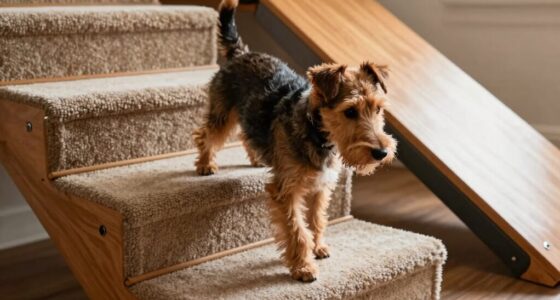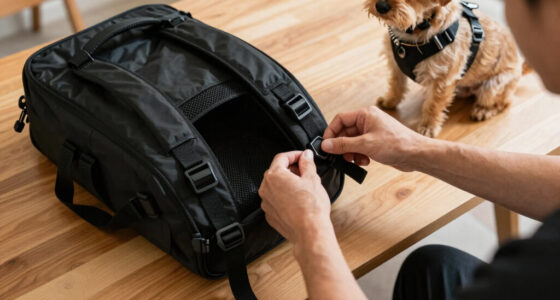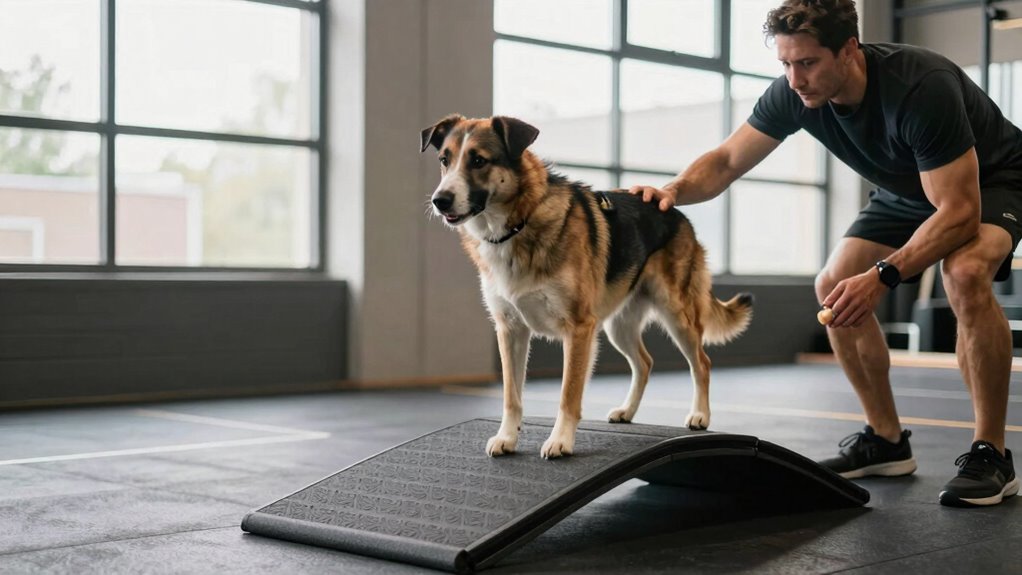

To get your dog confidently using a ramp, start with a sturdy, non-slip surface and choose a quiet, accessible spot. Use positive reinforcement like treats, praise, and toys to build excitement and confidence. Introduce the ramp gradually, allowing your dog to explore at their own pace, and avoid forcing them. Be patient, consistent, and encouraging during every step. Keep in mind, the right approach can make all the difference—if you keep going, you’ll discover more helpful tips.

Get pet supplies delivered free with Prime
- Fast, free delivery on millions of items
- Prime Video, Amazon Music and more included
- Member-only deals all year
Key Takeaways
- Use a sturdy, non-slip ramp with gentle incline and textured surfaces to ensure safety and build confidence.
- Create a positive environment with treats, praise, and calm voice to encourage curiosity and exploration.
- Gradually increase ramp incline and steps, allowing the dog to learn at their own pace without pressure.
- Reinforce good behavior immediately with rewards, avoiding punishment or force to foster trust.
- Consistently maintain patience, keep sessions short, and associate the ramp with positive experiences to promote usage.
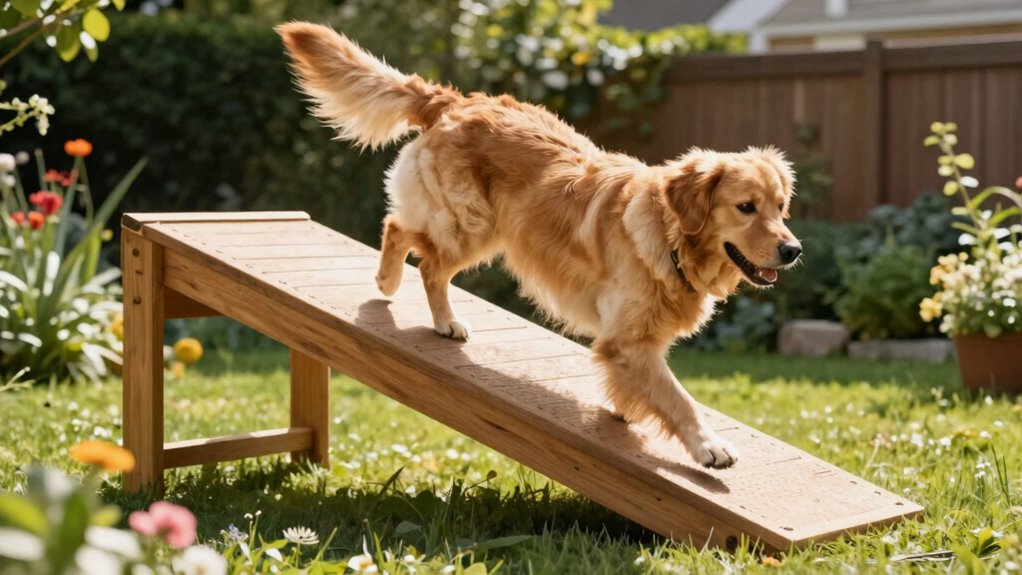
Start by choosing the right training accessories, such as a sturdy, non-slip ramp with gentle incline and a surface that provides good traction. Place the ramp in an accessible, quiet area where your dog feels relaxed. Begin by encouraging your dog to approach the ramp without any pressure. Use treats, praise, or their favorite toy to build positive associations. When your dog shows curiosity or steps onto the ramp, reward immediately. If your dog hesitates or shows signs of fear, don’t force them. Instead, back up and approach the situation gradually, allowing your dog to explore at their own pace.
Choose a sturdy, non-slip ramp and encourage your dog to explore it at their own pace with positive reinforcement.
Consistency is key in training your dog to use the ramp. Use a calm, encouraging voice and be patient. Keep sessions short and positive, ending on a successful note. As your dog becomes more comfortable, gradually increase the incline or encourage them to move further onto the ramp. Always reward small successes, and remember that every dog learns at their own pace. If your dog is hesitant, break the process into smaller steps—like just placing their paws on the ramp before moving onto full use. Over time, your dog will associate the ramp with positive experiences and will be more willing to use it independently.
It’s also important to incorporate training accessories that reinforce good behavior. For example, non-slip mats or textured surfaces on the ramp help prevent slipping, boosting your dog’s confidence. Using a leash or harness initially can help guide your dog gently without causing stress. Be consistent in your commands and rewards, and avoid punishing any reluctance or hesitation. With patience, positive reinforcement, and the right accessories, your dog will learn to use the ramp confidently. This method not only improves your dog’s mobility but also strengthens your bond through gentle, encouraging training sessions that respect your dog’s comfort and pace. Understanding how to train your dog effectively using appropriate techniques and tools is essential for success. Incorporating positive reinforcement techniques enhances the learning process and builds trust between you and your dog. Additionally, understanding the importance of a gradual approach helps prevent setbacks and encourages steady progress.
As an affiliate, we earn on qualifying purchases.
Frequently Asked Questions
How Long Does It Typically Take for a Dog to Master the Ramp?
It usually takes about one to two weeks for a dog to master the ramp, but training consistency is key. You should practice daily, using positive reinforcement to build your dog’s confidence and obedience. Keep sessions short and fun, gradually increasing difficulty. Every dog is different, so be patient and persistent. With steady effort, your dog will become comfortable on the ramp and show improved obedience over time.
Can Ramp Training Be Effective for Dogs With Mobility Issues?
Yes, ramp training can be effective for dogs with mobility issues. You should use a dog leash to guide your dog gently and guarantee safety, especially if they’re hesitant. Incorporate treat rewards to motivate your dog and build confidence as they learn to use the ramp. Be patient, go at their pace, and praise their progress, making the experience positive and encouraging for your dog.
What Are Common Mistakes to Avoid During Ramp Training?
To avoid mistakes during ramp training, don’t rush the process or force your dog, especially if they’re still learning puppy socialization or leash training. Use positive reinforcement and keep sessions short to prevent frustration. Avoid sudden movements or loud commands that could scare your dog. Also, make certain the ramp is stable and comfortable, so your dog builds confidence gradually, making the training effective and enjoyable.
Is There an Age Limit to Start Ramp Training With a Dog?
You can start ramp training at any age, from puppy development stages to senior dogs. Think of it as building a staircase; every dog, regardless of age, can learn to climb comfortably. I once trained a senior dog with joint issues who gradually adapted to a ramp, improving mobility and confidence. So, don’t hesitate—age isn’t a barrier, just patience and positive reinforcement.
How Do I Troubleshoot if My Dog Refuses to Use the Ramp?
If your dog refuses to use the ramp, start by making it inviting through puppy socialization and positive reinforcement. Use treats and praise to encourage your dog to approach the ramp calmly, gradually increasing exposure. Keep leash training sessions short and fun, guiding your dog gently without forcing. Make certain the ramp is stable and non-slip, and practice consistently, so your dog builds confidence and sees the ramp as a safe, rewarding space.
As an affiliate, we earn on qualifying purchases.
Conclusion
By embracing this ramp training method, you open a world where your dog’s confidence skyrockets faster than a rocket to the stars. No more struggles or setbacks—just smooth, joyful progress that transforms your furry friend into a confident, happy pup. With patience and consistency, you’ll witness astonishing changes that seem almost miraculous. So, get that ramp out and watch your dog’s life change in ways you never thought possible—it’s truly a game-changer!
As an affiliate, we earn on qualifying purchases.
dog training accessories for ramps
As an affiliate, we earn on qualifying purchases.
As an affiliate, we earn on qualifying purchases.
Columbus Day / Indigenous Peoples' Day Picks
long weekend sales
As an affiliate, we earn on qualifying purchases.