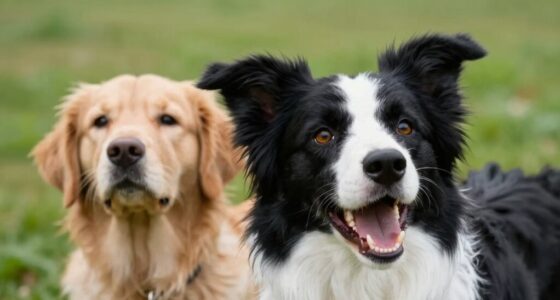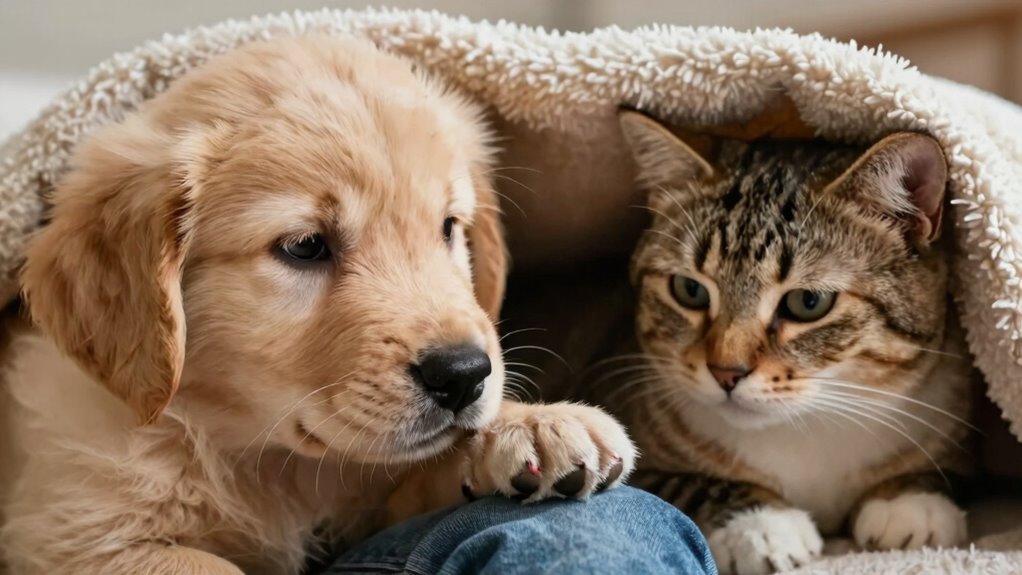

Some dog breeds bond faster because of their natural temperament and social traits. Friendly, enthusiastic-to-please breeds like Labs and Goldens quickly trust and connect, especially during positive interactions. In contrast, independent or cautious breeds like Afghan Hounds need more patience and consistent effort to build trust. Understanding these breed differences helps you create better bonds. Keep exploring to discover how to strengthen your relationship with any breed, no matter their bonding speed.

Get pet supplies delivered free with Prime
- Fast, free delivery on millions of items
- Prime Video, Amazon Music and more included
- Member-only deals all year
Key Takeaways
- Social, eager-to-please breeds tend to bond quickly due to their friendly and affectionate temperaments.
- Independent or reserved breeds require more time and patience to build trust and develop a bond.
- Breeds motivated by praise and treats often form connections faster through positive reinforcement.
- Temperament traits influence how breeds respond to new environments and people, affecting bond speed.
- Consistent, positive interactions tailored to breed traits foster stronger, quicker bonds.

Some dog breeds naturally form strong bonds quickly, while others take more time to trust and connect. This difference primarily stems from their breed temperament, which influences how they respond to new environments, people, and experiences. This understanding helps you recognize the importance of breed temperament traits in shaping their social behaviors. When you’re working on dog training, understanding these inherent traits helps you set realistic expectations and develop effective strategies. Breeds with a friendly, social temperament tend to bond faster because they’re naturally enthusiastic to please, seek human companionship, and thrive on interaction. For example, Labrador Retrievers and Golden Retrievers are known for their affectionate nature, making it easier for you to build a connection with them early on. They often view training sessions as opportunities for positive reinforcement and bonding, which accelerates the trust process.
Some breeds bond quickly through their social, eager-to-please nature, making training and connection easier early on.
On the other hand, some breeds are more reserved or independent by nature, which can slow down their bonding process. These dogs might be wary of strangers or cautious in unfamiliar settings, so it takes patience and consistent dog training to earn their trust. Breeds like the Afghan Hound or the Basenji often have a more aloof breed temperament, and you’ll notice that they prefer to approach you on their own terms. Their independence doesn’t mean they’re less loving; it simply means you need to give them time and space to develop a sense of security before forming a strong bond. In these cases, your approach to dog training should focus on gentle encouragement and respecting their boundaries, allowing the relationship to grow naturally. Understanding a breed’s temperament traits can help you tailor your training and interaction styles more effectively.
Breed temperament also influences how quickly a dog responds to training techniques. Some breeds are highly motivated by praise and treats, which makes the training process smoother and quicker. Others might be more stubborn or cautious, requiring more patience and consistent effort. Recognizing these traits helps you tailor your training methods for better results. For instance, breeds with a high prey drive, like terriers, may need more engaging and varied training sessions to stay motivated. Conversely, breeds with a calm demeanor, such as the Cavalier King Charles Spaniel, often bond and learn more quickly because they’re more receptive to your guidance. Additionally, understanding the breed’s social tendencies can help you adjust your training environment to better suit their comfort levels and learning pace. Knowing about breed-specific behaviors can further improve your training approach and strengthen your relationship with your dog.
In the end, understanding your dog’s breed temperament is key to fostering a strong bond. While some dogs will naturally connect faster, every dog needs patience, positive reinforcement, and consistent dog training to develop trust. By respecting their individual traits, you’ll create a relationship based on mutual understanding and affection that lasts a lifetime.
As an affiliate, we earn on qualifying purchases.
Frequently Asked Questions
Do Breed Traits Influence a Dog’s Ability to Bond Quickly?
Yes, breed traits influence a dog’s ability to bond quickly. You’ll notice that genetic predispositions and temperament variations play key roles; some breeds are naturally more social and enthusiastic to connect, while others are more independent. Your dog’s breed can affect how fast they form attachments, with certain breeds bonding swiftly due to their innate friendliness, while others may take more time to trust and build a strong bond with you.
How Does Early Socialization Affect Bond Formation in Different Breeds?
Early socialization greatly impacts bond formation across breeds. When you expose puppies to different people, environments, and experiences during the socialization windows, you foster confidence and trust. This process helps reduce puppy independence issues and encourages positive interactions. Breeds with strong early socialization tend to bond faster, as they’re more comfortable and enthusiastic to connect. Proper socialization during these critical periods builds a strong, lasting bond between you and your dog.
Can Training Methods Speed up Bonding in Slower-To-Bond Breeds?
Absolutely, training methods can speed up bonding in slower-to-bond breeds. Think of it as building a bridge through playful communication and scent recognition—both essential for trust. Consistent, positive interactions help your dog associate you with safety and fun, making the bond grow stronger faster. Using treats, praise, and gentle play, you create a welcoming environment that encourages your dog to open up and connect more quickly.
Are There Specific Breeds Known for Stronger Attachment to Owners?
Certain breeds are known for forming strong attachments quickly, thanks to their breed temperament and owner compatibility. For example, Labrador Retrievers and Golden Retrievers often bond fast because they are friendly and enthusiastic to please. You’ll notice these breeds thrive on regular interaction and social engagement. If you choose a breed with a temperament suited to your lifestyle, you’re more likely to develop a deep, lasting connection with your dog.
Does Age at Adoption Impact the Bonding Process Across Breeds?
They say “You can’t teach an old dog new tricks,” but age at adoption really does influence bonding across breeds. Younger dogs often form stronger bonds quickly, thanks to their genetic predispositions for adaptability. Adoption timing matters because earlier placements foster trust and attachment before habits develop. If you adopt later, patience is key, as your dog may need more time to build the same strong connection.
dog bonding toys for social breeds
As an affiliate, we earn on qualifying purchases.
As an affiliate, we earn on qualifying purchases.
Conclusion
So, don’t get discouraged if your dog takes a little longer to bond. Every breed has its own personality and pace, and building trust simply takes patience. Remember, bonding isn’t about speed but about consistency and love. Even if it feels slow at first, your effort pays off. Keep spending quality time, and soon enough, you’ll see that special connection grow stronger—because, in the end, patience and persistence always make a difference.
As an affiliate, we earn on qualifying purchases.
dog patience and trust building guides
As an affiliate, we earn on qualifying purchases.
As an affiliate, we earn on qualifying purchases.
Halloween Picks
halloween
As an affiliate, we earn on qualifying purchases.