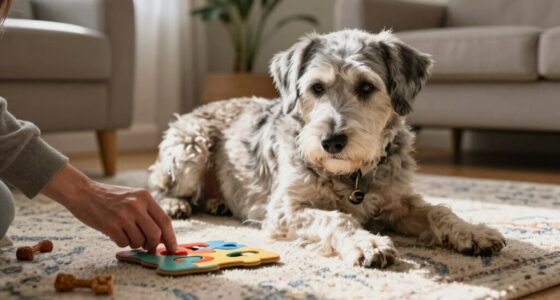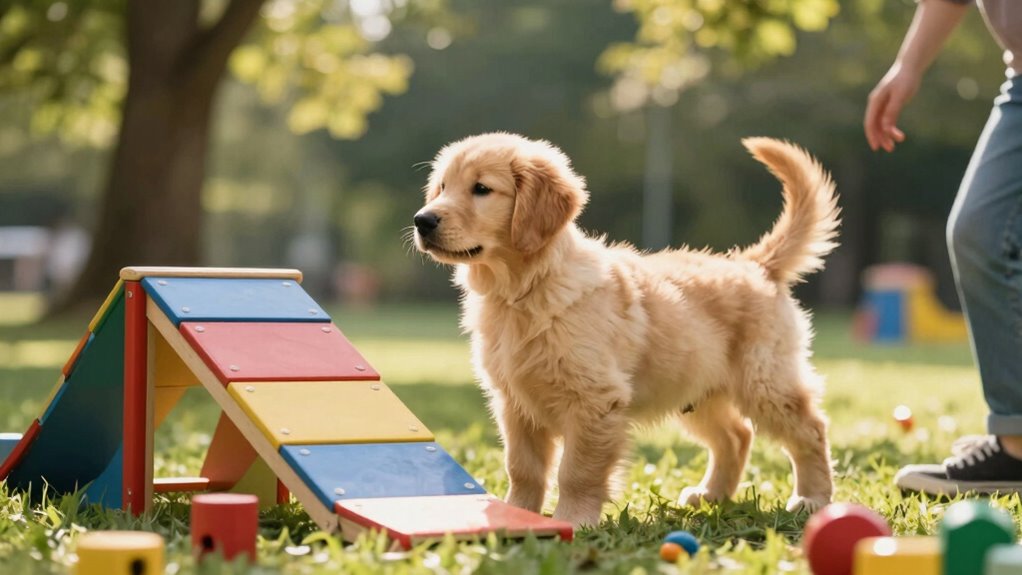

To help hesitant dogs explore, create a safe, calm environment where they can observe and gradually experience new stimuli without pressure. Use positive reinforcement like treats, praise, and gentle touch to reward confident behaviors, and watch for signs of discomfort. Slowly introduce new situations, celebrating small successes to build their trust and curiosity. Maintaining patience and using consistent cues can foster confidence, and if you continue to explore these techniques, you’ll discover effective ways to support your dog’s journey.

Get pet supplies delivered free with Prime
- Fast, free delivery on millions of items
- Prime Video, Amazon Music and more included
- Member-only deals all year
Key Takeaways
- Use positive reinforcement to reward calm, confident behaviors during exploration.
- Introduce new stimuli gradually, allowing the dog to observe and adapt at their own pace.
- Recognize and respond to body language cues indicating stress or discomfort.
- Create a safe, familiar environment to build trust and reduce anxiety.
- Celebrate small progress to boost the dog’s confidence and encourage further exploration.
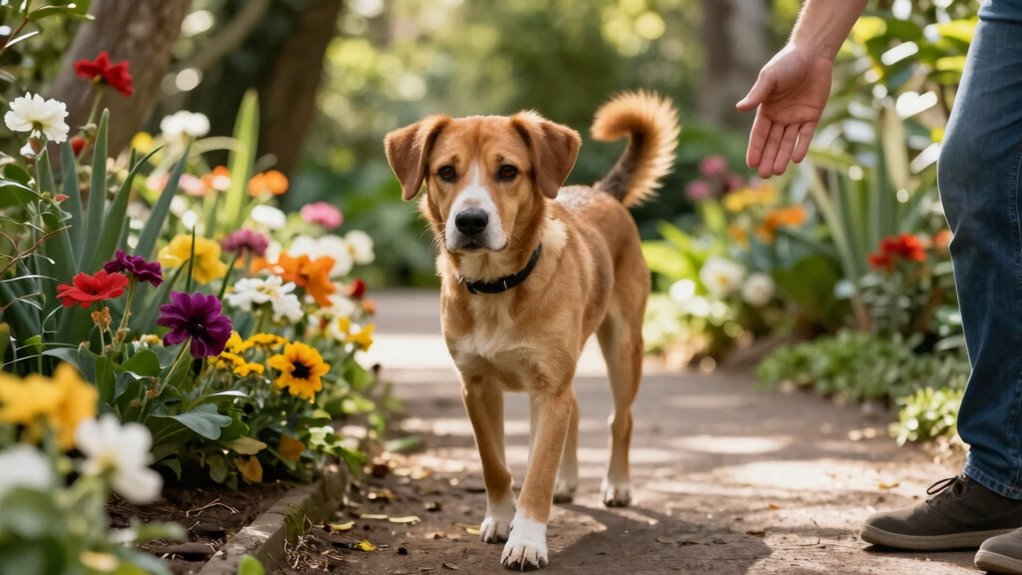
If your dog is hesitant or nervous in new situations, building their confidence is essential for a happier, more balanced life. You’ll notice their feelings through dog body language—ears pinned back, tail tucked, or avoiding eye contact can all signal discomfort. Recognizing these signs helps you understand what triggers their anxiety and allows you to respond appropriately. The key is to create a safe environment where your dog feels supported, gradually encouraging them to explore without overwhelming them.
Building your dog’s confidence starts with recognizing signs of discomfort and creating a safe, supportive environment for gradual exploration.
Positive reinforcement plays a key role in this process. When your dog approaches new objects or environments calmly, praise them with a gentle voice, treats, or affection. This reinforces the idea that exploration leads to positive outcomes, gradually reducing fear. Remember, timing matters—immediately reward your dog when they display confident behaviors, like taking a step forward or sniffing something new. Over time, these small successes build their self-assurance, making them more willing to venture out.
Your approach should be slow and consistent. Start by exposing your dog to new situations in a controlled way, perhaps in a calm, familiar space. If they seem hesitant, don’t force them; instead, give them time to observe and adapt at their own pace. Use dog body language as a guide—if they’re showing signs of stress, like yawning, lip licking, or trembling, pause and give them space. Once they relax, gently encourage them to continue exploring, always pairing these moments with positive reinforcement. Incorporating behavioral cues can help you better understand when your dog is ready to proceed or needs a break. Developing an understanding of dog body language can also help prevent setbacks and foster trust. Additionally, understanding emotional signals can be beneficial in recognizing subtle changes in your dog’s comfort level.
As your dog gains confidence, you can gradually introduce more challenging scenarios, always remaining attentive to their body language. Celebrate their efforts, even if they only make small steps forward. Remember, patience is essential. Pushing too hard can backfire, increasing anxiety instead of reducing it. Instead, focus on creating positive associations with new experiences, which naturally encourages your dog to become more curious and less fearful. Keeping in mind the importance of biodiversity and conservation can also inspire a broader sense of curiosity and exploration about the natural world beyond your immediate environment.
Over time, you’ll see your dog’s body language shift—ears come forward, tail held higher, and a relaxed posture. They’ll start to seek out new adventures instead of retreating from them. This confidence-building game isn’t about forcing your dog into situations they’re uncomfortable with but gently guiding them toward self-assurance through patience, understanding, and lots of positive reinforcement. With consistent effort, your hesitant dog will learn to explore the world around them with curiosity and joy.
dog training treats for confidence building
As an affiliate, we earn on qualifying purchases.
As an affiliate, we earn on qualifying purchases.
Frequently Asked Questions
How Long Does It Typically Take for a Dog to Gain Confidence?
It varies depending on the dog, but usually, it takes several weeks to a few months of consistent dog socialization and fear reduction efforts for a hesitant dog to gain confidence. You’ll notice progress as your dog begins to explore more and respond positively to new experiences. Patience is key—regular, gentle exposure helps build trust. With time and positive reinforcement, your dog will become more confident and comfortable in different environments.
Can the Confidence Game Be Used for All Dog Breeds?
Yes, you can adapt the confidence game for all dog breeds by using breed-specific adaptations and confidence training techniques. Different breeds have unique temperaments, so tailoring activities helps boost their confidence effectively. For example, energetic breeds might thrive with more active exercises, while shy or anxious breeds benefit from gentle, gradual exposure. By adjusting your approach, you guarantee every dog feels safe and motivated to explore and grow confident.
What Are Signs of Progress During the Confidence-Building Process?
You’ll notice signs of progress through your dog’s body language and social interactions. As they gain confidence, they’ll become more relaxed, with a wagging tail, loose body, and relaxed ears. They’ll initiate playful or friendly interactions more often and show curiosity rather than fear. Over time, their body language becomes more open, and they engage comfortably with new people and environments, indicating they’re building trust and confidence.
Are There Any Risks or Setbacks Involved With the Game?
Yes, there are risk factors and setbacks to watch for with this game. If your dog becomes overwhelmed or shows signs of fear, pushing too hard can cause setbacks and decrease confidence. To prevent this, monitor your dog closely, keep sessions short, and gradually increase difficulty. Always prioritize your dog’s comfort, and if setbacks occur, give them time to recover before trying again. This approach helps guarantee safe, steady progress.
How Do I Tailor the Game for Dogs With Previous Trauma?
You’ll want to approach trauma-sensitive techniques with care, like a delicate artist handling fragile glass. Personalize game adjustments by starting slow, respecting your dog’s pace, and avoiding overwhelming stimuli. Use positive reinforcement generously, and gradually introduce new challenges only when your pup shows confidence. Remember, patience is your best tool. Keep sessions short, gentle, and rewarding, ensuring your dog feels safe and supported on their journey toward exploration.
dog calming and anxiety relief products
As an affiliate, we earn on qualifying purchases.
As an affiliate, we earn on qualifying purchases.
Conclusion
As you watch your hesitant dog step forward, confidence flickers in their eyes. The game you’ve built becomes more than just a routine—it transforms into a doorway to bravery. You can almost feel the shift, the quiet promise of new adventures waiting just beyond the next treat or toy. Keep playing, keep encouraging, and soon that timid pup might just surprise you all by leaping into the unknown with fearless curiosity. The next breakthrough is closer than you think.
As an affiliate, we earn on qualifying purchases.
positive reinforcement dog training tools
As an affiliate, we earn on qualifying purchases.
As an affiliate, we earn on qualifying purchases.
Halloween Picks
halloween
As an affiliate, we earn on qualifying purchases.