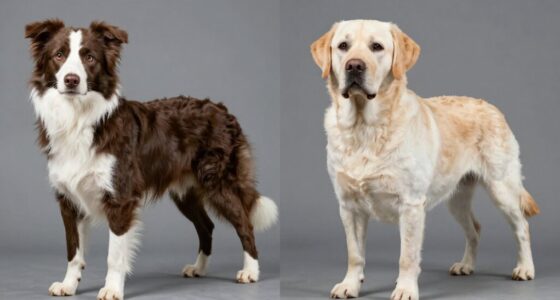

Some dog breeds are naturally more vocal because their genetic traits and evolutionary history favor alertness, protection, or excitement. Breeds like terriers and hounds bark more to warn you or signal prey, while others like Basenjis stay quieter. Your dog’s vocal tendency depends on its breed’s instincts and background. Understanding these traits helps you manage their behavior better. If you keep exploring, you’ll discover even more ways breed differences influence their communication styles.
Key Takeaways
- Certain breeds have genetic traits that predispose them to be more alert and vocal.
- Evolution and selective breeding have emphasized vocal communication in some breeds.
- Breeds like terriers and hounds naturally bark more to alert or signal prey.
- Communication styles vary, with some breeds relying more on barking than body language.
- Lifestyle and living environment influence how vocal a breed appears in daily life.
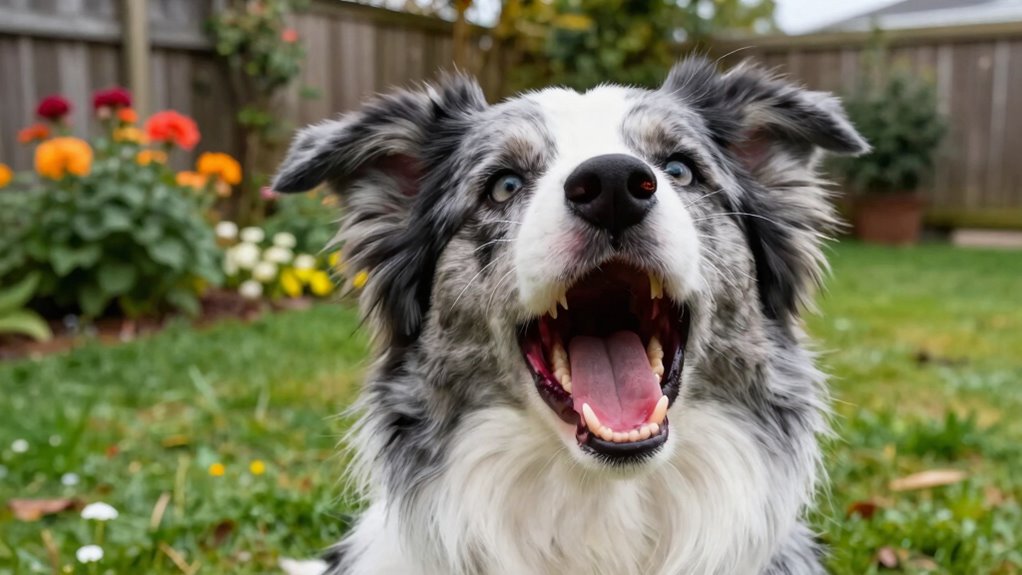
Some dog breeds are naturally more vocal than others, and understanding why can help you choose the right pet for your lifestyle. Breed-specific traits play a significant role in shaping how a dog communicates. Certain breeds have evolved or been bred to be alert, protective, or expressive, which influences their communication styles. For example, terriers and hounds tend to bark more because historically, their role involved alerting owners to intruders or prey. Their vocal tendencies aren’t random; they’re embedded in their genetic makeup, making them more likely to vocalize to fulfill their instinctual needs. Recognizing these Breed-specific traits can help you better understand and anticipate a dog’s communication style. Your experience with a dog’s communication style depends on their breed traits. Some breeds use barking as a primary way to express excitement, anxiety, or alertness. For instance, small breeds like Chihuahuas and Yorkshire Terriers often bark to get attention or warn about strangers, while larger breeds like German Shepherds may bark to alert their owners about potential threats. This breed-specific trait means that if you’re looking for a quiet, laid-back companion, these breeds might not be the best fit. Conversely, some breeds, like Basenjis, are known for being relatively quiet, as their communication style involves other sounds or body language rather than frequent barking. Additionally, understanding the evolutionary background of certain breeds can give further insight into their vocal tendencies and help set realistic expectations. Recognizing these genetic predispositions can also assist in training and managing barking behaviors effectively. Moreover, understanding how selective breeding has shaped vocal traits can clarify why certain breeds tend to be more vocal than others.
Certain breeds are naturally more vocal due to their alert and protective instincts.
Knowing how breed traits influence vocalization can also help in training and socialization, making it easier to develop a well-behaved and balanced dog. Understanding these differences helps you anticipate a dog’s behavior and choose a breed that matches your tolerance for noise. If you live in an apartment with close neighbors, a breed with a more subdued communication style might be more suitable. On the other hand, if you want a vigilant watchdog, a breed with a natural tendency to bark can be advantageous. Recognizing that breed-specific traits influence vocalization can also guide training. Some breeds are more responsive to commands designed to reduce unnecessary barking, while others might require more patience and consistency.
Ultimately, knowing why some breeds are more vocal helps you set realistic expectations. It’s not just about individual personality but about inherent traits that shape their communication styles. By understanding these differences, you can better decide which breed aligns with your lifestyle, living situation, and noise tolerance. Whether you want a quiet companion or a lively alert dog, understanding breed-specific traits and communication styles ensures you make an informed choice, leading to a more harmonious relationship.

2-in-1 Dog Bark & Shock Collar with Remote, 4500FT Training Range
- All-in-One Training System: Combines bark control and remote training
- Extended Range: Training range up to 4500 feet
- Smart AI Bark Detection: Accurately detects dog barks with AI chip
As an affiliate, we earn on qualifying purchases.
As an affiliate, we earn on qualifying purchases.
Frequently Asked Questions
Do Vocal Tendencies Vary Within the Same Breed?
Yes, vocal tendencies can vary within the same breed due to breed-specific traits and genetic predispositions. You might find some dogs of the same breed are more vocal, influenced by individual temperament, socialization, and environment. While breed traits set a general expectation, genetics and personal experiences shape how vocal a dog becomes. So, expect some variation, and remember that training and environment also play roles in their vocal behavior.
Can Training Reduce a Dog’s Barking Frequency?
Yes, training can reduce your dog’s barking frequency. Using effective training techniques like positive reinforcement and consistent commands helps your dog understand when barking is appropriate. Bark control methods, such as teaching the “quiet” command and providing distractions, can also be effective. With patience and regular practice, you’ll notice a decrease in unnecessary barking, making your dog more comfortable and better behaved in various situations.
Are There Breeds That Are Naturally Quieter?
Yes, some breeds are naturally quieter due to their breed history and genetic factors. Breeds like the Basenji and Cavalier King Charles Spaniel tend to bark less because they were bred for specific roles requiring calmness and discretion. You can expect these breeds to be less vocal, but individual personalities also play a role. Understanding their genetic background helps you choose a dog that fits your desire for a quieter companion.
How Does Environment Influence a Dog’s Vocalization?
Environmental factors can considerably influence your dog’s vocalization. For example, a study shows that noise sensitivity affects 30% of dogs, making them bark more in loud settings. If your dog lacks social interaction or feels anxious or threatened, they may bark more to communicate or seek attention. Creating a calm, engaging environment can help reduce unnecessary vocalization, making your dog more comfortable and less reactive to everyday stimuli.
Is Vocalization Linked to a Dog’s Personality?
Vocalization is definitely linked to a dog’s personality, influenced by breed temperament and vocalization genetics. If you notice your dog is more vocal, it’s likely because their breed naturally tends to be more expressive or alert. Genetics play a role in shaping their communication style, while personality traits like confidence or anxiety also affect how much they bark or vocalize. Understanding these factors helps you better interpret and respond to your dog’s needs.

SPOT Gigglers Hedgehog Dog Toy with Giggle Sound | Textured, Plush Shake and Wiggle Hedgehog Giggle Toy for Small and Medium Dog Breeds, Assorted Colors
- Toy Type: Hedgehog dog toy with giggle sound
- Material: Soft, plush exterior
- Texture: Nubby, textured surface
As an affiliate, we earn on qualifying purchases.
As an affiliate, we earn on qualifying purchases.
Conclusion
Understanding why some breeds are more vocal helps you appreciate their unique personalities. Just like a songbird’s melody, their sounds express love, alertness, or a desire for connection. Embrace their voices as a beautiful symphony that adds character and life to your home. Remember, each bark or meow is a window into their world—an emotional language that, when listened to, deepens your bond. Their voices are gifts, turning your house into a lively, loving sanctuary.

High Energy Dog Step By Step Guide: Discover Breed-Specific Training Activities, Balanced Routines, Fun Obedience Games, and Real-World Solutions
As an affiliate, we earn on qualifying purchases.
As an affiliate, we earn on qualifying purchases.

YUYQA Dog Bark Deterrent Device, 3X Ultrasonic Anti Barking, 6 Training Modes 23 FT Range Barks No More Indoors Outdoors Behavior Correct Safe & Humane Rechargeable Compact Bark Control for Dogs
- Enhanced Ultrasonic Coverage: Three ultrasonic emitters for wider range
- Versatile Training Modes: Six modes including ultrasonic and audible beeps
- Dual Ultrasonic Frequencies: Fixed 25kHz and adjustable 20-30kHz modes
As an affiliate, we earn on qualifying purchases.
As an affiliate, we earn on qualifying purchases.