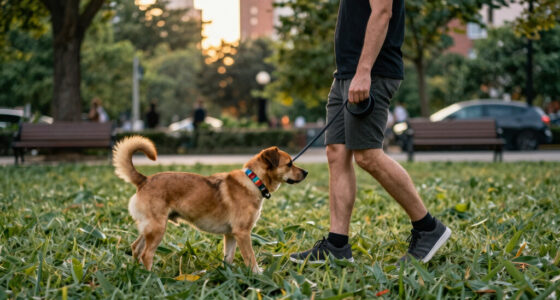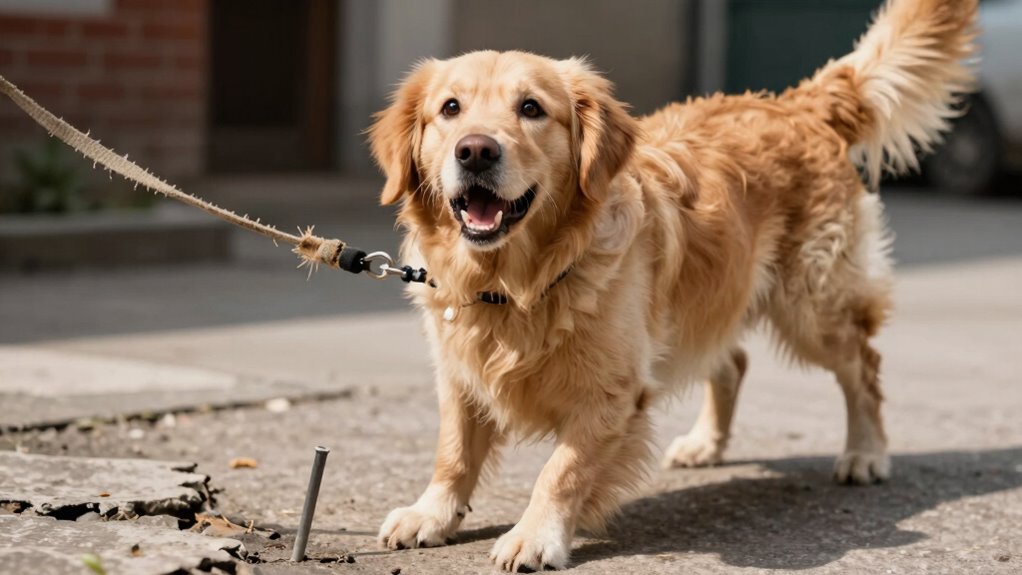
The biggest mistake that makes your dog hit the end of the tie-out too hard is using a line that’s too long or lacks shock absorption. When the leash stretches or has no shock-absorbing features, sudden pulls cause forceful hits, risking injury. Regularly inspecting your equipment and choosing sturdy, shock-absorbing gear helps reduce these impacts. To prevent accidents and keep your dog safe, it’s important to understand these common errors—and there’s more to take into account for a safer outdoor experience.
Key Takeaways
- Using a tie-out length longer than 10-15 feet increases the risk of sudden, forceful impacts when dogs reach the end.
- Ignoring shock absorption features causes dogs to experience harsher pulls, leading to harder hits.
- Failing to regularly inspect and replace worn equipment weakens safety and increases impact severity.
- Not training dogs to respect boundaries results in abrupt pulls and stronger hits at the end of the leash.
- Choosing low-quality or inappropriate gear without impact resistance heightens the risk of injury during sudden pulls.
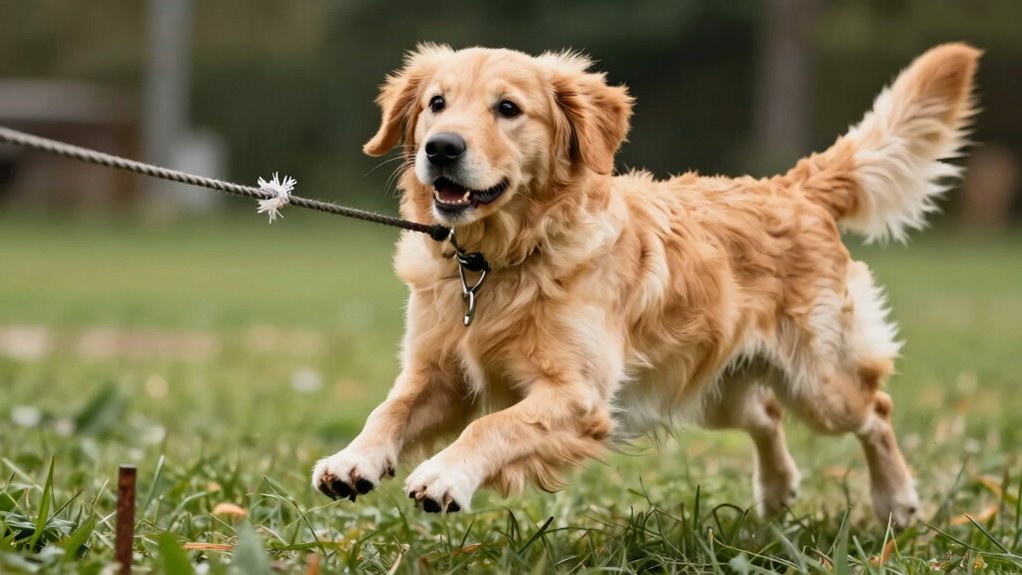
If you’re using a tie-out to keep your dog safe during outdoor time, it’s easy to overlook a common mistake that can lead to painful injuries. Many dog owners assume that simply attaching a leash or tie-out to a stake is enough, but the way you set up and use it can considerably impact your dog’s safety. One of the biggest errors is not considering leash safety and proper dog training when choosing the length and tension of the tie-out. If the line is too long or too loose, your dog has the freedom to run farther than intended, increasing the risk of hitting the end with a jarring force that can cause injuries.
You need to think about the durability of the tie-out and how it reacts when your dog pulls or suddenly lunges. A common mistake is assuming the tie-out will stretch or give way to absorb shocks. In reality, many tie-outs are designed to hold steady, which means if your dog pulls hard, they hit the end with enough force to hurt themselves or damage the equipment. Proper leash safety involves selecting a tie-out with a suitable length—usually no longer than 10 to 15 feet—and ensuring it has some shock absorption features or using a bungee-style leash. This helps reduce the impact when your dog reaches the end, preventing sudden jerks that can strain their neck or cause joint injuries. Additionally, understanding impact forces and how they affect your dog’s safety is crucial in choosing the right equipment. Regularly inspecting the equipment can also help catch potential hazards before they lead to accidents. Using high-quality, durable materials can further enhance safety and longevity of the setup. It’s also beneficial to educate yourself about safety standards for outdoor equipment to make more informed choices.
Dog training plays an essential role in preventing these accidents. If your dog isn’t trained to understand boundaries, they’re more likely to pull aggressively and hit the end of the tie-out forcefully. Teaching commands like “heel” or “stay” helps your dog learn patience and control, reducing the chances of abrupt pulls. It’s also important to supervise outdoor time and gradually introduce your dog to the tie-out, reinforcing calm behavior near the boundary. Proper training also involves boundary training, which helps your dog respect limits and reduces the likelihood of sudden, forceful pulls.
Another mistake owners make is not regularly inspecting the tie-out and stake. Wear and tear can weaken the equipment, increasing the chance of breakage or sudden failure. Check for frayed lines, rusted stakes, or worn attachments that could unexpectedly give way when your dog pulls hard. Upgrading to a heavy-duty tie-out and stake can make a big difference in safety. Taking these precautions ensures your dog remains safe and minimizes the risk of injuries caused by equipment failure. Remember, staying proactive with inspections and maintenance is key to avoiding preventable accidents.
dog shock-absorbing tie-out leash
As an affiliate, we earn on qualifying purchases.
As an affiliate, we earn on qualifying purchases.
Frequently Asked Questions
How Can I Prevent My Dog From Pulling the Tie-Out Taut?
To prevent your dog from pulling the tie-out taut, choose appropriate collar types like harnesses or head collars that give you better control. Use effective training techniques, such as teaching your dog to walk calmly on a loose leash and rewarding good behavior. Consistently reinforce these habits, and avoid jerking on the leash, which can encourage pulling. Patience and positive reinforcement will help your dog learn to stay relaxed and prevent the tie-out from becoming taut.
What Are Signs My Dog Is Overexerted on a Tie-Out?
Like Icarus flying too close to the sun, your dog may show signs of overexertion on a tie-out. Watch for excessive panting, drooling, or lagging behind—these indicate the need for leash training adjustments and exercise limits. If your dog struggles to walk or shows reluctance, it’s time to pause and reassess the activity. Recognizing these signals helps prevent exhaustion and keeps your pup safe and happy during outdoor adventures.
Are There Safer Alternatives to Traditional Tie-Outs?
Yes, there are safer options than traditional tie-outs. You can try leash training your dog, which gives you control and prevents sudden pulls or injuries. Installing a secure fencing around your yard is another great alternative, offering your dog freedom to roam safely without the risk of hitting the end too hard. Both options help keep your dog safe and comfortable while giving them outdoor time.
How Do Weather Conditions Affect Tie-Out Safety?
You might think tie-outs are safe year-round, but weather hazards and seasonal risks change that. Rain can cause slippery surfaces, increasing your dog’s risk of slipping or getting tangled. Hot weather risks overheating, while cold can lead to hypothermia or frostbite. Wind or storms can break or dislodge tie-outs. Always monitor weather conditions and adapt your dog’s outdoor safety plan accordingly to prevent accidents and ensure their well-being.
Can Specific Dog Breeds Be More Prone to This Mistake?
Yes, certain breeds are more prone to this mistake due to breed-specific behaviors and genetic predispositions. For example, high-energy breeds like Border Collies or Siberian Huskies may be more likely to run to the end of a tie-out because of their instinctual drive to explore or chase. Understanding these traits helps you choose safer tie-out setups and monitor your dog more closely, preventing injuries caused by hitting the end too hard.
10-15 ft dog tie-out with impact absorption
As an affiliate, we earn on qualifying purchases.
As an affiliate, we earn on qualifying purchases.
Conclusion
By avoiding the common mistake of tying your dog too tightly or at the wrong point, you prevent those harsh, painful stops that can jar their joints and spirits. Think of your leash as a gentle guiding hand rather than a tightrope—giving your pup room to explore without hurting themselves. When you adjust your tie-out properly, you’re not just protecting your dog’s body but also strengthening the trust and bond you share. It’s a simple fix that makes all the difference.
As an affiliate, we earn on qualifying purchases.
As an affiliate, we earn on qualifying purchases.