TL;DR
Dog Christmas stocking stuffers can include suitable treats, toys, grooming supplies, and walk accessories. Choose each item for your dog’s size, age, chewing habits, and diet, and keep hazardous foods, ribbons, tinsel, and small parts out of reach.
A stocking may look harmless, but a tiny chew or loose ribbon can turn a merry morning into a scramble to the vet. The safest dog Christmas stocking stuffers are picked for the dog who will use them, not just because they fit beside the candy canes.

Get pet supplies delivered free with Prime
- Fast, free delivery on millions of items
- Prime Video, Amazon Music and more included
- Member-only deals all year
You can build a stocking that feels generous without filling it with snacks. Think one treat your dog can eat, one toy suited to their mouth and play style, and a useful extra for walks or grooming. For example, a senior dog who likes sniffing may enjoy a small puzzle toy more than a bouncy ball.
This guide covers what gifts that fit a stocking can offer, how to choose them safely, and which holiday foods and decorations to keep away from your dog. You’ll also get practical ideas for puppies, older dogs, and dogs with food sensitivities.
Choose treats by checking ingredients, serving guidance, and calories; ask your veterinarian before offering unfamiliar foods if your dog has allergies or heal…
Select toys and chews for your dog’s size and chewing strength, inspect them for damage, and supervise first use.
Keep chocolate, xylitol, grapes, raisins, macadamia nuts, ribbons, tinsel, and small ornaments away from your dog.
Balance edible gifts with practical extras such as waste bags, a dog-safe brush, or a travel bowl.
Make the stocking personal: a puppy, a senior dog, and a heavy chewer may each need a different kind of surprise.
What Belongs in a Dog’s Christmas Stocking?
Dog Christmas stocking stuffers are small presents that fit in a holiday stocking, such as treats, toys, grooming items, and practical accessories. The best picks match your dog’s size, age, chewing habits, and diet because those details affect both whether the gift is safe and whether your dog will enjoy it. A few well-chosen items can feel more special than a stocking packed with things your dog cannot safely use.
Imagine opening stockings after breakfast: your terrier noses out a dog-safe biscuit, while your older spaniel gets a soft bandana and a treat-dispensing toy. Each gift has a clear purpose. Stuffers are small, but they still need a label check and a quick look for loose parts, sharp edges, or damage. Small size can make an item easier to tuck away, but it can also make some objects easier for a dog to swallow.
A useful mix might include one edible gift, one play or enrichment item, and one practical extra. Try dog biscuits, a small snuffle mat, and a roll of waste bags. If your dog has allergies or a restricted diet, ask your veterinarian before offering unfamiliar ingredients; a pretty package does not tell you whether a snack suits your dog. For a dog with food limits, a non-food gift may add variety without making the diet harder to manage.
Think of the stocking like a tiny care package. It can deliver fun, comfort, and something useful for your next walk. The point is to make your dog’s day brighter while keeping each item appropriate for the dog who will sniff, chew, lick, or carry it. Choosing fewer gifts can also make it easier to supervise each new item and notice how your dog responds.
Products Worth Considering

PETLIBRO Luma Smart Self-Cleaning Open-Top Litter Box with AI Camera

Roborock Qrevo S5V Robot Vacuum and Mop

Roborock Qrevo Edge 2 Robot Vacuum and Mop, 25,000 Pa, 3.14-Inch Ultra-Slim
As an affiliate, we earn on qualifying purchases.
Choose Treats That Match Your Dog’s Diet
The best edible stocking gifts are treats with ingredients and serving guidance that fit your dog’s diet. Check the ingredient list, calorie information, and recommended serving size before you buy. A treat can be small enough for a stocking and still be the wrong choice for a dog with allergies or a medical diet. The label helps you judge what you are offering, while serving guidance helps keep a festive extra from quietly becoming a large part of the day’s food.
For example, if your dog already eats a limited-ingredient food, a mixed-flavor holiday biscuit assortment may add ingredients you cannot easily identify. A simple, familiar treat can be a safer pick. If you want to try something new, ask your veterinarian first, especially if your dog has a health condition, food allergy, or sensitive stomach. Introducing several new snacks at once can make it harder to tell which one caused a reaction or stomach upset, so a single new item is easier to monitor.
Holiday treats add up quickly: a biscuit at breakfast, a chew from a relative, and a taste from the dinner table can become a lot of extras in one day. Keep treats a modest part of your dog’s daily intake and follow the package guidance. If your dog has a specific calorie or diet plan, your veterinarian can advise how treats fit it. Letting family members know which treats are allowed can help keep the total predictable without taking the fun out of sharing the occasion.
Keep human holiday foods out of the stocking. Chocolate, xylitol (also called birch sugar), grapes, raisins, and macadamia nuts can be dangerous to dogs. Put a dog-safe biscuit in the stocking instead of a chocolate coin, and store all sweets where curious noses cannot reach them. A sealed wrapper is not a safety measure if a dog can chew through it, so storage matters as much as what goes into the stocking.
“A festive wrapper does not make a food safe for your dog. Read the ingredients before the first bite.”
Pick Toys and Chews Your Dog Can Use Safely
A safe stocking toy is too large to swallow, suited to your dog’s chewing strength, and free of parts that can break off. Check the label and inspect the toy before giving it to your dog. If your dog chews hard, a small plush ornament-shaped toy may not last through the morning. A good match should hold up to the way your dog actually plays, though no toy is indestructible and regular checks still matter.
Picture a powerful chewer working at a toy while the family takes photos. A seam splits, stuffing comes loose, and the game changes from play to a swallowing risk. Supervise your dog with a new toy or chew, especially if they tend to shred, gulp, or break objects. Remove items that become damaged. Watching the first session can show whether a toy invites gentle play or prompts your dog to tear it apart, which helps you decide if it belongs in the rotation.
Match the toy to the dog in front of you. A puppy may need a softer, age-appropriate toy; a small dog may need a size it can grip without swallowing; a senior dog may prefer gentle enrichment over vigorous tugging. Think of toy size like choosing a ball for a game: too small can be hard to handle safely, while the right fit makes play easier. Age and size are useful starting points, but an individual dog’s habits and comfort should guide the final choice.
Useful ideas include a small fetch toy, a puzzle toy, a snuffle mat, or a treat-dispensing toy. Each offers a different kind of activity: fetch encourages movement, while sniffing and puzzles can occupy a dog with less running. Avoid leaving your dog alone with an unfamiliar toy or chew until you know how they use it. A toy that works beautifully for a gentle retriever may be a poor match for a dog who chews with the force of a garden shredder.
Build a Stocking That Suits Puppies, Seniors, and Small Dogs
The right stocking gift depends on your dog’s age, body size, comfort, and play habits. Puppies, seniors, and small dogs can all enjoy a festive surprise, but the same toy or chew may not suit every one of them. Choose for the dog’s current needs rather than the label’s holiday design, since a cute shape or age category cannot capture every dog’s chewing style or mobility.
For a puppy, consider a softer age-appropriate toy and supervise play while they explore it. Puppies may investigate by chewing, so early supervision helps you see whether a toy stays intact and fits their mouth. For an older dog with sore joints or worn teeth, a gentle sniffing game or a soft accessory may be more appealing than a hard chew. A small dog may enjoy a compact travel bowl, but the bowl still needs to be sturdy and easy for that dog to use. A gift that is manageable and comfortable can get more use than a more exciting item that is awkward to carry or play with.
Try this simple selection process before you buy:
- Start with your dog: Note their size, age, chewing style, diet, and favorite activities.
- Check the item: Read labels, look for small parts or damage, and confirm it is made for dogs.
- Plan the first use: Supervise new toys and chews, and ask your veterinarian about unfamiliar foods when health or diet needs apply.
This order connects the gift to the dog first, then checks whether the item is suitable, and finally considers how to introduce it. For instance, a small senior dog who no longer chases balls might get more joy from a soft bandana and a simple treat puzzle. The thoughtful gift is the one your dog can comfortably enjoy, even if it looks less flashy in the stocking.
Mix Fun Gifts With Useful Extras
A balanced dog stocking pairs something fun with something your dog can use in everyday life. Alongside a toy or treat, add a brush, washable bandana, waste-bag rolls, collapsible travel bowl, or clip-on light for walks. These useful gifts make the stocking feel full without relying on a pile of snacks, and they can keep serving a purpose after the holiday excitement fades.
Take a rainy December walk: your dog trots through wet leaves, comes home with muddy paws, and you reach for a dog-safe paw-care product or brush. That small stocking extra earns its place long after the wrapping paper is gone. Check that grooming and skin-care products are made for dogs, and ask your veterinarian about products if your dog has skin concerns. Practicality has a tradeoff too: an accessory is only useful if it fits your routine and your dog tolerates it.
Comfort gifts can be just as personal. A familiar-texture bandana may suit a dog who tolerates clothing, while a cozy accessory may be a poor choice for a dog who chews fabric. Watch how your dog responds. If they immediately pull at a ribbon or chew a cloth item, put it away. A gift that stays in a drawer because your dog dislikes wearing it adds little value, while a simple walk accessory may be used every day.
Some shoppers look for personalized presents, treat boxes, or products marketed as sustainable. Recycled materials, durable construction, and refillable packaging can be useful details, but broad “eco-friendly” language does not prove an item is safe or suitable. Choose based on the material, construction, and fit for your dog. A sturdy travel bowl you use each week can be a better gift than a novelty item that gets chewed once and discarded. The useful choice balances how long an item lasts with whether it actually suits your dog’s habits.
Keep Holiday Decorations and Wrappers Out of Reach
Keep ribbons, tinsel, small ornaments, and packaging away from your dog because they can be chewed or swallowed. A stocking can tempt a curious dog with crinkly paper and dangling strings, so take gifts out yourself and clear away the scraps before play begins. The challenge is that objects meant to decorate or wrap presents can look like toys to a dog, especially when they move or make noise.
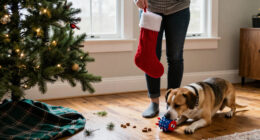
Consider a familiar Christmas morning scene: tissue paper flutters across the floor, a ribbon trails from a gift, and the dog races over to investigate. That bright, swishing strip can look like a toy. Store wrapping supplies and decorations where your dog cannot reach them, and supervise while the stocking is opened. A little planning keeps the dog included in the celebration while reducing the chance that a wrapper becomes an unsupervised chew.
Food needs the same attention. Do not put chocolate or other hazardous human foods in a dog’s stocking, and keep them off low tables and under the tree. If you are unsure whether an ingredient is safe, leave it out and ask your veterinarian. With food gifts, use products intended for dogs and check their labels. Keeping people’s sweets and the dog’s treats in separate places also makes it easier for guests to know which food they can offer.
Make the opening routine simple: put the dog in a comfortable spot, hand over one gift at a time, and collect the packaging as you go. If your dog fixates on the ribbon, trade their attention for a suitable toy. A tidy floor and a few minutes of supervision help keep the holiday excitement focused on safe play. The routine also gives you a chance to notice whether your dog is chewing a gift too forcefully before a small problem escalates.
Frequently Asked Questions
What can I put in my dog’s Christmas stocking?
Try a dog-safe treat, a toy suited to your dog’s size and chewing style, or a practical extra such as waste bags or a collapsible bowl. Check ingredients and inspect toys for loose parts or damage before use.
Which stocking stuffers are suitable for puppies or senior dogs?
Choose soft, age-appropriate toys for puppies and gentle enrichment or comfort items for seniors. Consider your dog’s teeth, mobility, size, and habits, and supervise new toys or chews.
What treats work for dogs with allergies or sensitive stomachs?
Read ingredient labels and stick with foods that fit your dog’s known diet. Ask your veterinarian before introducing unfamiliar ingredients if your dog has allergies, a medical condition, or a restricted diet.
Can I leave my dog alone with a new toy or chew?
Supervise your dog with new toys and chews, especially if they are a strong chewer or tend to swallow pieces. Check the item for damage and remove it if parts come loose or it breaks.
Which holiday foods and decorations are dangerous to dogs?
Keep chocolate, xylitol (also called birch sugar), grapes, raisins, and macadamia nuts away from dogs. Ribbons, tinsel, small ornaments, and packaging can also pose a swallowing risk, so clear them from the floor and keep them out of reach.
How can I make a dog’s stocking special without adding lots of treats?
Pair one suitable treat with a puzzle toy and a useful item such as a bandana, brush, travel bowl, or clip-on walk light. A gift that supports your dog’s favorite activity can feel personal without adding many snacks.
Conclusion
Choose each stocking gift for the dog who will actually use it: check the label, match the size and material to your dog, and supervise new toys or chews. A familiar treat, a suitable puzzle, and one useful walk accessory can make a small stocking feel wonderfully personal.
When the paper is cleared and the room smells of pine and biscuits, the best gift is the one your dog can enjoy safely beside you.