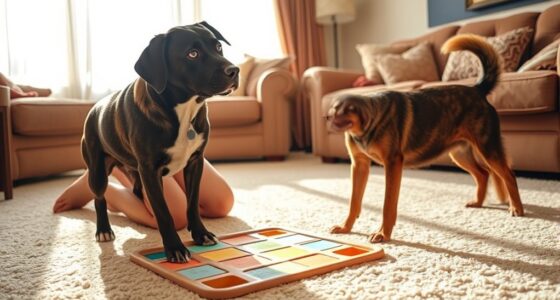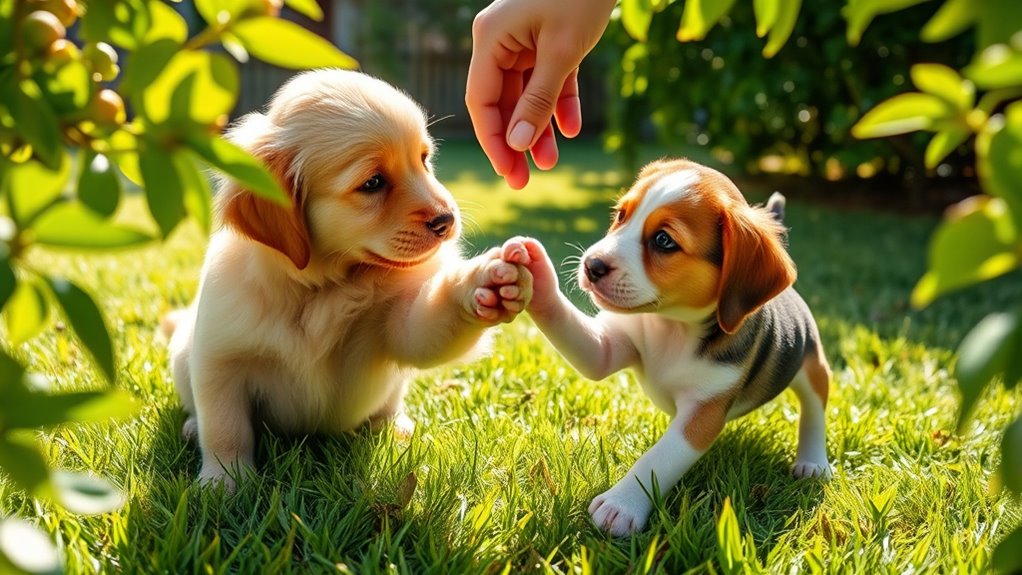

To curb aggressive play in your puppy, start by socializing them early with various people, sights, and sounds to build confidence and reduce fear. Be consistent with commands like “gentle” and reward positive behavior immediately. Redirect biting or rough play to toys and calmly interrupt unwanted actions. Proper redirection and socialization teach your puppy acceptable ways to play and interact. Keep exploring these strategies to help your puppy grow into a well-behaved, confident dog.
Key Takeaways
- Socialize puppies early with gentle interactions to prevent fear or overexcitement that can lead to aggression.
- Maintain consistent training using commands like “gentle” and “leave it,” reinforcing positive behavior immediately.
- Redirect biting or rough play to appropriate toys, and respond calmly to undesirable behaviors without harsh punishment.
- Understand that puppies test boundaries; respond promptly and calmly to teach acceptable play behaviors.
- Incorporate advanced socialization techniques to build confidence and reduce fear-based aggression as puppies mature.

Puppies often explore their world through play, but sometimes that play can turn aggressive, leading to unwanted behaviors. When your puppy nips, bites, or shows roughhousing tendencies, it’s essential to address these behaviors early on. One of the most effective ways to do this is through proper socialization techniques. Socialization helps your puppy learn how to interact appropriately with other dogs, people, and their environment. Expose your puppy to different situations, sights, sounds, and gentle interactions with other well-behaved dogs. This exposure teaches them that not every interaction has to be rough or aggressive and helps reduce fear or overexcitement that can trigger aggressive play.
Alongside socialization, maintaining training consistency is vital. Puppies thrive on routine and knowing what to expect. Consistently reinforcing commands like “gentle,” “leave it,” and “no” helps your puppy understand what behaviors are acceptable. When you’re consistent with your responses, your puppy quickly learns boundaries. For example, if your puppy nips during play, calmly say “no” and redirect their attention to a toy. Be sure to reward good behavior immediately, reinforcing positive actions with praise or treats. Consistency also means everyone in your household should follow the same rules and training methods. Mixed signals from different family members can confuse your puppy and undermine your efforts.
It’s important to recognize that puppies often test boundaries as part of their learning process. When they bite or growl during play, it’s usually not out of malice but curiosity and a desire to learn what’s acceptable. Respond to these behaviors promptly, but avoid harsh punishment, which can escalate aggression. Instead, calmly interrupt the behavior and redirect their focus. For example, if they start biting your hands, offer a chew toy instead. Over time, this teaches them that biting humans isn’t acceptable, but chewing toys is encouraged. Additionally, incorporating advanced socialization techniques can further help your puppy develop balanced behavior, especially as they grow and encounter more complex scenarios.
Frequently Asked Questions
How Can I Tell if My Puppy’s Aggression Is Normal Behavior?
You can tell if your puppy’s aggression is normal by observing their play behavior and looking for signs of normalcy. Play aggression usually involves lively, controlled interactions with wagging tails and relaxed body language. If your puppy’s aggressive play includes biting, growling, or snapping that seems excessive or causes concern, it’s worth monitoring closely. Generally, normal play aggression is energetic but not harmful, and your puppy will respond well to gentle corrections.
Are There Specific Breeds More Prone to Aggressive Play?
You notice a small, energetic dog with a confident stance, and it’s true—some breeds are more prone to aggressive play due to breed tendencies and genetic predispositions. For example, terriers and German Shepherds often exhibit more assertive behavior. Recognizing these tendencies helps you manage playtime better. While breed background influences behavior, consistent training and socialization remain key to ensuring your puppy plays safely and happily.
What Household Items Should I Avoid Using During Playtime?
During playtime, avoid household hazards like sharp objects, electrical cords, and small items that your puppy might swallow. Stick to safe toys designed for puppies, such as rubber chew toys or soft plushies, to prevent choking or injury. Always supervise play sessions, and regularly check toys for damage. By choosing safe toys and removing hazards, you create a secure environment that encourages healthy, fun play without risks.
How Long Does It Typically Take to See Behavior Improvement?
You’ll see behavior improvements in your puppy within a few weeks, but patience is key. Timing expectations vary, depending on the consistency of your training and your puppy’s behavior milestones. Like planting a seed, it takes time and care to grow. Stick to your routine, reinforce positive habits, and stay consistent. Most puppies respond well within a month, but some may take longer. Keep at it, and progress will come.
Can Diet Influence a Puppy’s Aggressive Tendencies?
Yes, diet can influence a puppy’s aggressive tendencies. Proper puppy nutrition guarantees they get essential nutrients that support healthy brain development and behavior. Avoiding overly processed foods and including dietary supplements like omega-3 fatty acids may help reduce aggression. You should consult your vet to tailor a diet plan that promotes calmness and balanced behavior, emphasizing high-quality food and appropriate supplements for your puppy’s unique needs.
Conclusion
By consistently applying these strategies, you’re shaping your puppy’s behavior for a calmer future. But remember, the journey isn’t over—stay vigilant and attentive to subtle changes. One unexpected slip could reignite those rough tendencies, challenging your patience and resolve. Will your steady guidance be enough to prevent setbacks? The next step depends on your commitment today. Keep watch, stay firm, and trust that your dedication will determine whether peace or chaos ultimately prevails.