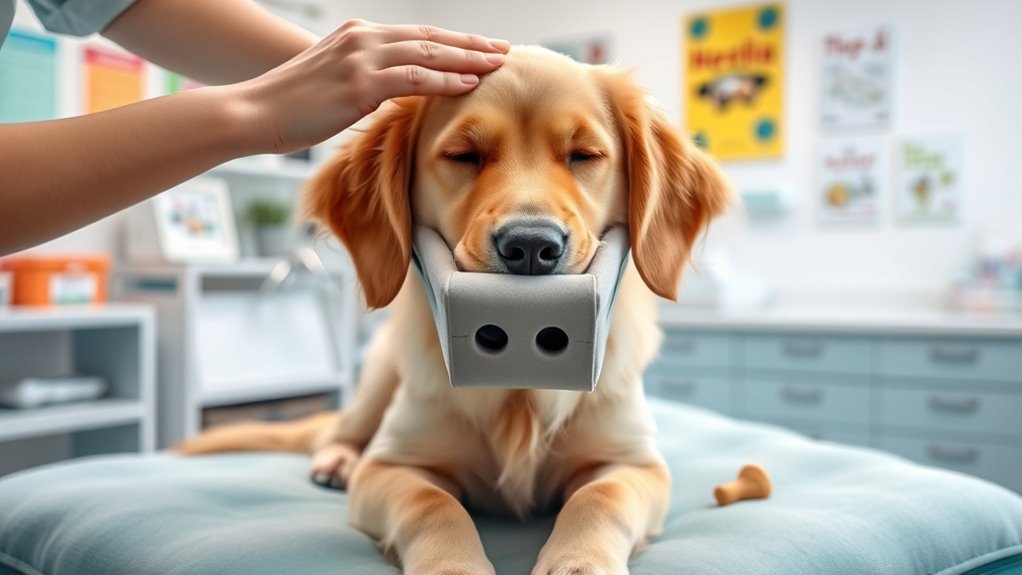

To condition your dog for vet visits, gradually expose them to the clinic environment using pictures, sounds, and scents first, rewarding calm behavior with treats and praise. Practice at home by simulating vet exams with gentle handling and positive reinforcement. When visiting the vet, bring familiar toys and treats, and ask staff to participate in rewarding your dog. Using cues like “relax” can help manage stress. Continue these steps to create lasting positive associations and help your dog stay calm during appointments.

Get pet supplies delivered free with Prime
- Fast, free delivery on millions of items
- Prime Video, Amazon Music and more included
- Member-only deals all year
Key Takeaways
- Gradually expose dogs to clinic sights, sounds, and smells using pictures, recordings, and scent samples to reduce fear.
- Use positive reinforcement like treats and praise to reward calm behavior during exposure and handling.
- Practice simulated vet exams at home by gently touching ears, paws, and mouth, pairing with rewards to promote calmness.
- Bring familiar treats and toys to actual vet visits; encourage staff to use positive reinforcement during exams.
- Establish and train a consistent cue, such as “easy” or “relax,” to help dogs self-regulate during stressful vet procedures.

Preparing your dog for vet visits can make the experience less stressful for both of you. One of the most effective ways to do this is through behavior modification techniques that focus on creating positive associations with the veterinary environment. Start by gradually introducing your dog to the sights, sounds, and smells of the clinic. You don’t need to take them inside right away; instead, expose them to pictures, recordings of vet noises, and even the scent of the clinic’s products or equipment. This helps desensitize your dog to stimuli they might find intimidating or unfamiliar.
Positive reinforcement is the cornerstone of successful behavior modification. Every time your dog remains calm in the presence of new stimuli or during simulated vet scenarios, reward them with treats, praise, or play. Use high-value treats that your dog finds irresistible to strengthen their positive associations. When your dog exhibits calm behavior, immediately reward them. Over time, they’ll learn that remaining relaxed during vet visits leads to good things, making future visits less stressful.
Reward calm behavior with treats and praise to reinforce positive associations during vet visits.
Consistency is key. Practice these exercises regularly, ideally in short sessions to avoid overwhelming your dog. For example, you might simulate a vet exam at home by gently touching your dog’s ears, paws, and mouth, then rewarding calm behavior. Gradually increase the level of interaction, always pairing it with positive reinforcement. When you do take your dog to the actual vet, bring familiar treats and their favorite toy to help create a positive environment. Encourage the staff to participate in this process by offering treats and praise when your dog remains calm.
Another effective strategy is to use a cue or command that signals calm behavior, such as “easy” or “relax.” Use this consistently during training and at the vet, so your dog learns to associate the word with staying calm. Over time, this cue can help them self-regulate during stressful moments.
dog calming treats for vet visits
As an affiliate, we earn on qualifying purchases.
As an affiliate, we earn on qualifying purchases.
Frequently Asked Questions
How Early Should I Start Conditioning My Puppy for Vet Visits?
You should start conditioning your puppy for vet visits as early as 3 to 4 weeks old. Focus on early socialization by exposing them gently to different sights, sounds, and handling. Use positive reinforcement, like treats and praise, to make vet visits a positive experience. Consistently practicing these steps helps your puppy feel relaxed and confident at the vet, making future visits easier and less stressful.
What Are Signs My Dog Is Stressed During Vet Visits?
Think of your dog as a ship steering through rough seas; signs of stress can include whining, trembling, growling, or trying to escape. You’ll notice behavioral signs like lip licking, yawning, or avoiding eye contact. When you see these, use calming techniques such as gentle petting or soothing voice. Recognizing these signals helps you support your dog, easing their anxiety and making vet visits smoother and less frightening.
Can Conditioning Reduce the Need for Sedation During Procedures?
Yes, conditioning can reduce the need for sedation during procedures. Through fear reduction techniques and behavior modification, you help your dog become more comfortable and relaxed in vet settings. Consistent positive reinforcement, gradual exposure, and desensitization help your dog associate vet visits with good experiences. Over time, this builds confidence, decreases anxiety, and can make procedures smoother, often reducing or eliminating the need for sedation.
How Often Should I Practice Vet Visit Simulations at Home?
You should practice vet visit simulations a few times a week, gradually increasing the frequency based on your dog’s comfort level. Use desensitization techniques to introduce new stimuli calmly, and always incorporate positive reinforcement to reward calm behavior. Keep sessions short and positive, making each experience enjoyable. Consistent practice helps your dog stay relaxed during real vet visits, reducing stress and making procedures smoother for both of you.
Are There Specific Breeds That Respond Better to Conditioning?
Some breeds, like Labrador Retrievers, respond better to conditioning because of their friendly temperament and lower breed sensitivities. Imagine a sponge that absorbs your training efforts easily; these breeds tend to soak up positive experiences quickly. Conversely, breeds with heightened sensitivities or anxiety, like Chihuahuas, may need gentler, more gradual approaches. Understanding your dog’s temperament helps tailor your conditioning, making vet visits less stressful for both of you.
dog desensitization training kit
As an affiliate, we earn on qualifying purchases.
As an affiliate, we earn on qualifying purchases.
Conclusion
By regularly conditioning your dog for vet visits, you help reduce their anxiety and make each appointment smoother. Remember, consistency is key—start early and use positive reinforcement. Did you know that 80% of dogs experience some level of fear during vet visits? By gradually desensitizing your pet, you not only improve their well-being but also make future check-ups quicker and less stressful for both of you. Keep up the good work—your calm approach makes all the difference.
vet visit preparation toys for dogs
As an affiliate, we earn on qualifying purchases.
As an affiliate, we earn on qualifying purchases.
positive reinforcement dog training tools
As an affiliate, we earn on qualifying purchases.
As an affiliate, we earn on qualifying purchases.
Halloween Picks
halloween
As an affiliate, we earn on qualifying purchases.