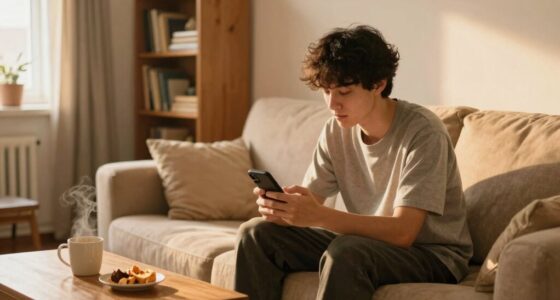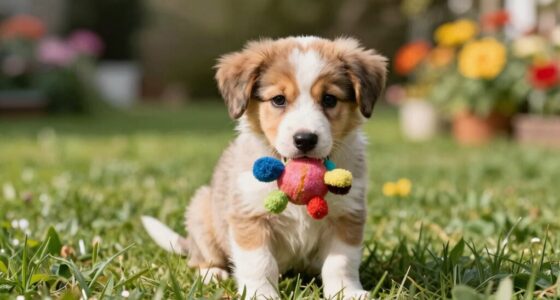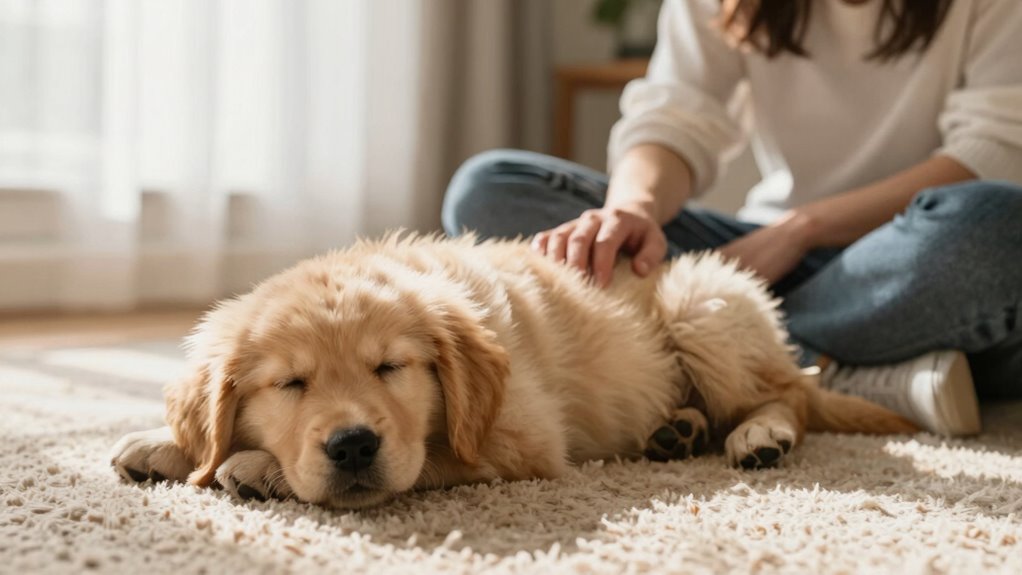
To teach your puppy to relax without constant treats, establish a calm routine and use positive reinforcement for relaxed behaviors. Encourage your puppy to settle calmly in their crate or designated space by pairing it with soft bedding and comfort items. Reinforce calmness with gentle praise and soothing voice cues, reinforcing that relaxation isn’t tied to food. Consistency and patience are key—keep practicing, and you’ll discover more effective ways to help your puppy stay peaceful.

Get pet supplies delivered free — and shop member deals
- Fast, free delivery on millions of items
- Access to Prime Big Deal Days deals on October 6–7
- Prime Video, Amazon Music and more included
Key Takeaways
- Use calm, gentle voice cues and body language to reinforce relaxation instead of relying solely on treats.
- Practice routine and structure to create predictability, helping the puppy feel secure and relaxed.
- Incorporate crate training as a calming retreat to foster relaxation without treats.
- Redirect excited behaviors to calm activities and reward calmness with praise, not treats.
- Gradually reduce treat dependence by pairing positive reinforcement with verbal praise and petting.
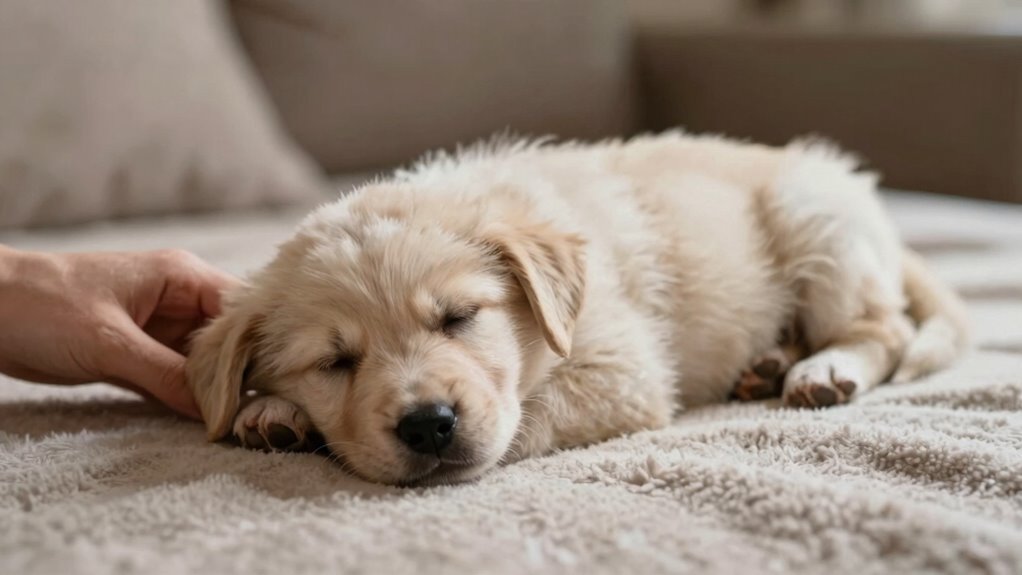
Teaching your puppy to relax can be a game-changer for both of you, especially during stressful situations. It’s essential to create an environment where your puppy feels safe and calm, which starts with good puppy socialization. When you expose your pup gradually to different people, animals, and environments, you help build their confidence and reduce anxiety. Positive interactions during puppy socialization teach them that new experiences aren’t threats, making it easier for them to settle down when things get overwhelming. Remember, these socialization sessions should be calm and controlled, always ending on a positive note, so your puppy associates new experiences with comfort, not stress. Incorporating tech tips can also help you monitor and manage your puppy’s environment more effectively, promoting relaxation. Crate training plays a vital role in teaching your puppy to relax without constant treats. The crate isn’t a punishment but a cozy refuge where your puppy can unwind. Start by introducing the crate as a welcoming space—place soft bedding inside, and encourage your pup to explore it with treats or toys, but don’t force them in. Once they’re comfortable, leave the door open and allow them to enter and exit freely, gradually increasing the time they spend inside. This helps your puppy associate the crate with calmness and security, making it easier for them to relax when you need them to. This process also supports stress reduction, which is crucial for developing a confident and relaxed puppy. Additionally, ensuring a consistent routine can further ease anxiety and help your puppy feel more secure in their environment. Incorporating a structured daily schedule can reinforce predictability, further reducing stress and fostering relaxation. Over time, you can use the crate during stressful moments, such as thunderstorms or visits to the vet, to help your puppy self-soothe without relying on treats. Building relaxation skills also involves practicing calm behaviors in everyday situations. When your puppy begins to get excited or anxious, gently redirect their attention to a calm activity, like sitting quietly or lying down. Use your presence and voice to reassure them without over-stimulating. Instead of constant treats, reward your puppy with your calm praise and gentle petting when they settle down. This reinforces that relaxation is desirable behavior, not just a momentary state achieved through food. Consistency is key. Keep socialization, crate training, and calm behavior practices routine. Over time, your puppy will learn that relaxing isn’t just a temporary state but a normal part of life. By creating a secure environment through controlled socialization, positive crate experiences, and calm reinforcement, you help your puppy develop the confidence and tranquility to handle stressful situations without constantly needing treats or your frantic attention. This approach not only promotes a more relaxed puppy but also fosters a stronger, more trusting bond between you both.
As an affiliate, we earn on qualifying purchases.
Frequently Asked Questions
How Long Does It Typically Take for a Puppy to Relax Consistently?
Puppy relaxation varies, but with consistent training, you might see progress in a few weeks. Typically, it takes about 2-4 weeks of daily practice to establish steady relaxation habits. Your role in training consistency is vital—you must remain patient and persistent. As you reinforce calm behavior, your puppy gradually learns to relax on cue, leading to more peaceful moments together and a strong foundation for future training.
Can Relaxing Training Work for All Puppy Breeds Equally?
Research shows that breed differences considerably impact relaxation training effectiveness, with some breeds more naturally calm than others. While training consistency is key across all puppies, certain breeds may require tailored approaches to achieve relaxation. For example, high-energy breeds might need more mental and physical stimulation before settling. So, while relaxation training can work for all breeds, customizing your methods ensures better results, regardless of your puppy’s breed.
What if My Puppy Becomes More Anxious Without Treats?
If your puppy becomes more anxious without treats, it’s likely due to treat dependence, which can heighten their anxiety when treats aren’t available. To manage this, focus on anxiety management techniques like gentle reassurance, calming sounds, and creating a predictable environment. Gradually reduce treats while reinforcing calm behavior with praise or petting, helping your puppy feel secure without relying solely on treats. This builds confidence and eases anxiety over time.
Are There Any Signs My Puppy Is Ready to Relax Without Assistance?
You’ll notice your puppy is ready to relax when their body language shows calmness—soft eyes, relaxed ears, and a loose body. Look for relaxation cues like yawning, stretching, or lying down comfortably. If your puppy naturally adopts these signs without your prompting, it indicates they’re beginning to self-soothe. Celebrate these moments, as they show your puppy is learning to relax independently, fostering confidence and reducing anxiety over time.
How Do I Handle Setbacks During Relaxation Training?
When setbacks happen during relaxation training, stay patient and avoid frustration. Use treat alternatives like praise, gentle petting, or toys to reinforce calm behavior, and keep your patience strategies consistent. Remind yourself that progress takes time, and setbacks are normal. Gently guide your puppy back to relaxing, offering encouragement and calm energy. This approach helps build trust and gradually improves your puppy’s ability to relax without constant treats.
positive reinforcement puppy training tools
As an affiliate, we earn on qualifying purchases.
As an affiliate, we earn on qualifying purchases.
Conclusion
Teaching your puppy to relax without constant treats can foster calmness and strengthen your bond. Remember, patience is key—use calming techniques consistently, and your pup will learn to settle naturally. An interesting fact: studies show that puppies trained with gentle, reward-based methods are 50% more likely to develop better self-control and emotional resilience. By avoiding over-reliance on treats, you’re setting your puppy up for a lifetime of relaxed, confident behavior.
puppy soft bedding and comfort items
As an affiliate, we earn on qualifying purchases.
As an affiliate, we earn on qualifying purchases.
As an affiliate, we earn on qualifying purchases.
Fall Picks
fall essentials
As an affiliate, we earn on qualifying purchases.