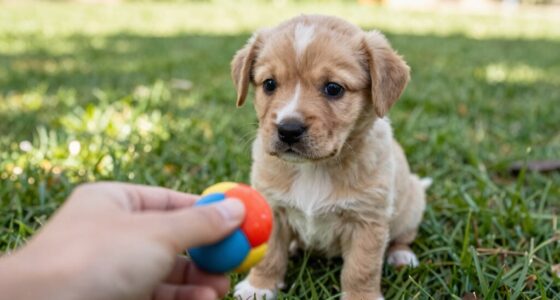

You’ll notice your puppy’s biting worsens during the evening and late at night, especially around the 3-6 month teething stage. This is when teething discomfort, restlessness, and natural nighttime instincts peak, making them more likely to chew and nip. Boredom or anxiety can also play a role if they lack stimulation or safe outlets. Understanding these triggers can help you manage their behavior better—keep going to discover more effective tips.

Get pet supplies delivered free — and shop member deals
- Fast, free delivery on millions of items
- Access to Prime Big Deal Days deals on October 6–7
- Prime Video, Amazon Music and more included
Key Takeaways
- Biting often intensifies in the evening or late at night due to teething discomfort and natural restlessness.
- Puppies are more prone to biting during these hours when they are tired, overwhelmed, or seeking self-soothing.
- Lack of daytime mental and physical stimulation can lead to increased biting episodes at night.
- Biting peaks when puppies experience limited outlets for chewing and self-expression.
- A consistent calming bedtime routine can help reduce nighttime biting tendencies.
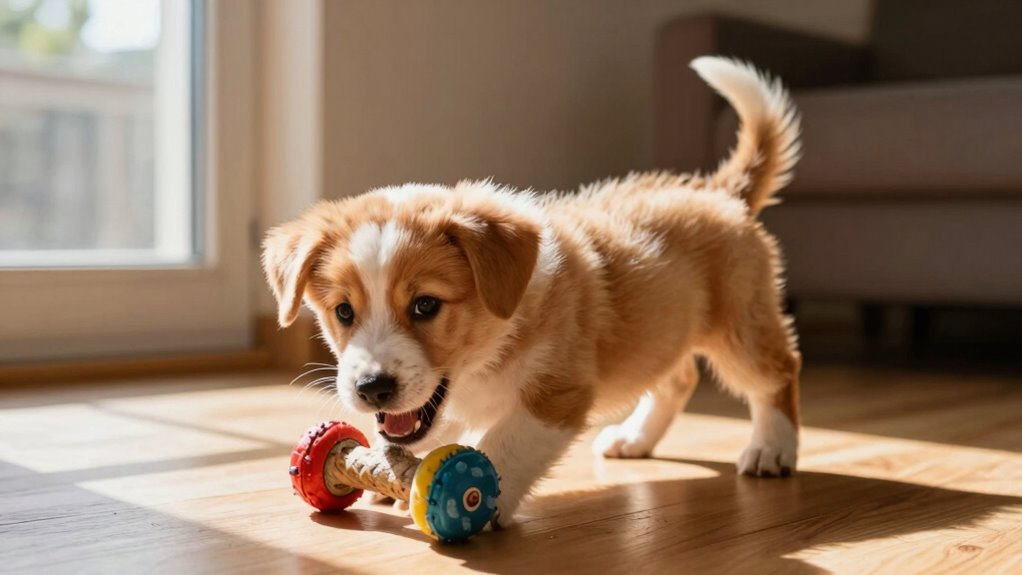
Many puppy owners notice that their little bundles of energy tend to bite more aggressively at a specific time of day, and understanding why can help you manage the behavior. For many puppies, this spike in biting happens during the evening or late at night, and it’s often linked to a combination of puppy teething and their natural nighttime behavior. Recognizing these causes can help you develop strategies to handle the biting and keep both you and your pup comfortable.
Puppy biting often increases in the evening due to teething and nighttime energy.
Puppy teething is a key factor behind increased biting in the evening. When your puppy’s adult teeth start to come in, usually around three to six months of age, they experience discomfort similar to human teething. During this time, your puppy feels the urge to chew and bite more frequently to soothe sore gums. This heightened need to chew can make them more aggressive with their biting, especially when they’re feeling restless or overwhelmed. Since teething is a process that lasts for several months, you’ll notice this behavior recurring at various points, often peaking during the evening hours when your puppy is most tired and restless.
Nighttime behavior also plays a significant role. Puppies tend to be more energetic during the evening because they’re winding down from their daytime activities. As the day ends, they might become more excitable, and their natural instincts to chew and bite can intensify. Plus, puppies often struggle with settling down at night, which leads to increased biting as a form of release or self-soothing. Their limited ability to self-regulate during these hours means they might bite more aggressively when they’re feeling overwhelmed or anxious about being alone or tired.
Additionally, the environment can influence nighttime biting. If your puppy is bored, anxious, or doesn’t have enough mental or physical stimulation during the day, they’ll be more prone to aggressive biting as a way to cope with their pent-up energy. This is especially true if they haven’t been given enough safe outlets for chewing, like toys or chew treats. Many owners find that establishing a calming bedtime routine and providing appropriate chew toys can help reduce nighttime biting and manage their puppy’s teething discomfort.
Furthermore, research shows that consistent routines can significantly reduce anxiety and help puppies settle down more easily at night. In essence, the combination of puppy teething and their natural nighttime behavior creates a perfect storm for increased biting during certain hours. By understanding these factors, you can better anticipate your pup’s needs, offer appropriate teething relief, and create a calming environment that minimizes the biting urge. Patience and consistent training, along with plenty of suitable chew toys, will help your puppy transition through this phase more smoothly.
As an affiliate, we earn on qualifying purchases.
Frequently Asked Questions
Can Puppy Biting Habits Be Influenced by Weather Changes?
Yes, your puppy’s biting habits can be influenced by weather changes. Environmental triggers like seasonal variations can cause your pup to feel more anxious or energetic, leading to increased biting. Hot or cold weather may make them more irritable, while gloomy days might boost their need for comfort through mouthing. Paying attention to these weather patterns helps you understand and manage your puppy’s biting behavior better.
Does Puppy Biting Increase During Specific Moon Phases?
You might notice that puppy biting seems to increase during certain moon phases, though scientific evidence on this behavioral correlation is limited. Some pet owners believe lunar cycles influence their pup’s mood and energy levels, which could lead to more biting. While this isn’t proven, observing your puppy during different moon phases might reveal patterns. Keep monitoring their behavior to better understand if moon phases impact their biting habits.
How Does Puppy Age Affect Biting Intensity at This Time?
You’ll notice that as your puppy ages from 3 to 6 months, their biting intensity often peaks, especially during teething discomfort. Interestingly, during this stage, puppy socialization plays an essential role in managing biting behavior. You might find that older puppies bite less if they’ve had consistent socialization, but teething causes temporary spikes. Be patient and gentle, as this period is critical for their development and your bond.
Are Certain Breeds More Prone to Biting During This Period?
Certain breeds are more prone to biting during this period due to breed tendencies and bite severity. For example, high-energy breeds like German Shepherds or Dobermans may bite more when they’re feeling overstimulated or anxious. Smaller breeds, such as Chihuahuas, might also show increased biting, especially if they’re insecure. Understanding your puppy’s breed tendencies helps you manage and reduce biting, especially during those challenging times.
Can Diet Impact a Puppy’s Biting Behavior at This Time?
Think of your puppy’s biting as a storm, with diet effects acting as the calm before it. Nutritional influence can reduce biting by stabilizing energy levels and soothing irritability. Proper diet provides essential nutrients that help your pup feel balanced and less prone to hyperactivity. When your puppy’s nutritional needs are met, you may notice a decrease in biting, especially during those peak times when their energy surges.
As an affiliate, we earn on qualifying purchases.
Conclusion
So, next time your puppy’s biting peaks, remember it’s like a rollercoaster climbing before the drop—part of their development. Just like a child learning boundaries, your pup needs patience and guidance. One evening, I watched my puppy’s energy spike right before bedtime, biting everything in sight. That’s when I knew it was just a phase. With consistent training, you’ll help them navigate this wild ride and come out calmer on the other side.
As an affiliate, we earn on qualifying purchases.
As an affiliate, we earn on qualifying purchases.
Fall Picks
fall essentials
As an affiliate, we earn on qualifying purchases.