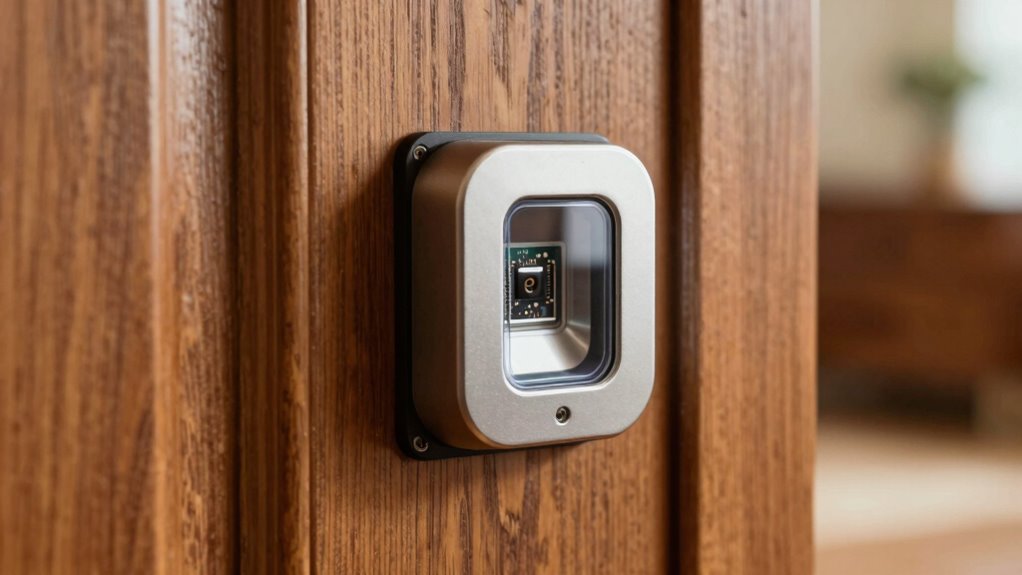

Microchip dog doors work by scanning your pet’s microchip each time it approaches the entry. When your dog’s microchip is detected, the door’s system recognizes it as authorized and open, allowing easy access. If an unregistered animal or stray tries to come through, the door stays locked for them. This smart identification keeps your pet safe and secure, and there’s more to discover about how it all works behind the scenes.
Key Takeaways
- Microchip dog doors scan the pet’s embedded chip to identify authorized pets.
- The door’s microchip reader detects the unique ID stored in the chip.
- Only pets with registered microchip IDs are granted access through the door.
- The system compares the scanned ID to a pre-programmed list of permitted pets.
- Unauthorized animals or stray cats are automatically denied entry or exit.
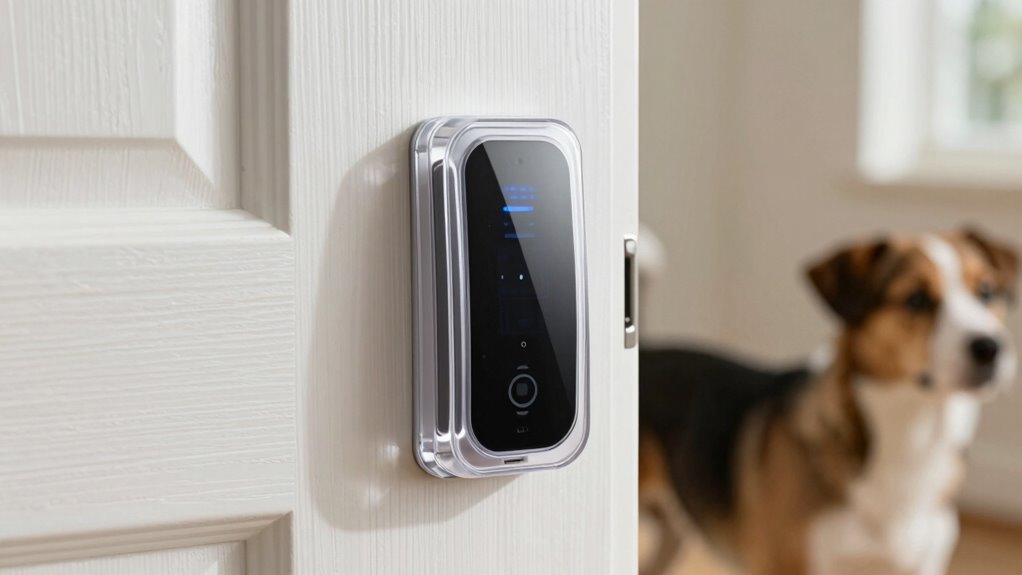
If you’re tired of constantly opening and closing your dog’s door, a microchip dog door offers a smart and secure solution. These advanced devices use your dog’s microchip to identify them and allow access only to your pet, providing peace of mind and enhanced pet safety. Unlike traditional dog doors, which can be left open or easily accessed by intruders or other animals, microchip dog doors ensure that only your dog can come and go. This technology helps prevent neighborhood animals or strays from entering your home, reducing potential hazards and keeping your pet safe inside.
When considering a microchip dog door, proper installation is vital. You want to guarantee it fits seamlessly into your home and functions reliably. Start by measuring your pet’s size accurately and selecting a door that accommodates their height and width comfortably. Read the manufacturer’s installation tips carefully; most models require a standard pet door cut into your door or wall, often involving drilling or cutting. Before starting, verify that your chosen location is suitable — it should be accessible, free from obstructions, and provide a clear path for your dog to come and go safely. Make sure the installation area is sturdy and well-supported to prevent any damage over time, especially if you live in an area with extreme weather conditions.
The installation process usually involves creating an opening in your door or wall, then fitting the microchip door into the opening securely. Some models come with templates to help you cut accurately, reducing the risk of errors. It’s important to follow all instructions precisely to guarantee the safety and durability of the installation. Seal any gaps around the door to prevent drafts or water leaks, which can compromise pet safety and comfort. Additionally, double-check the microchip reader’s placement — it should be at a height that your dog can easily reach and pass through without difficulty. Proper installation not only guarantees pet safety but also minimizes the chance of malfunctions that could leave your pet stranded or confused.
Frequently Asked Questions
How Do Microchip Dog Doors Differ From Traditional Pet Doors?
Microchip dog doors differ from traditional pet doors by using your dog’s microchip to grant access, enhancing security. Unlike manual doors, they don’t require you to open or close them. These smart doors often integrate with your smart home system, allowing remote management. Installation requirements are minimal, usually needing a small hole in your door or wall. This tech-savvy setup keeps unwanted animals out and provides convenience for you and your pet.
Can Microchip Dog Doors Be Programmed for Multiple Pets?
Yes, microchip dog doors can be programmed for multiple pets. You simply use the programming options provided by the door to register each pet’s microchip. This allows the door to recognize multiple pets and grant access accordingly. You can easily add or remove pets from the system as needed, making it a convenient solution for households with multiple pets. Just follow the manufacturer’s instructions for seamless programming.
What Is the Typical Battery Life of Microchip Dog Doors?
Sure, your microchip dog door’s battery life typically lasts around 6 months to a year, making it a true endurance champion—if you remember to replace the batteries. Thanks to clever power management, these doors conserve energy, but don’t get too comfortable. Keep an eye on the battery indicator, or you’ll be faced with the heartbreaking task of explaining to your dog why they’re suddenly locked out.
Are Microchip Dog Doors Weatherproof and Suitable for Outdoor Use?
Yes, microchip dog doors are weatherproof and designed for outdoor use. They feature weather resistance that helps protect against rain, wind, and dirt, ensuring durability in various conditions. You can confidently install them outside because they’re built for outdoor durability, maintaining functionality despite the elements. Just make sure to choose a model with high-quality weatherproof seals and materials, so your pet’s door stays reliable year-round.
How Secure Are Microchip Dog Doors Against Unauthorized Entry?
You might worry about security vulnerabilities, but microchip dog doors are quite secure if you choose a quality model. They’re designed to minimize false rejection rates, ensuring only your pet gains entry. While no system is completely foolproof, these doors deter unauthorized entry effectively. Regular updates and proper installation further enhance security, giving you peace of mind when your pet is outside.
Conclusion
So, next time you see your dog happily darting through the microchip door, remember it’s not just luck — it’s science. Sometimes, it’s funny how a tiny chip can make such a big difference, almost like fate guiding your pup’s adventures. With these doors, your furry friend’s safe and their independence is protected. It’s a small coincidence, but one that keeps your pet secure and your mind at ease, every single day.