Climate change affects your dog’s health by increasing the risk of diseases transmitted by ticks and fleas, like Lyme disease and heartworm. Hotter temperatures can cause heatstroke, dehydration, and worsen existing health issues. Pollution and higher pollen levels may trigger allergies, skin problems, and respiratory issues. Urban heat islands create safer environments for vectors, raising disease chances. Staying informed about these changes helps you protect your dog—learn more about how to keep your pet safe today.
Key Takeaways
- Rising temperatures increase the spread of vector-borne diseases like Lyme disease and heartworm in dogs.
- Urban heat islands and extreme heat raise risks of heatstroke, dehydration, and exacerbate existing health conditions.
- Higher temperatures and unpredictable weather heighten allergen levels, causing skin, respiratory, and ear issues.
- Increased outdoor exposure during hot periods raises the likelihood of heat-related illnesses in dogs.
- Climate change-related environmental shifts lead to more frequent health challenges, requiring vigilant preventive care.
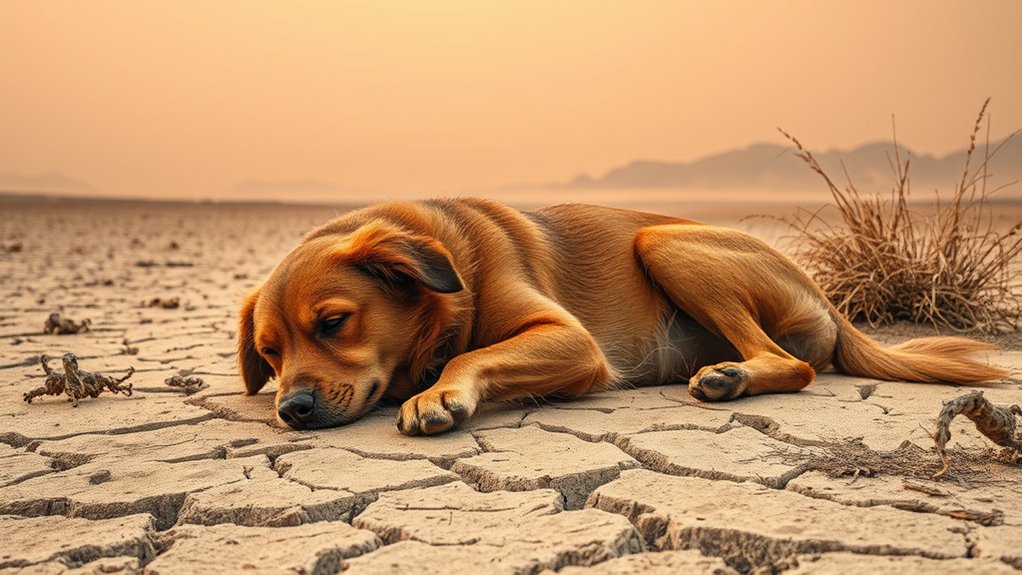
Another emerging concern related to climate change is the potential for increased vector-borne diseases, which can also affect dogs. As temperatures rise, certain parasites and pathogens transmitted by insects like ticks and fleas become more prevalent in urban areas, increasing the risk of illnesses such as Lyme disease or heartworm. Urban environments often create favorable conditions for these vectors, especially with the proliferation of heat islands, which sustain higher temperatures that support their life cycles. When your dog spends time in these hot zones, they’re exposed to extreme heat that can lead to heatstroke or dehydration. The elevated temperatures can also worsen existing health issues, such as respiratory or cardiovascular conditions. You might notice your dog panting excessively, seeking shade more often, or showing signs of discomfort during walks or outdoor play. To protect your furry friend, it’s crucial to limit outdoor activities during peak heat hours and ensure they have access to cool, shaded spots. Always carry water to keep them hydrated and watch for symptoms of overheating, which can escalate rapidly.
Another concern linked to climate change is the increase in allergic reactions among dogs. As temperatures rise and weather becomes more unpredictable, pollen levels and air pollutants tend to spike. These changes can trigger allergic responses in dogs, leading to itchy skin, ear infections, sneezing, or respiratory issues. Urban environments often amplify this problem because of higher pollution levels and the presence of allergens like mold spores and dust mites. Additionally, the proliferation of certain plants in urban heat islands can introduce new allergens to your dog’s environment. If you notice your dog scratching excessively, licking paws more than usual, or experiencing frequent sneezing or coughing, allergies might be the culprit. Managing these reactions involves regular vet checkups, keeping your home clean, and minimizing exposure during peak allergy seasons. In some cases, your vet might recommend antihistamines or other treatments to help your dog feel more comfortable.
Frequently Asked Questions
How Does Increased Heat Affect a Dog’s Lifespan?
You might notice that increased heat can reduce your dog’s lifespan because it lowers their heat tolerance. When temperatures rise, dogs are more prone to heat stroke and dehydration, which can cause lasting health damage. Over time, this stress accelerates aging and shortens their lifespan. To protect your dog, make certain they stay cool, hydrated, and avoid outdoor activities during the hottest parts of the day.
Are Certain Dog Breeds More Vulnerable to Climate Change?
Imagine some dog breeds as delicate glass sculptures, fragile and easily affected by shifting conditions. Breed susceptibilities and climate adaptability vary widely; small, short-haired breeds like Chihuahuas or Whippets struggle more with heat, while thick-coated breeds like Huskies or Malamutes are less adaptable to warmer climates. You should consider these factors to protect your dog, especially as climate change intensifies, making certain breeds more vulnerable to environmental stresses.
Can Climate Change Influence the Prevalence of Canine Diseases?
Yes, climate change can influence the prevalence of canine diseases. You might notice an increase in vector-borne diseases like Lyme or heartworm, as warmer temperatures boost the habitats of ticks and mosquitoes. Additionally, environmental toxins may become more common, exposing your dog to harmful chemicals. Rising temperatures and changing weather patterns can also stress your dog’s immune system, making them more susceptible to infections and other health issues.
What Are the Signs of Heatstroke in Dogs During Hot Weather?
You’ll notice signs of heatstroke in your dog such as excessive panting, drooling, weakness, and disorientation during hot weather. To prevent this, use dog cooling strategies like providing shade and cool water, and avoid outdoor activities during peak heat. Follow heatstroke prevention tips by watching for rapid breathing and lethargy, and never leave your dog in a parked car. Stay vigilant to keep your furry friend safe.
How Can Owners Adapt Their Routines to Protect Dogs From Climate Change?
You can safeguard your dog from climate change by adjusting your routines. Focus on hydration strategies by providing fresh water often and adding ice to keep it cool. Schedule exercise during cooler parts of the day, like early mornings or evenings, to prevent heat stress. Avoid long walks during peak heat and create shaded or cooled resting spots. These steps help make sure your dog stays safe and comfortable in changing weather conditions.
Conclusion
As you see, climate change impacts your dog’s health like a ripple spreading across a pond—small changes quickly grow into bigger problems. By staying informed and taking action, you can help protect your furry friend from rising temperatures, heatstroke, and disease. Just as a sturdy tree roots itself against storms, your care and awareness can keep your dog safe and healthy in these changing times. Together, you can make a difference, one step at a time.