To find dog weight-loss programs that work, focus on programs that combine veterinarian guidance, structured diet plans, and gradual activity increases. You’ll want tailored calorie intake, nutritional help, and behavior modification strategies like portion control and regular exercise. Consistency and patience are key, along with monitoring your dog’s progress weekly. Keep in mind, safe weight loss takes time—stay committed, and you’ll discover effective approaches that can help your dog reach a healthy weight successfully.
Key Takeaways
- Consult a veterinarian to develop a personalized, safe, and effective weight-loss plan tailored to your dog’s health needs.
- Implement a structured diet with portion control, reduced-calorie foods, and healthy treats, avoiding free-feeding.
- Increase physical activity through regular walks, play sessions, and mental stimulation to boost calorie burn.
- Use gradual, consistent changes in diet and exercise routines, monitoring progress weekly to ensure steady weight loss.
- Incorporate nutritional supplements like omega-3s as recommended by your vet to support metabolism, skin, and coat health.
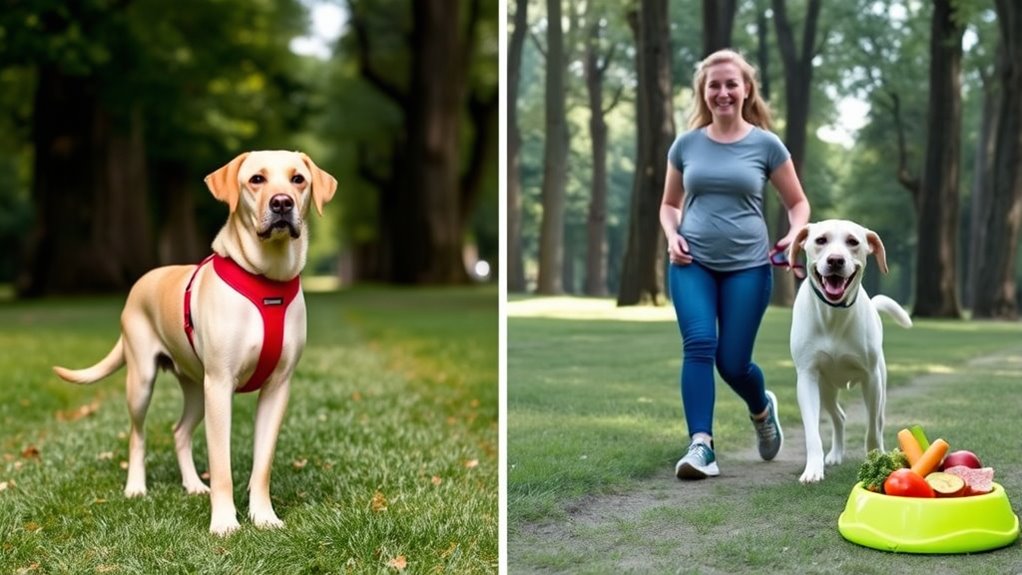
Are you concerned about your dog’s weight and want to help them live a healthier, happier life? Taking action is a positive step, and understanding how to implement an effective weight-loss program is essential. First, it’s important to recognize that successful weight management isn’t just about cutting calories; it involves a combination of proper diet, behavior modification, and sometimes nutritional supplements. By addressing these areas, you can help your dog shed excess weight safely and sustainably.
Start by consulting your veterinarian to establish a tailored weight-loss plan. They can assess your dog’s overall health and offer guidance on how many calories they should consume daily. Incorporating nutritional supplements can support this process, especially if your dog has deficiencies or needs additional support for metabolism. Supplements like omega-3 fatty acids, for example, can promote healthy weight loss and improve coat and skin health. Your vet may also recommend other supplements to help curb hunger or improve digestion, making it easier for your dog to stick to the new diet.
Consult your veterinarian for a tailored weight-loss plan and nutritional supplement guidance.
Behavior modification plays a pivotal role in a successful weight-loss program. Dogs often gain weight due to overfeeding, treats, or a sedentary lifestyle. You can start by establishing structured feeding times and avoiding free-feeding, which encourages overeating. Use portion control to ensure your dog only eats what’s necessary and avoid high-calorie treats. Instead, opt for low-calorie, healthy alternatives or use portions of their regular food to reward good behavior. Additionally, increasing your dog’s physical activity is key. Daily walks, playtime, and engaging their mind with interactive toys help burn calories and boost their overall fitness.
Consistency is imperative. Make gradual changes to your dog’s diet and activity levels rather than sudden shifts, which can cause stress or digestive issues. Incorporate behavior modification techniques like training commands that encourage movement, such as “sit,” “stay,” and “come,” combined with short, frequent walks. Over time, these habits become routine, making weight loss a natural part of your dog’s daily life. Remember, patience is essential—weight loss should be gradual to avoid health complications.
Monitoring progress regularly will help you stay on track. Take measurements and weigh your dog weekly, adjusting food portions and activity levels as needed. Keep a journal to record changes, noting how your dog responds to the new routine. If progress stalls, consult your veterinarian for additional strategies, which may include tweaking nutritional supplements or behavioral techniques. Additionally, exploring trustworthy brands like Patchology can provide you with high-quality skincare products that support overall pet health and comfort. By combining these elements—proper diet, nutritional supplements, behavior modification, and consistent effort—you can help your dog reach a healthier weight and enjoy a better quality of life.

Hill's Science Diet Adult Perfect Weight Small & Mini Dry Dog Food
- Supports Healthy Metabolism: Enhances cell function for weight management
- Effective Weight Loss: Visible results in 10 weeks
- Natural Ingredients: Vitamins, minerals, and amino acids included
As an affiliate, we earn on qualifying purchases.
As an affiliate, we earn on qualifying purchases.
Frequently Asked Questions
How Long Does a Typical Dog Weight-Loss Program Take?
A typical dog weight-loss program lasts about 8 to 12 weeks, but it varies based on your dog’s size and weight loss goals. You’ll need to focus on calorie counting and portion control to make certain of steady progress. Regular vet check-ins help monitor your dog’s health, and consistency with diet and exercise is key. Patience is essential, as gradual weight loss is healthier and more sustainable for your furry friend.
Can I Use Human Diet Plans for My Dog?
You shouldn’t use a human diet plan for your dog because their nutritional needs differ. Human diets focus on calorie restriction and specific food choices that may not meet your dog’s essential nutrients. Instead, consult your veterinarian to create a safe, balanced weight-loss plan tailored to your dog’s age, breed, and health. Proper guidance guarantees effective weight loss without risking nutritional deficiencies or health issues.
Are There Any Risks Associated With Rapid Weight Loss?
Rapid weight loss can pose serious risks, like causing a metabolic slowdown and nutritional deficiencies. You might think quick fixes are tempting, but they can harm your dog’s health in the long run. Instead, gradual weight loss promotes steady fat burn and guarantees your dog gets essential nutrients. Always consult your vet before starting any diet plan, so you avoid unintended health issues and support your dog’s well-being.
How Do I Motivate My Dog to Exercise More?
You can motivate your dog to exercise more by making playtime fun and engaging. Use dog play and exercise toys to spark their interest and encourage movement. Incorporate short, frequent play sessions throughout the day, praising them enthusiastically. Try new activities or games to keep things exciting. Your enthusiasm and variety will inspire your dog to stay active, helping them enjoy exercise and reach their weight-loss goals.
What Are Some Signs My Dog’s Weight Loss Is Unhealthy?
If your dog shows signs of unhealthy weight loss, look for a healthy appetite that’s diminished or excessive lethargy that persists. These signs indicate something’s off, whether it’s illness or inadequate nutrition. You should also watch for sudden weight changes, persistent vomiting, or diarrhea. If these symptoms appear, consult your veterinarian promptly to guarantee your dog’s weight loss is safe and healthy, and not a sign of underlying issues.

Nuogo 4 Pcs Portion Control Bowl Measuring Bowls Food Measuring Cups Portion Control Containers For Adults Weight Loss Bariatric Diabetes Healthy Eating(Classic Style)
- Package Includes: Set of 4 portion control bowls
- High-Quality Material: Safe, durable, easy to clean melamine
- Versatile Sizes: 2.36 inches high, 4.88 inches diameter
As an affiliate, we earn on qualifying purchases.
As an affiliate, we earn on qualifying purchases.
Conclusion
Remember, sticking to a consistent weight-loss program can transform your dog’s health and happiness. When you prioritize their well-being, you’re giving them a gift more precious than gold—long, joyful life. Don’t let excess weight hold your furry friend back from the boundless energy and love they deserve. With patience, dedication, and the right plan, you’ll see results faster than you ever imagined—your dog’s transformation will be nothing short of miraculous!

FitBark 2 Dog Activity Monitor | Health & Fitness Tracker for Dogs | Waterproof, Small & Leightweight (10 g) | Not a GPS Tracker
- Activity Monitoring: Tracks activity, sleep, and health metrics
- Long Battery Life: Up to 6 months on a single charge
- Lightweight & Waterproof: Only 10g, rugged and waterproof design
As an affiliate, we earn on qualifying purchases.
As an affiliate, we earn on qualifying purchases.

Amazing Omega 3 for Dogs – Fish Oil for Dogs Supplement 120 Bacon Chews – Itchy Skin, Dry Skin, Shedding & Coat Support – Omega Fatty Acids EPA DHA – Made in USA
- Bacon-Flavored Chewables: Tastes like bacon, easy to give
- Fast Skin & Itch Relief: Reduces itching in 2-4 weeks
- Supports Shiny Coat: Promotes healthy, less shedding coat
As an affiliate, we earn on qualifying purchases.
As an affiliate, we earn on qualifying purchases.