Dog insurance helps you manage rising vet costs by offering policies that cover accidents, illnesses, and sometimes preventive care like vaccines and dental work. You can choose from accident-only plans or all-encompassing coverage that includes wellness visits and behavioral support. Premiums vary based on your dog’s age, breed, and coverage level, with deductibles affecting your out-of-pocket costs. Knowing these options can help you pick the best plan—if you want to explore more, keep going.
Key Takeaways
- Dog insurance mainly covers accidents, illnesses, and sometimes preventive care like vaccinations and dental work.
- Policies vary between accident/illness coverage and wellness plans, with options for breed-specific risks and preventive services.
- Out-of-pocket costs depend on deductibles, premiums, coverage limits, breed, age, and location.
- Understanding policy details, including exclusions, claim procedures, and coverage caps, helps in choosing the right plan.
- Preventive care and behavioral support included in policies promote long-term health and reduce future veterinary expenses.
Understanding What Dog Insurance Covers

Understanding what dog insurance covers is essential before choosing a policy. Most plans mainly focus on medical expenses like accidents and illnesses, but some also include preventive care. While dog training and pet nutrition aren’t typically covered, they are important for your dog’s overall well-being. Good training can prevent behavioral issues that might lead to injuries, and proper nutrition keeps your dog healthy and less prone to health problems. When reviewing policies, check if they include coverage for vet visits related to dietary issues or behavioral consultations. Knowing what’s covered helps you plan financially and ensures your dog gets the care they need. Additionally, exploring comprehensive coverage options can help you select a plan that best fits your dog’s needs. It’s also helpful to understand the limitations and exclusions that might apply to certain treatments or conditions. Remember, dog insurance isn’t a substitute for good training and nutrition, but it can support your dog’s health when unexpected issues arise.
Types of Dog Insurance Policies

You can choose between policies that cover accidents and illnesses or opt for wellness and preventive plans. Accident and illness coverage helps pay for unexpected injuries or health issues your dog faces, while wellness plans focus on routine care. Understanding these options lets you pick the best coverage to keep your dog healthy and protected. Additionally, some policies may include preventive care benefits, which can help reduce long-term veterinary costs. Incorporating coverage options that address specific health needs ensures comprehensive protection for your pet. Recognizing the importance of emotional alignment in fostering a positive environment can also contribute to your dog’s overall well-being, making health and happiness more attainable.
Accident and Illness Coverage
Have you ever wondered what types of coverage are available for your dog’s accidents and illnesses? Accident and illness coverage typically include plans that help you manage unexpected health issues. These policies often cover emergency care, surgeries, medications, and diagnostics. Keep in mind that certain breeds have specific risks, so some policies tailor coverage accordingly. Here are four key points to consider: Sulfate-free options can help reduce color fading and protect your highlighted hair. Additionally, understanding the coverage limits and exclusions can ensure you select a plan that best fits your pet’s needs. As with AI in Education, advancements in veterinary medicine and insurance technology are constantly evolving to better serve pet owners. Recognizing familiar health risks based on breed can help you choose the most appropriate coverage for your dog.
Wellness and Preventive Plans
While accident and illness coverage protect your dog during unexpected health issues, many owners also consider wellness and preventive plans to keep their pets healthier overall. These plans often include routine checkups, vaccinations, and dental care, which promote good health and early detection of potential issues. Wellness plans can also offer nutrition benefits, ensuring your dog receives proper diet advice and supplements that support longevity. Additionally, some policies cover training programs that improve behavior and mental well-being, reducing stress-related health problems. By investing in proactive care, you not only save on costly treatments later but also enhance your dog’s quality of life. Incorporating preventive health measures can significantly improve your pet’s longevity and happiness. This forward-looking approach helps maintain your pet’s vitality, making wellness and preventive plans a valuable part of all-encompassing dog insurance. Regular veterinary visits and early detection are key components that can prevent minor issues from becoming major health crises, and understanding insurance coverage options can help you choose the best plan for your pet. Emphasizing holistic healing methods, such as natural remedies and alternative therapies, can further support your dog’s overall well-being.
How Premiums and Deductibles Work
Understanding how premiums are calculated helps you choose the right plan for your dog’s needs. You’ll also want to know what deductible amounts mean for your out-of-pocket costs. These factors directly affect your overall insurance expenses, so it’s important to contemplate them carefully. Being aware of coverage options can help you select a policy that best suits your pet’s health requirements. Additionally, understanding the ethical hacking methodologies can provide insight into how security vulnerabilities are identified and addressed within insurance systems. For example, some policies may include coverage for specialized equipment like electric bikes, which can be beneficial for active pet owners. Familiarizing yourself with signs of spoilage, such as mold or discoloration, can also aid in managing your pet’s health and preventing unnecessary expenses.
Premium Calculation Factors
Premiums and deductibles are key factors that determine how much you’ll pay for dog insurance. Several elements influence premium calculation, including breed specific risks and age related costs. Your dog’s breed can notably impact premiums because some breeds are prone to certain health issues. Age also plays a role; younger dogs usually cost less to insure, while older dogs may have higher premiums due to potential health problems.
Consider these points:
- Breed-specific health risks increase premiums for high-risk breeds.
- Older dogs typically have higher premiums because of age-related costs.
- Your dog’s overall health and medical history influence rates.
- The coverage level you choose can affect your premium amount.
- The popularity of certain breeds can also affect insurance costs due to demand and breed-specific claims.
- Insurance providers often consider breed-specific risks when setting premiums, leading to variability across different breeds.
- Regularly monitoring health trends within breeds can help predict potential future costs for your pet.
Understanding these factors helps you anticipate costs and select the best policy for your dog.
Deductible Amounts Explained
Deductible amounts are a key component of your dog insurance policy that directly affect your out-of-pocket costs. When your dog needs veterinary care, you’ll pay the deductible first before the insurance covers veterinary fees. A higher deductible lowers your premium but means paying more upfront when claims arise. Conversely, a lower deductible increases your premium but reduces your initial costs. Keep in mind that coverage limits can also influence how much the insurer pays for veterinary fees over time. Some policies have annual or lifetime limits, which cap the total reimbursement. Choosing the right deductible depends on your budget and the potential veterinary expenses your dog may face. Understanding how these deductibles work helps you balance premiums with your expected veterinary costs, making sure you’re prepared for unexpected veterinary bills. Additionally, familiarizing yourself with best anime movies and other entertainment options can provide helpful ways to unwind after managing pet insurance details.
Being aware of the coverage limits can also help you plan for the worst-case scenarios and avoid surprises when filing claims. Moreover, understanding the role of insurance policy features can help you select a plan that best suits your needs and financial situation.
Impact on Insurance Costs
Choosing a higher deductible can substantially lower your monthly insurance premiums, but it also means you’ll pay more out of pocket when your dog needs veterinary care. Premium adjustments depend on your deductible choice, affecting your overall costs. When it’s time for policy renewal, these adjustments can lead to changes in your premium rates. To better understand, consider these points:
- Higher deductibles typically lower premiums but increase out-of-pocket costs.
- Lower deductibles raise premiums but reduce your expenses during claims.
- Premium adjustments can vary annually based on your claims history.
- Policy renewal may bring changes to your premium, influenced by your deductible and claims patterns.
- Selecting Vetted – AP Tuning water spot removers can help maintain your vehicle’s appearance, potentially reducing the need for costly repairs and keeping your car in better condition over time.
Understanding this balance helps you choose a plan that fits your budget and risk comfort.
Factors That Affect Policy Costs
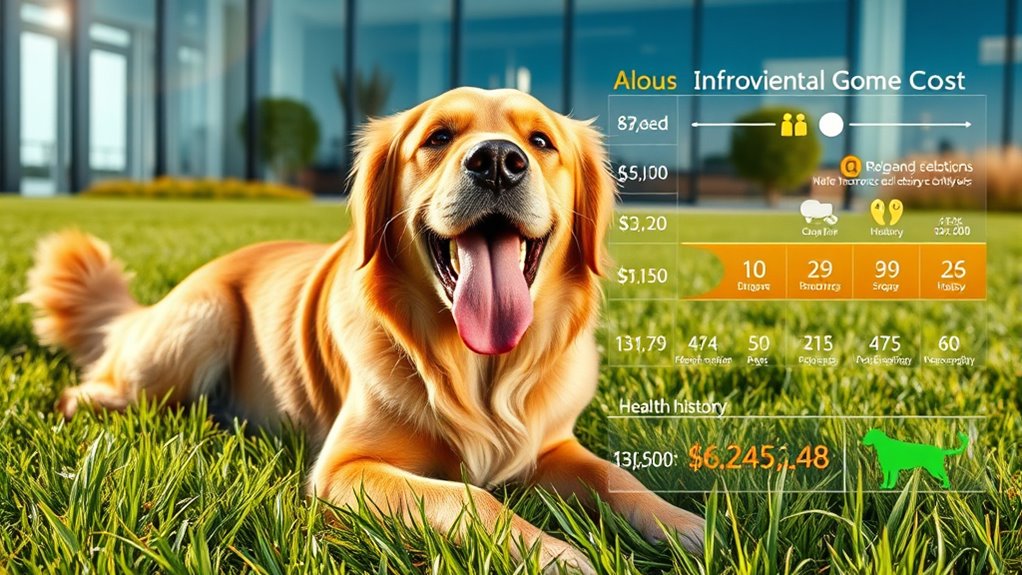
Have you ever wondered what determines the cost of your dog’s insurance policy? Several factors come into play, but two major influences are breed predispositions and geographic location. Certain breeds are more prone to health issues, which can lead to higher premiums. For example, larger or brachycephalic breeds often face more medical problems, increasing insurance costs. Your geographic location also impacts prices—areas with higher vet costs or more frequent health risks may see higher premiums. Additionally, regional differences in climate and prevalent diseases can influence coverage needs. Understanding these factors helps you anticipate costs and choose the right policy. By considering your dog’s breed and where you live, you can better manage expenses and ensure your furry friend gets the coverage they need.
Choosing the Right Coverage for Your Dog

Selecting the right coverage for your dog guarantees you’re prepared for their specific health needs and your budget. Start by considering breed-specific coverage, as certain breeds are prone to specific conditions requiring targeted protection. Next, evaluate whether your policy includes an emergency fund to cover unexpected accidents or illnesses. When choosing, keep these points in mind:
- Identify your dog’s breed and common health issues.
- Decide if you need all-encompassing coverage or just accidents and emergencies.
- Check if the policy offers breed-specific coverage options.
- Guarantee it includes an emergency fund for sudden, costly vet visits.
The Claims Process and Reimbursement

Once you’ve picked the right coverage for your dog, understanding how the claims process works is key to getting your reimbursements smoothly. Typically, you’ll need to follow pre-authorization procedures for certain treatments, so check your policy to confirm what’s required beforehand. When your dog needs care, gather all relevant receipts and medical records to support your claim. Be aware of claim submission deadlines—missing these can delay or invalidate your reimbursement. Submit your claim promptly, either online or via mail, according to your insurer’s instructions. After submission, your provider will review the documentation, and once approved, you’ll receive your reimbursement. Staying organized and aware of deadlines ensures a hassle-free process and quicker access to funds for your dog’s veterinary expenses.
Tips for Comparing and Selecting Policies

Comparing and selecting the right dog insurance policy can feel overwhelming, but focusing on key factors makes the process easier. First, consider breed-specific issues, as some breeds are prone to certain health problems that require coverage. Next, review policy renewal strategies to ensure continuous coverage without gaps. Third, examine coverage limits and exclusions carefully to avoid surprises later. Fourth, compare premiums and deductibles to find a plan that fits your budget. Don’t forget to check if the policy covers essential treatments for your dog’s specific needs. By paying attention to breed issues and renewal options, you’ll choose a policy that offers reliable protection and peace of mind.
Frequently Asked Questions
Are Pre-Existing Conditions Covered by Dog Insurance?
Pre-existing conditions usually aren’t covered by dog insurance, so your pet’s health issues prior to the policy often fall under coverage exclusions. You might find some plans that offer limited coverage or add-ons, but generally, insurance companies exclude pre-existing conditions to keep premiums lower. It is crucial to review the policy details carefully and ask about any exclusions related to pre-existing conditions before signing up.
Can I Customize My Dog Insurance Policy?
Your options for customizing your dog insurance policy are almost limitless—you can tailor coverage options to fit your pet’s specific needs like a bespoke suit! Most providers offer policy customization, allowing you to choose coverage options such as accidents, illnesses, or preventive care. Review the available plans carefully to make certain your pet’s needs are met, and select the coverage options that give you peace of mind without overpaying.
What Is the Typical Claim Turnaround Time?
You’re probably wondering about the typical claim turnaround time. Usually, claim processing takes anywhere from a few days to a few weeks, depending on your insurer and the complexity of the claim. During this time, your insurance provider reviews your documentation and determines your insurance reimbursement amount. To speed things up, make sure you submit all necessary paperwork promptly, keep copies of your claims, and stay in contact with your insurer throughout the process.
Do Policies Cover Hereditary or Congenital Conditions?
Think of hereditary and congenital conditions as hidden landmines in your dog’s health. Many policies do cover genetic conditions and breed predispositions, but coverage varies widely. Some plans exclude certain breed-related issues, while others include them under all-encompassing coverage. Always read the fine print to see if your dog’s breed-specific risks are covered, ensuring you’re not caught off guard by unexpected medical bills down the road.
Is There a Waiting Period Before Coverage Begins?
You might be wondering if there’s a waiting period before your coverage starts. Typically, insurance policies include waiting periods to prevent fraud and ensure you’re genuinely seeking coverage for unexpected issues. These waiting periods usually last from a few days up to several weeks, depending on the provider. Once this period ends, your coverage begins, allowing you to file claims for eligible veterinary expenses. Always check your policy details for specific waiting period durations.
Conclusion
Now you’re armed with all the dog insurance secrets! With the right policy, you could potentially save your pup from financial chaos worse than a tornado in a pet store. Don’t leave your furry friend unprotected—think of insurance as your superhero cape, ready to swoop in when unexpected chaos strikes. Choose wisely, compare like a pro, and turn what seems like a confusing maze into the easiest, most stress-free decision ever. Your dog will thank you—probably with endless tail wags!