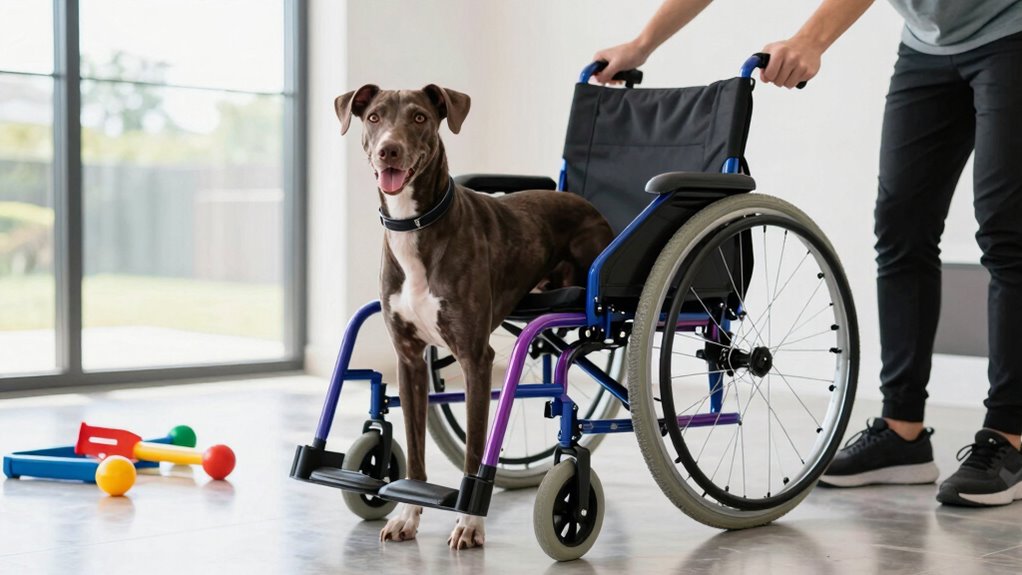

To teach your dog to move confidently alongside your wheelchair without stress, start with simple commands and positive reinforcement. Gradually introduce more complex scenarios like crowded areas or uneven terrain. Consistent practice helps your dog become familiar with sounds and movements, while patience builds confidence for both of you. Focus on safety and calmness, reinforcing good behavior each step of the way. Keep practicing regularly, and you’ll discover more ways to guarantee smooth, stress-free mobility together.
Key Takeaways
- Use positive reinforcement consistently to encourage calm, focused behavior during training sessions.
- Introduce the dog gradually to wheelchair sounds and movements to prevent stress and build confidence.
- Teach simple commands like follow, stay, and heel to improve control and seamless movement.
- Practice in various environments to help the dog adapt to different terrains and obstacles.
- Be patient and avoid rushing training, ensuring the dog feels secure and confident at each stage.
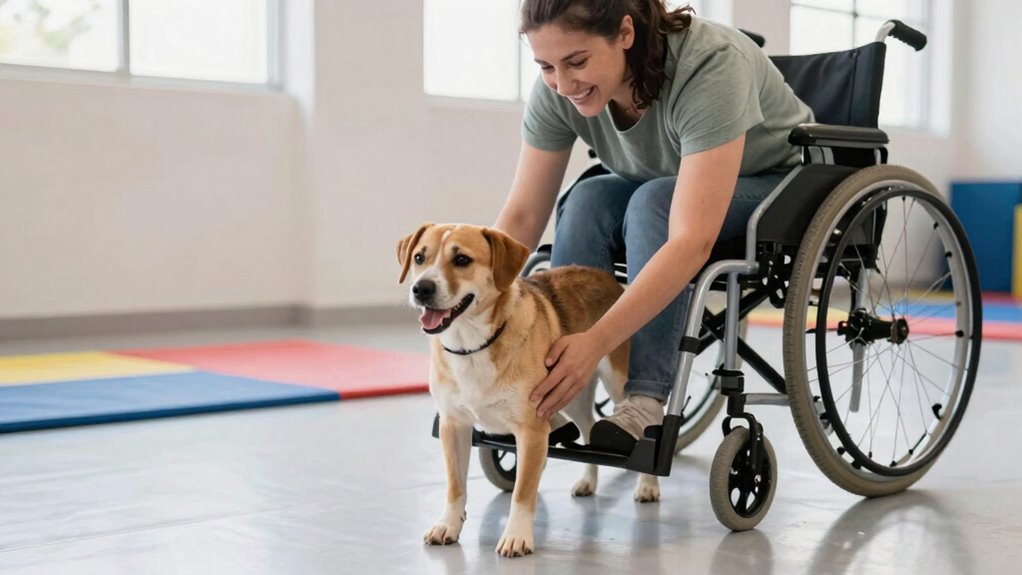
Have you ever wondered how proper wheelchair training can enhance your independence and safety? When you learn to maneuver your wheelchair confidently, you gain more control over your daily activities, reducing reliance on others and increasing your sense of autonomy. An essential part of this process involves assistive mobility, which isn’t just about the wheelchair itself but also about integrating your canine companion into your mobility routine. Training your dog to move confidently alongside you can significantly improve your overall experience, making your journey smoother and more secure. Canine confidence is key here; a dog that is well-trained and comfortable around the wheelchair will naturally become a reliable partner, reducing stress and promoting a harmonious partnership.
Proper wheelchair and canine training boost independence, safety, and confidence for a smoother mobility experience.
The goal of wheelchair training is to foster a seamless interaction between you, your mobility device, and your dog. As you teach your dog to stay close, follow commands, and navigate around obstacles, you’re also reinforcing your own skills in controlling the wheelchair. This mutual understanding creates a foundation for safer, more efficient movement. It’s important to start with simple commands and gradually introduce more complex scenarios, such as navigating crowded areas or uneven terrain. Your dog’s confidence in these situations can translate into better support for your assistive mobility needs, giving you peace of mind and allowing you to focus on your tasks without constant concern about unexpected challenges.
Consistency and patience are vital in this training process. Regular practice helps your dog become familiar with the sounds, movements, and environment associated with wheelchair use. Positive reinforcement encourages your dog to stay calm and focused, which in turn helps you maintain better control of your mobility. As your canine companion learns to adapt to your wheelchair, you’ll notice that both of you become more confident in handling everyday obstacles. This confidence can drastically reduce stress, making outings more enjoyable and less physically demanding.
Furthermore, proper training creates a safer environment for everyone involved. When your dog understands how to move confidently alongside your wheelchair, the risk of accidents decreases. Your dog can act as a stable support, alert you to potential hazards, and help you maintain your balance during transitions or sudden stops. Ultimately, investing time in assistive mobility training for yourself and your canine partner pays off by enhancing your independence, boosting canine confidence, and creating a more positive, less stressful mobility experience. Together, you and your dog can navigate the world with greater ease, safety, and confidence.

OYEFLY Dog Training Clicker with Wrist Strap Durable Lightweight Easy to Use, Pet Training Clicker for Cats Puppy Birds Horses. Perfect for Behavioral Training 2-Pack (Black and Water Lake Blue)
EASY TO USE – Simple push button with distinct clicking sound.
As an affiliate, we earn on qualifying purchases.
As an affiliate, we earn on qualifying purchases.
Frequently Asked Questions
How Long Does Wheelchair Training Typically Take?
Wheelchair training usually takes a few weeks, but the exact training duration varies based on your dog’s age, temperament, and previous experience. You should conduct regular progress assessments to track how comfortably your dog adapts to the wheelchair. Consistent, positive reinforcement helps speed up the process. Be patient and flexible, understanding that some dogs may need more time to build confidence and move confidently without stress.
Can Any Dog Learn Wheelchair Mobility?
Yes, most dogs can learn wheelchair mobility with proper training techniques and patience. You should introduce assistive devices gradually, ensuring your dog feels comfortable and confident. Use positive reinforcement and consistent commands to help your dog adapt to moving with a wheelchair. Keep training sessions short and enjoyable, and always observe your dog’s comfort level. With time and patience, your dog can become confident and independent using assistive devices.
What if My Dog Is Afraid of the Wheelchair?
If your dog is afraid of the wheelchair, start with fear management by introducing it gradually. Use positive reinforcement, rewarding your dog for calm behavior around the wheelchair. Let your dog sniff and explore at their own pace, offering treats and praise to build confidence. Patience is key; never force your dog, and continue to create positive associations. Over time, your dog will become more comfortable moving confidently alongside the wheelchair.
Are There Age Restrictions for Training Dogs?
Absolutely, age considerations matter when training your dog. There’s no strict age restriction; however, the best training timing depends on your dog’s development. Puppies are enthusiastic learners, but older dogs can still learn new tricks. You should tailor training techniques to your dog’s age, stamina, and attention span. With patience and proper timing, dogs of any age can gain confidence and comfort in wheelchair mobility, making the journey joyful for both of you.
How Do I Maintain My Dog’s Confidence During Training?
To maintain your dog’s confidence during training, use positive reinforcement to reward their successes and keep sessions upbeat. Incorporate gradual exposure to new commands or environments, allowing your dog to build trust and comfort step by step. Avoid rushing, and be patient when they need extra time. Consistently praising their efforts helps them stay motivated and confident, ensuring training remains a positive experience for both of you.

Buddy Biscuits Trainers Training Bites Soft & Chewy Dog Treats, Bacon, 10 oz. Pouch
Highly Palatable with natural pork liver base
As an affiliate, we earn on qualifying purchases.
As an affiliate, we earn on qualifying purchases.
Conclusion
With patience and gentle guidance, you’ll watch your dog blossom into a confident mover, like a ship sailing smoothly through calm waters. Remember, every small step is a victory, and your consistent support helps build trust and independence. Keep your sessions positive and encouraging, and soon your furry friend will navigate their wheelchair with ease, turning challenges into opportunities. Together, you’re creating a journey of resilience and joy, proving that with love and patience, anything is possible.

The Big Book of Tricks for the Best Dog Ever: A Step-by-Step Guide to 118 Amazing Tricks and Stunts
Book: the big book of tricks for the best dog ever: a step-by-step guide to 118 amazing tricks…
As an affiliate, we earn on qualifying purchases.
As an affiliate, we earn on qualifying purchases.

Adjustable Dog Lift Harness Dog Sling for Large Dogs Hind Leg Support Soft Lift Support and Rehab Harness for Weak Rear Legs, Helps Senior, Injured, Disabled and After ACL Surgery Dogs Large
Harness Object: The Rear Legs support Harness is designed to help your elderly, disabled, or injured dog, who…
As an affiliate, we earn on qualifying purchases.
As an affiliate, we earn on qualifying purchases.