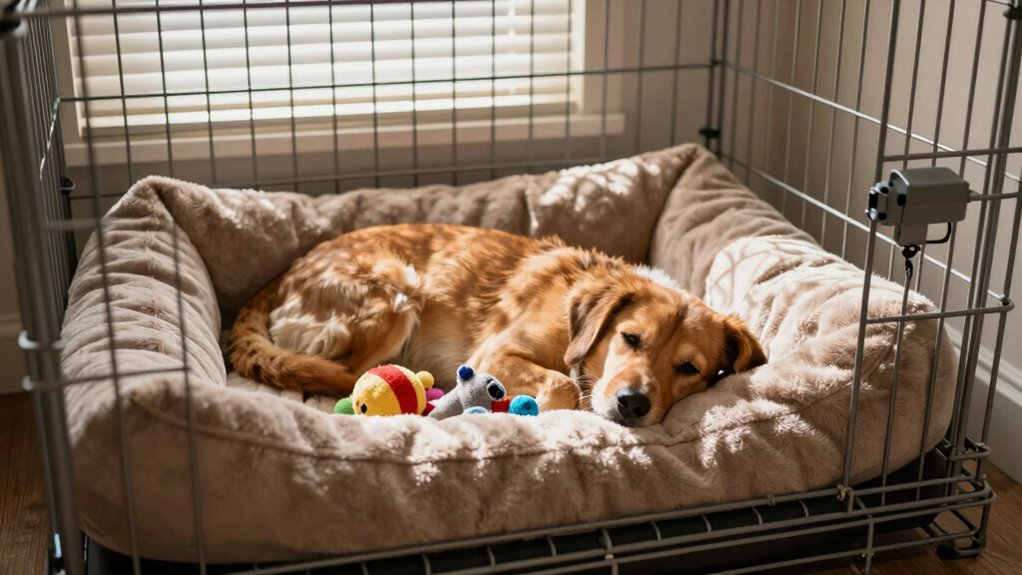
To make your dog’s crate feel safe without coddling, create a calm, consistent environment with familiar scents like your worn clothing or toys. Use positive reinforcement by offering treats and praise, making the space an enjoyable place. Position the crate in a quiet spot and allow your dog to explore at their own pace, gradually closing the door for short times. Keep routines steady, and you’ll help your dog trust their crate naturally—learn more about fostering this trust effectively.

Get pet supplies delivered free with Prime
- Fast, free delivery on millions of items
- Prime Video, Amazon Music and more included
- Member-only deals all year
Key Takeaways
- Use familiar scents and soft bedding to create a calming environment without overinfantilizing.
- Introduce the crate gradually, allowing exploration without pressure or excessive coddling.
- Position the crate in a quiet, consistent spot to foster routine and security.
- Incorporate positive reinforcement, treats, and praise to build trust without over-attachment.
- Avoid using the crate as punishment; make it a neutral, positive space for your dog.
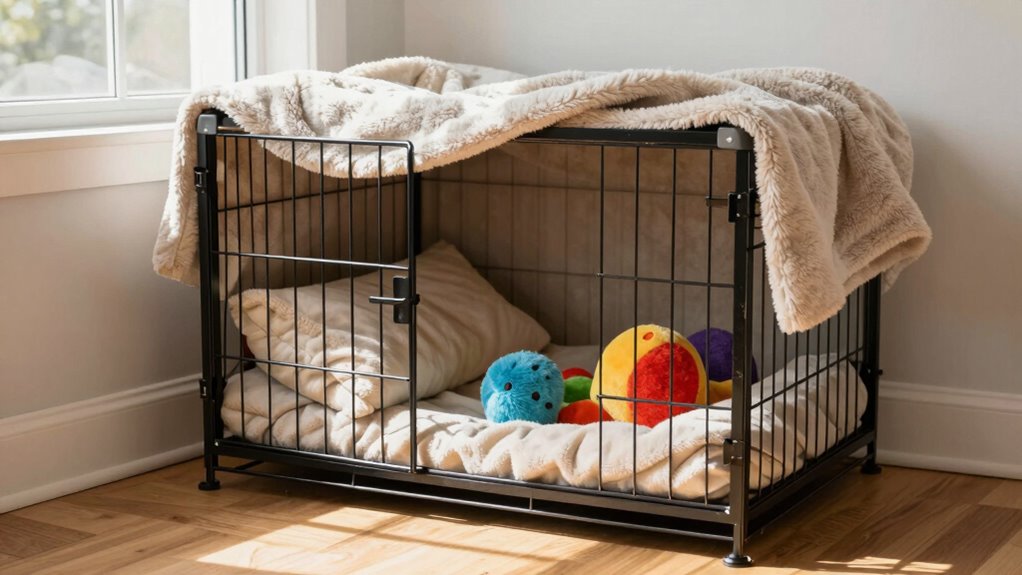
Creating a safe and comfortable space for your dog in their crate is essential for their well-being and training. When you approach crate training, your goal should be to make the crate feel like a natural, inviting refuge—not a place of punishment. One effective way to do this is by incorporating scent enrichment, which involves placing familiar smells inside the crate. This can be a worn t-shirt, a blanket, or even a toy that carries your scent, helping your dog associate the crate with comfort and security. The scent acts as a calming anchor, easing their anxiety and encouraging them to settle inside willingly.
Creating a cozy, familiar space in your dog’s crate fosters comfort, security, and positive training experiences.
To start, introduce the crate gradually, allowing your dog to explore it at their own pace. Keep the door open initially and place treats or toys inside to spark curiosity. As they become more comfortable, begin closing the door for short periods, always ensuring they’re calm before releasing them. During these sessions, scent enrichment plays a *vital* role. Adding a piece of cloth with your scent inside the crate helps your dog associate the space with your presence, even when you’re not physically there. Over time, this *association builds trust* and reduces stress.
You should also pay attention to the crate’s environment. Make sure it’s placed in a quiet, familiar area of your home where your dog can see and hear household activity without feeling overwhelmed. Use soft bedding and keep the space tidy to foster a cozy atmosphere. Avoid overcrowding the crate with too many toys or blankets, which can cause discomfort or overstimulation. Instead, just a few thoughtfully chosen items, especially those with your scent, will do the trick. These subtle touches help your dog feel like the crate is a safe haven rather than a punishment zone.
Consistency is *paramount* in crate training. Establish a routine that includes regular crate periods, especially during times when your dog might feel anxious or restless. When you use scent enrichment consistently, your dog begins to recognize the crate as a positive, familiar space. This reduces resistance and makes crate training smoother. Remember, your tone and body language matter. Stay calm and positive, never force your dog into the crate or use it as a punishment. Instead, let the crate be associated with positive experiences by offering treats, praise, and gentle encouragement. Incorporating training techniques that focus on positive reinforcement will further enhance your success.
As an affiliate, we earn on qualifying purchases.
Frequently Asked Questions
Can I Leave My Dog Alone in the Crate Overnight?
Yes, you can leave your dog alone in the crate overnight if you’ve properly crate trained them. Make sure the crate is comfortable and that your dog feels secure. Gradually increase the time they spend in the crate to help reduce dog separation anxiety. Keep the environment calm, and avoid coddling, so your dog learns to feel safe and relaxed when alone, promoting healthy crate training habits.
How Long Should I Initially Keep My Dog in the Crate?
Start with short crate sessions, around 10-15 minutes, and gradually increase as your dog becomes comfortable. During crate training, use positive reinforcement like treats and praise to encourage your dog to see the crate as a safe space. Always observe your dog’s cues and avoid forcing them inside. Over time, your dog will learn to stay calmly in the crate for longer periods, building trust and security.
Is It Okay to Use Treats Inside the Crate?
Yes, using treats inside the crate is a great idea for treat training and crate rewards. You actively encourage your dog to see the crate as a positive space by giving treats when they enter or stay calmly inside. This builds trust and comfort without coddling, making the crate a safe, rewarding environment. Just be sure to use small, tasty treats and keep training sessions positive and consistent.
How Do I Prevent My Dog From Developing Crate Aversion?
To prevent crate aversion, focus on consistent crate training with positive reinforcement. Make the crate a comfortable, inviting space by offering treats, praise, and toys. Gradually increase crate time, never forcing your dog, and always reward calm behavior. Keep training sessions short and positive, so your dog associates the crate with good experiences. Over time, this approach builds trust, making your dog more comfortable and less likely to develop crate aversion.
What Are Common Signs of a Distressed Dog in the Crate?
You’ll notice signs of distress in your dog’s body language, like flattened ears, tucked tail, or stiff posture. Vocalizations such as whining, barking, or whimpering also indicate discomfort. If your dog shows these signs, it’s a cue to pause, assess their needs, and gradually help them feel more secure in the crate. Watch their body language and listen to their sounds to understand when they’re truly stressed.
As an affiliate, we earn on qualifying purchases.
Conclusion
Creating a safe crate is like building a cozy nest where your dog can truly relax. By offering comfort without overdoing it, you help your pup see the crate as a trusted sanctuary, not a punishment. Remember, a safe space fosters confidence, not dependence. With patience and consistency, you turn the crate into a fortress of calm—a place your dog feels secure enough to explore independence while knowing you’re always there.
dog crate with removable soft lining
As an affiliate, we earn on qualifying purchases.
As an affiliate, we earn on qualifying purchases.
dog crate for anxiety with positive reinforcement
As an affiliate, we earn on qualifying purchases.
As an affiliate, we earn on qualifying purchases.
Fall Picks
fall essentials
As an affiliate, we earn on qualifying purchases.