TL;DR

Get pet supplies delivered free with Prime
- Fast, free delivery on millions of items
- Prime Video, Amazon Music and more included
- Member-only deals all year
A remote dog training collar pairs a handheld transmitter with a receiver worn by your dog, which can deliver a tone, vibration, or electrical stimulation depending on the model. The device does not teach behavior by itself: pair any signal with a cue your dog already knows, reward the response, check fit and local rules, and consider a long line and reward-based training first.
A remote collar sends signals; your dog learns through clear cues, gradual practice, and reinforcement.
Build recall in easy settings first, and use a long line to manage risk while you train.
Check fit, skin, wear time, and the transmitter and receiver’s separate water-resistance limits.
Treat advertised range as a favorable-condition claim; obstacles, interference, and battery condition can reduce usable distance.
Compare alternatives and check local rules; seek qualified humane or veterinary behavior guidance before using electrical stimulation.
What a remote collar can signal—and what it can’t teach
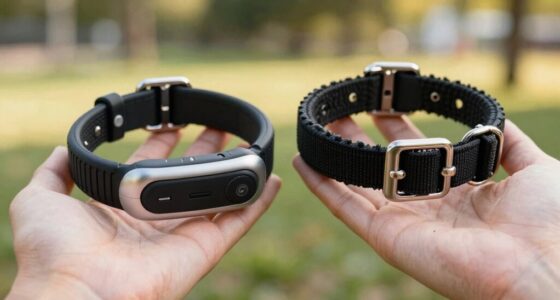
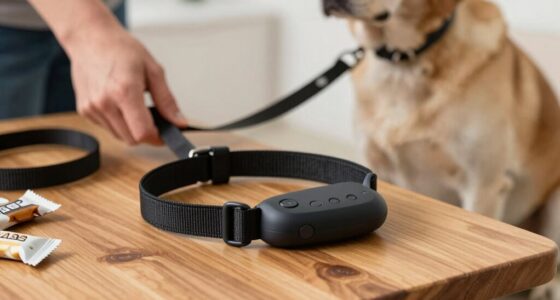
A remote dog training collar sends a signal from a handheld transmitter to a receiver on your dog’s neck; depending on the model, that signal may be a tone, vibration, or electrical stimulation. The collar can get your dog’s attention, but it cannot explain which behavior you want. Learning still depends on clear cues and consistent reinforcement. The word “e-collar” can refer to different devices, so check the specific functions rather than assuming every model works the same way. Some include a light or beeper; some pair more than one receiver; GPS or app-based tracking may be a separate feature. Read the product details carefully. A collar pairs a handheld transmitter with a receiver, but marketing labels don’t tell you how each function feels to your dog. For example, imagine your dog reliably responds to “come” in the yard. You could practice that familiar cue in a quiet field and reward your dog for returning. A tone could become a signal your dog recognizes during that practice, but the reward and repetition teach the recall. If your dog has never learned the cue, a remote signal alone is like hearing a doorbell without knowing which door to open. Think of the remote as a doorbell, not a teacher: a sound can get attention, while patient practice shows your dog what happens next. The training method matters more than the device. Introduce any remote signal gradually and pair it with behavior your dog already understands. If you’re unsure how to use a signal, get guidance from a qualified, humane trainer before starting.Products Worth Considering

PETLIBRO RFID Automatic Cat Feeder with Collar Sensor

PetSafe Guardian GPS Dog Fence for Properties 3/4 Acre or Larger

PetSafe Electronic Pet Door with Collar Key Sensor, Large
As an affiliate, we earn on qualifying purchases.
How to build a reliable recall before adding distance
To build a recall, practice in a calm, enclosed space first, reward your dog for returning, and increase distance and distractions gradually. A remote signal cannot replace those steps; it has meaning only when your dog has learned what response earns a reward.- Choose a familiar cue: Say “come” once in a quiet garden or room when your dog can hear you.
- Reward the return: Give a treat, toy, or another reward your dog enjoys as soon as they reach you.
- Add a little distance: Move farther away while keeping practice easy enough for success.
- Introduce distractions slowly: Try a quiet park before practicing near other dogs, cyclists, or wildlife.
- Use a long line for backup: A long line gives your dog room to explore while helping you prevent a dangerous dash.
How fit, contact, and wear time affect comfort
A receiver should fit securely without restricting your dog’s breathing or movement, and its contact points must reach the skin as the manufacturer specifies. A loose receiver may shift and send inconsistent signals; one worn incorrectly can irritate the skin or put too much pressure on one spot. Follow the product’s fit and wear-time guidance and check your dog’s neck regularly. Start by checking the collar while your dog stands and moves naturally. It should not slide freely around the neck, and your dog should be able to breathe, walk, and turn comfortably. Contact requirements vary by model, so use the manufacturer’s instructions instead of improvising with a tighter fit. If you notice redness, tenderness, hair loss, or a change in how your dog moves, remove the device and seek veterinary advice about the skin or discomfort. A practical example: after a walk in the rain, you take off the receiver and spot a red patch where it sat. Don’t shrug it off or put the collar straight back on. Give the skin a chance to recover and check the instructions; contact your veterinarian if irritation or discomfort persists. Before buying, compare receiver weight and design with your dog’s size, and look for clear instructions about cleaning, fit, and wear time. Features such as “waterproof” also have limits set by the manufacturer. A dog that can swim in a water-resistant receiver may still need the transmitter kept dry, so check both ratings.Why advertised range may not match your usual walk
The practical range of a remote collar can fall short of its advertised range because range tests usually use favorable conditions. Buildings, hills, vegetation, interference, battery condition, and the position of your hand can all affect how reliably the transmitter reaches the receiver.| What can affect range | What you may notice outdoors | What to check |
|---|---|---|
| Buildings and terrain | A signal works in an open field but becomes unreliable behind a hill or between houses. | The manufacturer’s test conditions and independent reviews. |
| Trees and thick vegetation | Coverage changes along a wooded trail or hedge-lined path. | Whether the product has been assessed in settings like yours. |
| Interference and battery condition | The signal feels less dependable near other equipment or when the battery runs low. | Battery guidance, charging needs, and warranty support. |
| Transmitter position | Results vary depending on how you hold the remote. | Clear controls and instructions on ordinary use. |
What to compare before you choose a model
Compare a remote training collar by fit, receiver weight, simple controls, battery life, water-resistance rating, usable range, warranty, and clear safety instructions. Consider available signal types, but don’t choose a model solely because it offers more settings or a higher maximum. A higher setting is not automatically more effective, and dogs can respond very differently.- Fit and size: Does the receiver suit your dog’s neck and weight without restricting movement?
- Signal options: Does the product offer tone or vibration, and are the functions described clearly?
- Controls: Can you identify the right button quickly and select the right dog if the system supports several receivers?
- Battery and water ratings: What are the limits for the transmitter and receiver separately?
- Instructions and support: Does the maker explain fit, wear time, care, and troubleshooting?
- Local requirements: Are devices that deliver electrical stimulation allowed where you live?