People comparing dog training collars with remote controls are often deciding whether tone and vibration are enough or whether to buy a model that also delivers static stimulation. That difference matters more than display size or advertised range: one type offers cues without an electric stimulus, while the other adds a correction that can be uncomfortable or frightening if the timing or intensity is wrong.

Get pet supplies delivered free with Prime
- Fast, free delivery on millions of items
- Prime Video, Amazon Music and more included
- Member-only deals all year

Jugbow Dog Training Collar with Remote, 4,500 ft Range
- ✔ Remote range: Up to 4,500 ft
- ✔ Training modes: Beep 1–8; vibration 1–16; static 1–99; static boost +10%
- ✔ Dog capacity: Up to 2 dogs

HapTop Dog Training Collar with Remote, 4500 ft Range, Waterproof, for Dogs 10–120 lb
- ✔ Remote range: Up to 4,500 ft
- ✔ Training modes: Beep 1–8; vibration 1–16; shock 0–99; boost 10% higher
- ✔ No-shock option: Yes, according to product details
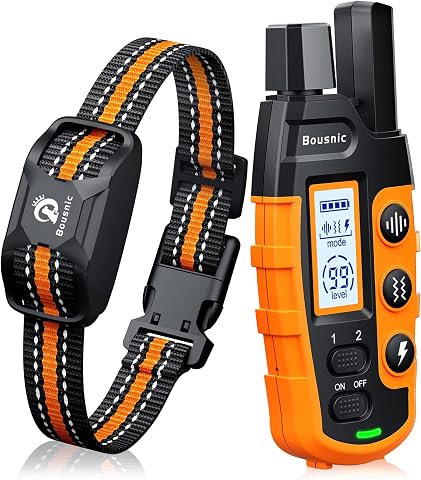
Bousnic Rechargeable Dog Training Collar with Remote, 3300-Foot Range, Orange
- ✔ Remote range: Up to 3,300 ft
- ✔ Training modes: Beep 1–8; vibration 1–16; shock 1–99
- ✔ Dog capacity: 2 dogs
Tone-and-vibration models are the better starting point for owners who want a remote cue and can train consistently with rewards. Static-stimulation models offer another tool, but more settings do not make training more effective by themselves. This comparison looks at training purpose, welfare, control, fit, range, cost, and suitability so buyers can judge whether the extra feature solves a real problem or adds risk without clear benefit.
At a Glance
| Criteria | Tone-and-vibration remote collars | Remote collars with static stimulation | Winner |
|---|---|---|---|
| Feedback options | Tone and vibration; no static stimulation | Tone, vibration, and adjustable static stimulation on some models | B |
| Welfare and misuse risk | Lower risk of pain-related stress, though poor timing can still confuse or startle a dog | Greater risk of fear, stress, or accidental punishment; careful professional guidance matters | A |
| Training flexibility | Useful for recall cues and attention when paired with reward-based training | Adds a correction option, but does not replace training or address the cause of behavior | Depends |
| Ease of learning | Requires practice to make the signal predictable and meaningful | Requires careful setup and timing; more controls can increase user error | A |
| Range and reliability | Depends on the specific model; advertised range can be affected by terrain and obstacles | Depends on the specific model; static settings and range vary by product | Tie |
| Fit and household use | Check neck fit, weight, waterproof rating, and whether the remote is manageable | Check contact points, fit, weight, waterproof rating, and secure lock controls | Tie |
| Value | Often sufficient for owners who need a cue rather than a correction | Extra cost is justified only when the additional feature has a sound, dog-specific use | A |
Jugbow Dog Training Collar with Remote, 4,500 ft Range
The Jugbow BTC801 is our best overall pick because it combines a 4,500-foot listed range, a backlit color screen and a two-year warranty with support for two dogs. That combination gives it a slight edge over HapTop, which lists the same range and IPX8 receiver protection but has a one-year warranty and no stated screen detail. The screen may make controls easier to read at a glance, though the supplied specifications do not establish how it performs in every lighting condition.Its receiver is rated IPX8 and the collar is described as suitable for rain, mud and swimming. That is a useful distinction from Bousnic: Bousnic’s receiver is IP67 and its remote must be kept dry. Jugbow’s listed fit, however, starts at 10 pounds and a neck size of 7.8 inches, so Bousnic may be a better match when the dog falls below that weight guidance. The Jugbow provides beep, vibration and adjustable static modes, plus a static boost; that broad range of controls will not suit every owner’s training approach. The product also recommends no more than 12 hours of wear daily, and its 4,500-foot range is intended for open areas.
Pros:
- Lists a remote range of up to 4,500 feet and support for two dogs.
- IPX8 waterproof receiver is described for rain, mud and swimming.
- Backlit color screen and individual settings for two dogs.
- Two-year warranty and listed standby of up to 35 days for the collar and 45 days for the remote.
Cons:
- The listed 10–120-pound range excludes dogs below 10 pounds.
- The 4,500-foot range is intended for open areas and can vary by setting.
- Recommended daily wear is no more than 12 hours.
Best for: Owners who want a two-dog remote, an IPX8 receiver, a readable backlit display and a longer stated warranty.
Not ideal for: Dogs below the listed 10-pound starting point, owners who need a remote rated for wet use, or people who want a collar with no stimulation mode.
Bottom line: We rank Jugbow first for its strong combination of range, receiver protection, screen and warranty, provided its fit and stimulation modes suit your dog.
“We rank Jugbow first for its strong combination of range, receiver protection, screen and warranty, provided its fit and stimulation modes suit your dog.”
HapTop Dog Training Collar with Remote, 4500 ft Range, Waterproof, for Dogs 10–120 lb
HapTop’s most useful distinction is explicit: its controls include an option to disable shock. For owners comparing electronic collars who want the choice to use beep and vibration without the shock mode, that detail makes the AC131-GN easier to assess than Jugbow or Bousnic based on the supplied information. We would still advise checking the manual to understand how the setting works before fitting the collar.Its other headline details track closely with Jugbow: both list a 4,500-foot remote range, two-dog support, an IPX8 receiver, the same 10–120-pound guidance and neck-size range, and similar standby figures. HapTop adds USB-C charging and a 1–8 beep, 1–16 vibration and 0–99 shock scale, with a boost feature. Those overlapping specifications make the warranty a clear difference: HapTop lists one year, compared with Jugbow’s two. As with Jugbow, daily wear is recommended for no more than 12 hours. The receiver’s water protection does not establish that the remote is waterproof, so owners should keep the handset protected unless its instructions say otherwise.
Pros:
- Explicitly lists an option to disable shock.
- Lists up to 4,500 feet of range and remote control for two dogs.
- IPX8 receiver and fit guidance for 10–120-pound dogs with 7.8–24.4-inch necks.
- USB-C charging and standby figures up to 35 days for the receiver and 45 days for the remote.
Cons:
- One-year warranty is shorter than Jugbow’s listed two years.
- Recommended daily wear is no more than 12 hours.
- The supplied details do not specify that the remote is waterproof.
Best for: Owners who want the product description to explicitly specify a shock-disable option alongside beep and vibration modes.
Not ideal for: Buyers who want the longest stated warranty, a listed fit below 10 pounds, or a collar with no stimulation controls at all.
Bottom line: HapTop is the strongest fit for buyers who value an explicitly stated shock-disable option, but Jugbow has the longer warranty.
“HapTop is the strongest fit for buyers who value an explicitly stated shock-disable option, but Jugbow has the longer warranty.”
Bousnic Rechargeable Dog Training Collar with Remote, 3300-Foot Range, Orange
Bousnic earns its place by listing a 5-pound minimum, lower than the 10-pound starting point given for Jugbow and HapTop. That makes it the first one to investigate if your dog is smaller, though weight alone cannot confirm a safe or comfortable fit; check the collar’s dimensions and the manufacturer’s fitting instructions. Its receiver has an IP67 waterproof rating, but the remote must be kept dry, so the system’s water precautions are less straightforward than the receiver rating might first suggest.Compared with the two 4,500-foot models, Bousnic’s remote lists up to 3,300 feet. That may be enough for many training situations, but owners prioritizing the longest stated open-area range will likely prefer Jugbow or HapTop. Bousnic still supports two dogs and offers adjustable beep, vibration and shock modes. Its receiver battery is listed for up to 15 days, shorter than the 35-day standby figures for the other two; its remote runs for over a month according to the product description. The product details do not specify collar material or neck-size range, which leaves more fit questions to resolve before choosing it.
Pros:
- Lists guidance for dogs weighing 5–120 pounds.
- IP67 waterproof receiver and support for two dogs.
- Adjustable beep, vibration and shock modes.
- Remote battery is described as lasting over a month.
Cons:
- Remote range is listed at up to 3,300 feet, shorter than Jugbow and HapTop.
- Remote must be kept dry.
- Receiver standby is listed for up to 15 days, and no neck-size range is provided in the supplied details.
Best for: Owners of dogs near the lower end of the listed weight range who want two-dog support and an IP67 receiver.
Not ideal for: Buyers who need a remote rated for wet conditions, want a 4,500-foot listed range, or need a stated neck-size range and longer receiver standby figure.
Bottom line: Bousnic is the more relevant option for dogs below the other collars’ listed weight floor, but its shorter range and dry-only remote call for closer fit and use checks.
“Bousnic is the more relevant option for dogs below the other collars’ listed weight floor, but its shorter range and dry-only remote call for closer fit and use checks.”
As an Amazon Associate we earn from qualifying purchases.
Key Differences
The central tradeoff is between limiting the available signal and adding a more aversive one. Tone and vibration can help a dog notice a cue at a distance, but they work only when the dog has learned what the cue predicts. Static stimulation adds another control, yet it can create fear or confusion, particularly if delivered at the wrong moment or used to stop behavior without teaching an alternative.
Neither type is a shortcut for recall, leash skills, or safety around distractions. Owners should prioritize reward-based training, a secure harness or leash where needed, and help from a qualified trainer for persistent behavior problems. A remote collar should not be used to punish barking, fear, aggression, or other behavior whose cause is not understood. In many ordinary training situations, the simpler tone-and-vibration model is the more sensible purchase.
Detailed Comparison
Feedback options (Remote collars with static stimulation wins — moderate)
Option A provides tone and vibration; option B offers those signals plus static stimulation on models with that feature. B wins on the number of available controls, a moderate difference for buyers who specifically need a broader set of signals. Extra choices do not establish that the dog will learn faster, and the additional stimulus may be inappropriate for the dog or situation.
Welfare and misuse risk (Tone-and-vibration remote collars wins — major)
Option A avoids static stimulation, so it has a lower risk of causing pain-related distress. Vibration can still startle or worry a dog, and either collar can cause confusion if cues are inconsistent. Option B has a greater welfare risk because an incorrectly timed or intense static signal can frighten the dog or associate discomfort with the wrong person, place, or action. A wins by a major margin for owners prioritizing lower-risk tools.
Training flexibility (moderate difference)
Option B offers more forms of feedback, but that flexibility is useful only when the handler knows how to apply each one and has a suitable training plan. Option A is narrower yet can support attention and recall practice when the signal is paired with a reward. This is a moderate, user-dependent difference: B has more controls, while A is sufficient for many cue-based training goals.
Ease of learning (Tone-and-vibration remote collars wins — minor)
Option A has fewer controls to manage and avoids decisions about static intensity. Both types still require the owner to teach the signal gradually and reward the desired response. B’s additional setting makes setup and timing more demanding, so A has a minor practical advantage for most inexperienced owners; neither collar makes training effortless.
Range and reliability (minor difference)
Range is a model-specific feature, not a reliable distinction between these two categories. Manufacturers’ range claims may not reflect conditions with hills, buildings, or interference, and a collar should not replace a leash where control is necessary. Compare independent product specifications and return policies; neither option wins on category alone.
Fit and household use (minor difference)
Both types need a secure, comfortable fit and a receiver sized for the dog. Buyers should check weight, neck-size limits, water resistance, charging, contact-point design, and accidental-activation locks. These details vary by model, so neither category wins. A poor fit can undermine comfort and signal delivery regardless of the feedback options.
Value (Tone-and-vibration remote collars wins — moderate)
Option A is usually the better value when tone and vibration meet the training goal: the owner avoids paying for a feature they may not need and reduces the chance of misuse. Paying more for option B makes sense only if a qualified professional recommends that specific tool for an appropriate, carefully managed plan. The difference is moderate because price and feature sets vary across models.
Tone-and-vibration remote collars: Pros and Cons
Pros:
- Avoids static-stimulation settings.
- Offers remote tone and vibration cues.
- Fewer controls can make consistent use easier.
- Often covers basic attention and recall practice.
Cons:
- Vibration can still startle or distress some dogs.
- A cue has little value until the dog learns its meaning.
- May not suit a narrowly defined plan recommended by a qualified professional.
Remote collars with static stimulation: Pros and Cons
Pros:
- Provides more feedback choices on models with adjustable static settings.
- May fit a specific professionally guided training plan.
Cons:
- Static stimulation can cause fear, stress, or confusion.
- More controls increase the chance of poor timing or accidental use.
- Extra features do not replace reward-based training or solve behavior causes.
Who Should Choose What
Choose Tone-and-vibration remote collars if:
- You want a remote cue for attention or recall and prefer to avoid static stimulation.
- You are new to remote training and want fewer settings to manage.
- Your dog responds well to rewards and can learn a consistent tone or vibration cue.
Choose Remote collars with static stimulation if:
- A qualified trainer who knows your dog has recommended a specific model and carefully supervised plan.
- You understand how to fit, lock, and operate the device and have a clear reason for the added feature.
Skip both if: Your dog is fearful, reactive, aggressive, or likely to be distressed by vibration or collar pressure; seek a qualified reward-based trainer or veterinary behavior professional and use appropriate leash management.
Value for Money
For most owners shopping for a remote cue, option A is better value. It covers tone and vibration without charging for static stimulation that may go unused or introduce welfare and handling risks. A higher price for option B is worth considering only when a qualified professional recommends that feature for the individual dog and can guide its use. Compare the actual model’s fit, waterproofing, controls, battery, warranty, and range claims; category labels alone do not guarantee quality.
Final Verdict
Choose a tone-and-vibration remote collar if you want to teach a cue at a distance and can pair it with rewards and consistent practice. For most buyers, it is the more prudent choice because it offers useful feedback with fewer opportunities to cause distress. Choose a static-stimulation model only when a qualified professional familiar with your dog recommends it and provides a specific plan. The deciding factor is not how many settings the remote has; it is whether the signal supports humane, effective learning. If your dog’s behavior reflects fear, reactivity, or aggression, skip both and get tailored professional help.
Frequently Asked Questions
Are remote training collars the same as shock collars?
Some remote collars include static stimulation and are commonly called shock collars. Others provide only tone and vibration. Check the product’s actual feedback options rather than relying on its name.
Can a vibration-only collar hurt or scare a dog?
Vibration does not use static stimulation, but it can still startle or distress an individual dog. Introduce any cue gradually, watch the dog’s response, and stop if it causes fear or discomfort.
Is a longer advertised range better?
Only if the range is useful in your surroundings and the signal remains reliable there. Obstacles and terrain affect performance, and a remote collar does not replace a leash when physical control is needed.
Should I pay more for a collar with static stimulation?
Usually not for ordinary recall or attention training. Pay more only when a qualified professional recommends the specific feature for your dog and can guide safe, appropriate use.