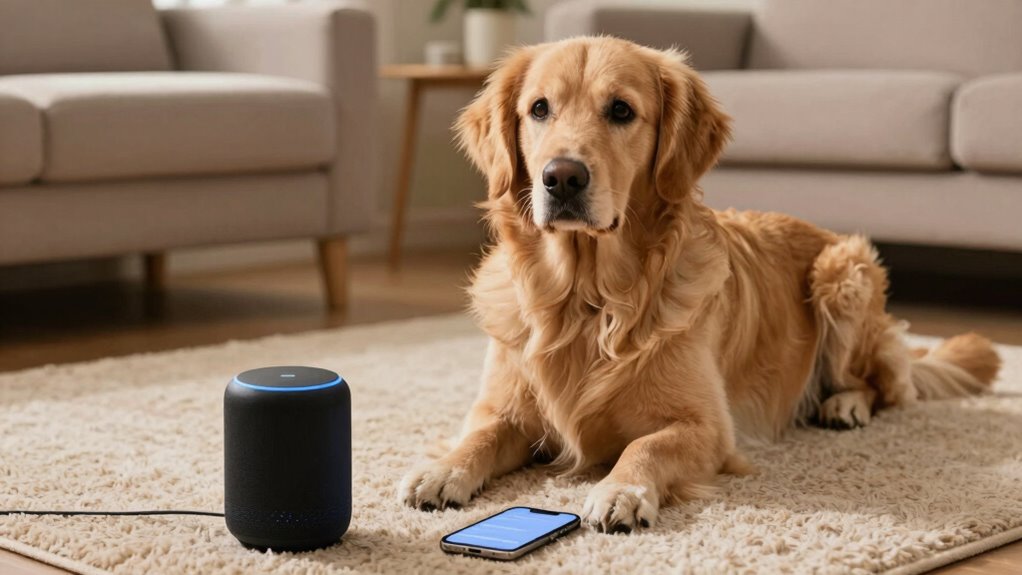

Some dogs dislike hearing your voice on a speaker because loud or sudden sounds can startle or confuse them. They may perceive it as a threat or an unfamiliar noise, causing stress or anxiety. Pets with previous negative experiences might react more strongly. Understanding their reactions helps you care for them better. If you keep exploring, you’ll discover more ways to make your interactions less stressful for your furry friends.
Key Takeaways
- Loud or unexpected playback of owner’s voice can startle or stress dogs, causing discomfort.
- Pets may associate the voice with unfamiliar or negative experiences, leading to anxiety.
- Distorted or unclear audio on speakers can confuse dogs and trigger wary or aggressive reactions.
- Previous negative reactions to loud noises increase a dog’s sensitivity to their owner’s voice on speakers.
- Sudden or repetitive voice sounds may disrupt a dog’s sense of safety, resulting in stress or behavioral changes.

Two-way audio technology allows you to communicate directly through a device, enabling real-time voice interaction between you and someone on the other end. This feature is commonly used in security cameras, smart home devices, and pet monitors. It’s designed to give you the ability to check in, soothe your pets, or deter intruders without needing to be physically present. However, while two-way audio offers convenience, it also introduces issues related to voice recognition and privacy concerns that you should consider.
When you activate two-way audio, the device’s voice recognition capabilities come into play. These systems analyze sounds and voices to distinguish commands or identify specific voices. While this can improve device responsiveness, it also raises questions about how your voice data is stored and used. Manufacturers often collect voice recordings to improve their algorithms, but this data collection can feel invasive. If you’re worried about privacy, you might hesitate to use the feature or disable it altogether. The concern isn’t just about the device listening when you don’t want it to but also about how securely your voice data is stored and who has access to it. Data breaches or unauthorized access pose real risks, making privacy concerns a significant factor in your decision to use two-way audio.
Activating two-way audio raises privacy concerns about voice data collection, storage, and security.
Furthermore, dogs and other pets often react negatively to hearing their owner’s voice on speakers. They can be startled or confused by the unfamiliar sound, especially if it’s loud or unexpected. Your pet’s reaction might be intense, leading to stress or anxiety. Some dogs associate the sound of your voice with separation or unfamiliar situations, which heightens their discomfort. This emotional response can be compounded if your pet has had previous negative experiences with loud noises or unfamiliar voices. Because two-way audio relies on transmitting your voice through a device, the clarity and tone of your voice can sometimes be distorted, making it even more unsettling for your pet. Additionally, pets might develop voice recognition sensitivity, causing them to react negatively even when the device is not actively in use.
Ultimately, while two-way audio provides a useful way to stay connected, it’s important to weigh the benefits against potential drawbacks. Voice recognition can enhance device efficiency, but privacy concerns remain a valid issue, especially given the risks of data misuse. As for pets, their reactions highlight that hearing your voice on a speaker isn’t always comforting, and it can cause unnecessary stress. Being aware of these factors helps you make informed choices about when and how to use two-way audio technology in your home.

Pet Tunes Bluetooth Speaker for Canines with Preloaded Calming Music for Dogs – Dog Anxiety Relief for Separation, Fireworks, and Thunderstorms – Relaxing Pet Music Device for Puppy and Adult Dogs
Clinically Proven Calming Music for Dogs: Preloaded with hours of calming canine music developed by an expert sound…
As an affiliate, we earn on qualifying purchases.
As an affiliate, we earn on qualifying purchases.
Frequently Asked Questions
Can Two-Way Audio Cause Long-Term Anxiety in Dogs?
Two-way audio can cause long-term anxiety in dogs, especially if they have high dog auditory sensitivity. Repeated exposure to loud or unfamiliar sounds may lead to increased stress and behavioral changes over time. You should monitor your dog’s reactions and limit exposure if you notice signs of anxiety. Consistent, gentle interactions help prevent long-term behavioral effects and keep your dog feeling safe and secure.
Are Certain Dog Breeds More Sensitive to Speaker Voices?
Some dog breeds are more sensitive to speaker voices due to breed sensitivity, which influences their vocal reaction. Breeds like herding or terrier types tend to be more alert and may react strongly to unfamiliar sounds, including your voice on a speaker. You should observe your dog’s responses and adjust accordingly. Understanding breed sensitivity helps you prevent stress or anxiety and makes interactions with speaker devices more comfortable for your dog.
How Can I Train My Dog to Tolerate Two-Way Audio?
To help your dog tolerate two-way audio, start by using positive reinforcement. When they hear your voice, reward calm body language and avoid sudden movements. Gradually introduce the speaker, allowing your dog to sniff and scent mark nearby to feel secure. Keep sessions short and comforting, gradually increasing exposure. Consistency and patience will help your dog associate the device with positive experiences, reducing anxiety over time.
Does the Volume of the Speaker Affect a Dog’s Reaction?
Imagine a gentle ripple growing into a loud splash—that’s how speaker volume impacts your dog’s reaction. If you turn up the volume too high, it can overwhelm your dog’s sensitivity, making them anxious or scared. Lowering the speaker volume helps your dog feel more comfortable, reducing stress. Adjusting the volume to match your dog’s sensitivity guarantees they stay calm and reassured when they hear your voice through the speaker.
Are There Alternative Ways to Communicate With Dogs Remotely?
Yes, you can communicate with your dog remotely using visual cues and scent. Show them familiar objects or use hand signals to reassure them, which they recognize better than speech. You can also leave scented items, like a worn shirt, so they feel your presence. These methods help reduce anxiety, making your dog feel connected and safe, even when you’re not physically there.

LASTCOW Two Way Pet Camera with 2.8 inch HD Screen, 1080P Video Calling Camera for Indoor Home Security, Indoor Home Nanny/Dog/Baby Security Device with Phone App
LASTCOW Two-Way Video Camera 2.8-inch Screen, Video Pet Dog Camera Indoor
As an affiliate, we earn on qualifying purchases.
As an affiliate, we earn on qualifying purchases.
Conclusion
So, next time your dog reacts negatively to your voice on speaker, ask yourself—are you really the best communicator for them? Understanding their reactions can help you build trust and comfort. Remember, not all dogs will love hearing your voice this way, and that’s okay. By paying attention to their cues, you can find better ways to stay connected. Isn’t it worth trying different methods to keep your furry friend feeling safe and loved?

Calming Collar for Dogs 4 Packs Dog Pheromone Calm Collars Relief Anxiety Stress Separation Lasts 60 Days Relieve Bad Behavior 25 Inches Size Flexible Adjustable for All Small Medium and Large Dog
[High Cost Performance of calming collars for dogs] Calming collar for dogs 4-pack all in one delicate box….
As an affiliate, we earn on qualifying purchases.
As an affiliate, we earn on qualifying purchases.

VTech Upgraded Audio Baby Monitor with Rechargeable Battery, Long Range, and Crystal-Clear Sound
Best-in-class Long Range The VTech DM111 Audio Baby Monitor's dependable long operation range covers up to 1,000 feet,…
As an affiliate, we earn on qualifying purchases.
As an affiliate, we earn on qualifying purchases.