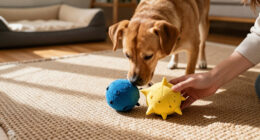
To prevent your dog from developing a fetch obsession with a ball launcher, limit its use and incorporate other activities like obedience training or puzzle games. Avoid over-relying on the launcher by providing variety and balancing playtime. Be mindful of your own reactions, like guilt or excitement, that may reinforce dependence. Maintaining diverse routines helps keep fetch fun without obsession. If you keep these strategies in mind, you’ll discover more ways to keep your dog happy and balanced.

Get pet supplies delivered free with Prime
- Fast, free delivery on millions of items
- Prime Video, Amazon Music and more included
- Member-only deals all year
Key Takeaways
- Limit launcher sessions and incorporate varied activities like obedience or puzzle games to reduce dependence.
- Avoid emotional over-attachment by owners, focusing on balanced routines that include traditional fetch and training.
- Use the launcher as a special treat rather than a daily activity to prevent routine overuse.
- Monitor your dog’s enthusiasm for the launcher and introduce alternative play methods to diversify their interests.
- Prioritize quality time and training over relying solely on the launcher to foster a healthier, less dependent relationship.

If you’ve ever found yourself unable to put down a ball launcher, you’re not alone. Many dog owners develop an emotional attachment to these devices because they seem to make playtime easier and more enjoyable. It’s easy to get caught up in the excitement, especially when your dog eagerly chases after each launch, tail wagging with pure joy. However, this strong attachment can lead to training challenges, as it may blur the lines between fun and over-reliance. Recognizing this emotional attachment is key to preventing fetch addiction from spiraling out of control.
You might notice that your dog begins to expect the ball launcher every time you’re outside, and their enthusiasm grows into dependence. This isn’t just about a love for fetch; it’s an emotional bond formed around the routine, making it harder for your pet to accept other forms of play or training. The more you use the launcher, the more your dog associates it with positive reinforcement, which can lead to a cycle where they only want to play with it. This attachment can make it difficult to shift your dog to other activities or training methods that don’t involve the device, creating a challenge for you as a trainer.
Dogs can develop routines that foster dependence on their ball launcher, making other play and training methods more challenging.
To avoid these training challenges, it’s important to set boundaries early. Limit the number of times you use the ball launcher during a session, and don’t rely solely on it for play. Incorporate variety by mixing fetch with other activities like obedience exercises, puzzle games, or traditional fetch with a ball by hand. This helps prevent your dog from becoming emotionally fixated on the launcher and encourages a more balanced approach to play. When you do use the launcher, keep it as a special treat rather than a daily routine, so your dog learns that fetch isn’t always about the launcher but about quality time with you.
Additionally, pay attention to your own feelings and reactions. If you find yourself hesitant to stop using the launcher, ask yourself why. Sometimes, owners develop their own emotional attachment because they enjoy the easy play or feel guilty about stopping. Recognizing this can help you step back and assess whether your dog’s well-being is truly prioritized. Building a playful routine that includes other forms of interaction will help your dog develop a healthier relationship with fetch, reducing over-reliance on the launcher and easing the training challenges that come with emotional attachment. It’s also beneficial to understand that high-quality projectors with better image fidelity can improve the overall play experience when used with a screen, making the activity more engaging for your pet. Remember, balance is key to ensuring fetch remains a fun activity rather than an obsession.
dog ball launcher with adjustable distance
As an affiliate, we earn on qualifying purchases.
As an affiliate, we earn on qualifying purchases.
Frequently Asked Questions
Can a Ball Launcher Improve My Dog’s Overall Fitness?
Yes, a ball launcher can boost your dog’s overall fitness by encouraging more fetch training and active play. It provides excellent dog enrichment, keeping your pup engaged and physically stimulated. By using a launcher, you can extend play sessions, helping your dog build strength, endurance, and coordination. Just make certain you balance fetch training with rest and monitor for signs of overexertion to keep your dog healthy and happy.
What Are Signs My Dog Is Overusing the Ball Launcher?
If your dog shows signs of ball obsession or fetch fatigue, they might be overusing the ball launcher. Look for signs like excessive panting, drooling, or reluctance to take breaks. You may notice your dog losing interest or becoming anxious when playtime ends. To prevent this, set time limits, incorporate rest periods, and offer other stimulating activities. This helps avoid fetch fatigue and keeps your dog excited without overdoing it.
How Often Should I Allow Fetch Sessions With a Ball Launcher?
You should limit fetch sessions with a ball launcher to maintain a healthy playtime balance. Aim for 10 to 15-minute intervals, a few times a day, depending on your dog’s energy level. Incorporate training boundaries by watching for signs of overexertion or obsession. Always end play sessions on a positive note, ensuring your dog remains excited but not overstimulated or tired.
Are There Any Safety Precautions for Using a Ball Launcher Indoors?
Be cautious with your canine companion’s comfort by considering indoor safety when using a ball launcher. Always ensure safe launcher placement—away from fragile furniture and walls—to prevent accidents. Keep the play area clear of clutter, and supervise your pup closely during fetch sessions. Use soft, lightweight balls to minimize damage and injuries. Regularly check the launcher for damage, and avoid launching balls near stairs or tight spaces to keep your dog safe and sound.
Can Excessive Fetch Cause Joint Issues in Dogs?
Excessive fetch can indeed cause joint issues in dogs, especially if they’re overexerted or have underlying health concerns. To protect their joint health, you should maintain an activity balance, providing plenty of rest and varied exercises. Watch for signs of discomfort, and avoid repetitive high-impact fetch sessions. Ensuring moderation helps prevent joint injuries and keeps your dog healthy and happy during playtime.
interactive puzzle toys for dogs
As an affiliate, we earn on qualifying purchases.
As an affiliate, we earn on qualifying purchases.
Conclusion
To keep your pup’s fetch obsession from turning into a backyard tornado, set clear boundaries and limit playtime. Remember, even the most enthusiastic dog can become a fetch junkie if left unchecked—soon, your yard might look like a war zone! Balance is key; sprinkle in other activities and give your dog mental breaks. With a little effort, you’ll prevent fetch addiction from transforming your happy home into a never-ending ball pit.
As an affiliate, we earn on qualifying purchases.
As an affiliate, we earn on qualifying purchases.
Halloween Picks
halloween
As an affiliate, we earn on qualifying purchases.