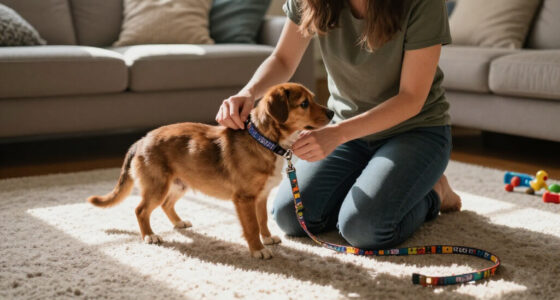
To stop door-dashing in just 7 days, start by teaching your dog a simple “wait” or “stay” command at the door. Use consistent practice, reward calm behavior with praise and treats, and keep your dog on a leash near the entrance. Reinforcing patience and control each time you open the door builds reliability. Stay committed, and you’ll discover more effective techniques to create a calm, obedient doorway routine.

Get pet supplies delivered free with Prime
- Fast, free delivery on millions of items
- Prime Video, Amazon Music and more included
- Member-only deals all year
Key Takeaways
- Consistently practice the “wait” command at doors multiple times daily to reinforce calm behavior.
- Use a leash to maintain control and prevent the dog from bolting when opening the door.
- Reward and praise the dog for staying seated or lying down patiently before and after opening the door.
- Before opening, ask the dog to sit and stay, opening the door gradually while monitoring their response.
- Reinforce training over 7 days with patience, ensuring the dog understands that calm behavior leads to positive rewards.

Door-dashing might seem like a convenient way to get your favorite meals quickly, but it often comes with hidden costs. When it comes to your dog, rushing through doorways can create chaos, confusion, and even safety hazards. Training your dog to have good door manners is essential for a peaceful home and reliable behavior outside. The good news is, with consistent effort over just seven days, you can teach your dog to reliably wait at doors, reducing the urge to bolt or act anxious.
Start by establishing a clear command, like “wait” or “stay,” that your dog understands at doorways. Before opening the door, ask your dog to sit and stay. Only open the door slightly, rewarding your dog if they remain calm and in position. If they move forward, gently close the door and repeat the process. This teaches patience and control, reinforcing the idea that good things happen when they listen. Consistency is key, so practice this multiple times daily. Over time, your dog will associate the command with calm behavior at doorways, making door dashing less tempting.
Establish a clear command like “wait,” practice patience daily, and reward calm behavior at doorways.
Leash training also plays a crucial role in improving door manners. When heading outside, keep your dog on a leash near the door. Before opening it, ensure they are calmly seated or lying down, then give the “wait” command. As you open the door, maintain control of the leash, preventing your dog from rushing out. If they try to bolt, gently pull back and reinforce the “wait” command. This method keeps your dog safe and under control in potentially dangerous situations, like busy streets or crowded areas. It also helps reinforce patience and respect for boundaries.
Integrating these techniques into your daily routine will help your dog understand that door manners are a priority. Use positive reinforcement generously—praise and treats work wonders to motivate your dog to stay calm and obedient. Remember, dogs thrive on consistency and clear boundaries. If you keep practicing these steps daily, your dog will start to anticipate and understand what’s expected at every door. By the end of the week, your dog should be much more reliable, waiting calmly and behaving politely when doors are opened.
This approach not only reduces the urge to door dash or bolt out unexpectedly but also builds your dog’s confidence and trust in you. It’s about creating a safe, respectful environment where your dog feels secure and understands boundaries. A good understanding of home environment and consistent training techniques are key to success. With patience, persistence, and positive reinforcement, you’ll see noticeable improvements in just seven days. Your home will be calmer, your dog safer, and your door manners much improved, making every doorway a moment of trust rather than chaos.
As an affiliate, we earn on qualifying purchases.
Frequently Asked Questions
How Long Does It Typically Take to Train a Reliable ‘Wait’ at Doors?
It typically takes about 7 days to train a reliable ‘wait’ at doors, but duration expectations depend on your training consistency. You need to practice daily, reinforcing the behavior until it becomes habitual. With regular, focused training, your dog will learn to wait patiently at doors in about a week. Remember, patience and consistency are key to achieving reliable results within this timeframe.
What Are Common Mistakes to Avoid During Training?
Imagine guiding your dog through a maze of distractions, avoiding common pitfalls like inconsistent cues or rushing the process. You’ll want to steer clear of giving mixed signals or losing patience, which can confuse your pup. Focus on positive reinforcement and consistency tips, rewarding calm behavior at doors. By staying steady and clear, you help your dog learn faster and build trust, turning erratic waiting into a reliable habit.
Can This Training Work for All Dog Breeds and Ages?
Yes, this training can work for most breeds and ages, but you should consider breed adaptability and age considerations. Some breeds may pick up the ‘wait’ command faster, while older dogs might need more patience. You’ll need to tailor your approach, using positive reinforcement suited to your dog’s temperament. Consistency and patience are key, regardless of breed or age, to successfully teach your dog to wait at doors.
How Should I Handle Setbacks or Regression in Training?
Imagine guiding a ship through unpredictable waters—you’ll face setbacks and rough patches. When this happens, praise consistency, patience, and perseverance, just like adjusting your sails. Stay calm, reinforce positive behaviors, and avoid frustration. Understand setbacks are part of the journey, not failure. With steady effort, your dog will learn to wait reliably. Keep your focus on progress, not perfection, and celebrate small victories along the way.
Are There Specific Tools or Treats Recommended for This Training?
You should use treat suggestions like small, soft treats or high-value snacks to reinforce patience during training. Training tools such as a clicker can also help mark desired behavior precisely. Keep treats handy and offer them consistently when your dog waits calmly at the door. This combination of effective treats and tools makes it easier to build a reliable ‘wait’ and encourages your dog to stay calm and attentive during training sessions.
dog training treats for obedience
As an affiliate, we earn on qualifying purchases.
As an affiliate, we earn on qualifying purchases.
Conclusion
By practicing these simple steps, you’ll master the art of waiting patiently at doors in just 7 days. Don’t worry if it feels uncomfortable at first—consistency makes perfect. Remember, staying calm and respectful not only improves your reputation but also makes the experience smoother for everyone involved. So stick with it, and soon waiting will become a natural part of your routine. You’ll find that with patience, door-dashing becomes a thing of the past.
dog doorbell or door alert system
As an affiliate, we earn on qualifying purchases.
As an affiliate, we earn on qualifying purchases.
As an affiliate, we earn on qualifying purchases.
Columbus Day / Indigenous Peoples' Day Picks
long weekend sales
As an affiliate, we earn on qualifying purchases.