
When you place a barrier like a gate, it acts as a clear territorial boundary for your dog, making them more alert to any potential intrusion. The gate emphasizes the boundary, triggering instinctive responses like barking and growling when stimuli, such as visitors or other animals, cross that threshold. This heightened alertness is due to their thresholds for reacting being surpassed by the barrier’s presence. If you want to better understand why this happens, there’s more to uncover below.

Get pet supplies delivered free — and shop member deals
- Fast, free delivery on millions of items
- Access to Prime Big Deal Days deals on October 6–7
- Prime Video, Amazon Music and more included
Key Takeaways
- Barriers like gates act as territorial boundaries, signaling potential intrusion and triggering defensive barking in dogs.
- Gates emphasize the boundary, making dogs more alert and sensitive to stimuli beyond the barrier.
- Reactions depend on a dog’s individual threshold; barriers can heighten responses by increasing perceived threat.
- Physical barriers focus a dog’s attention on stimuli outside, often intensifying barking as a protective instinct.
- Managing reactivity involves understanding thresholds and gradually desensitizing dogs to stimuli beyond barriers.
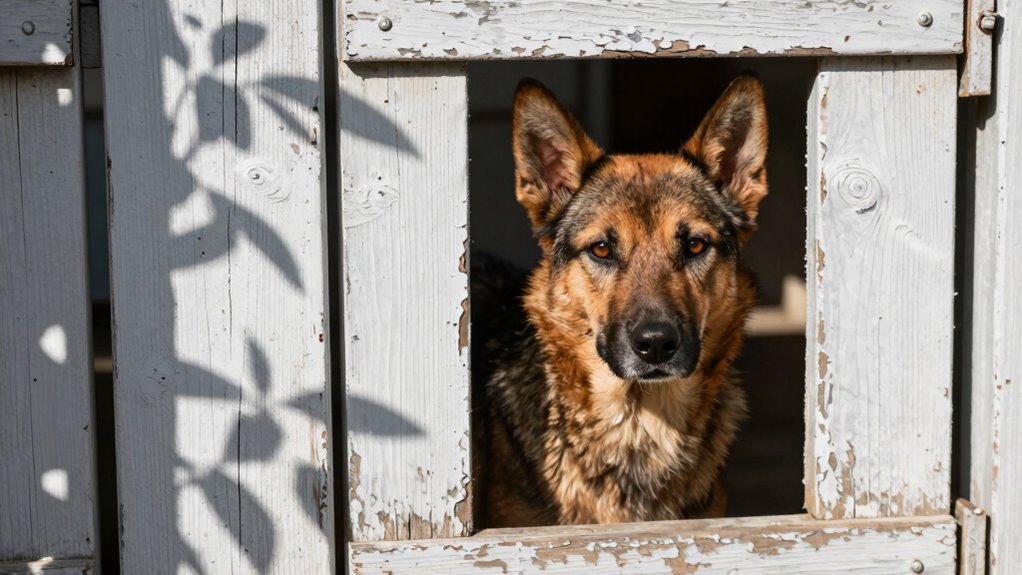
Have you ever wondered how gates control the flow of signals or substances in a system? It’s a fascinating process, especially when you consider how similar mechanisms work in your dog’s behavior. When a dog encounters a gate, it often triggers a specific response—sometimes calm, sometimes aggressive. This reaction hinges on what scientists call threshold behavior, meaning your dog’s response depends on how strongly they perceive a stimulus. If a stranger approaches the gate, your dog might remain quiet until the stimulus crosses a certain point. Once the threshold is surpassed, they switch from relaxed to alert, or even aggressive. This is where their territorial response kicks in; the gate becomes a barrier that marks their territory, prompting them to react more intensely to perceived intruders. You might notice your dog barking more when someone approaches the gate because their threshold for reacting has been reached or exceeded.
The gate acts as a boundary, sharpening your dog’s sense of territory. When an outsider crosses this invisible line, it signals a potential threat, activating their territorial response. This response isn’t just about barking; it’s an instinctual defense mechanism that helps protect their space. The gate amplifies this reaction by providing a clear, physical barrier that makes the boundary more prominent. Your dog’s nervous system responds strongly when stimuli, like unfamiliar voices or movement, come close to or cross the gate. If the stimulus is weak—say, a distant noise—they might ignore it. But when it gets stronger or more direct, crossing the threshold, your dog’s response escalates. Barking, growling, or even lunging are all ways they reinforce their territorial claim.
Understanding this threshold behavior helps you better interpret why your dog barks more behind gates. It’s not just random noise; it’s a calculated response based on their perception of threat or intrusion. The gate doesn’t just act as a physical barrier; it heightens your dog’s alertness and readiness to defend their territory. This reaction can vary depending on individual temperament, past experiences, and the specific stimulus involved. Some dogs have a lower threshold and react quickly, while others may require a more significant trigger. Recognizing these nuances allows you to manage their reactions more effectively. Training and socialization can help adjust their threshold, making them less reactive or more confident around boundaries. In principle, gate reactivity involves a complex interplay of threshold behavior and territorial instincts, with barriers amplifying the natural signals your dog sends when they feel their space is threatened.
As an affiliate, we earn on qualifying purchases.
Frequently Asked Questions
How Can I Prevent My Dog From Becoming Reactive at Gates?
To prevent your dog from becoming reactive at gates, practice threshold management by calmly guiding them through the gate, rewarding calm behavior. Use impulse control exercises to teach your dog to stay relaxed when visitors arrive or when encountering other dogs. Consistent training helps your dog associate the gate with positive experiences, reducing reactivity. Patience and positive reinforcement are key to building your dog’s confidence and controlling their impulses at thresholds.
Are Certain Breeds More Prone to Gate Reactivity?
Did you know some breeds are twice as likely to develop gate reactivity? Breed tendencies play a significant role, with herding and terrier breeds often showing higher reactivity risks. These breeds are naturally alert and protective, making them more prone to barking at gates. Understanding your dog’s breed tendencies can help you tailor training strategies, reducing their reactivity risks and creating a calmer, more controlled environment for everyone involved.
What Training Methods Are Effective for Gate Reactivity?
You can effectively address gate reactivity by using positive reinforcement to reward calm behavior when visitors arrive. Incorporate desensitization techniques by gradually exposing your dog to triggers behind barriers, rewarding patience and calmness. Consistent training, patience, and avoiding punishment help your dog associate the barrier with positive experiences. Over time, these methods reduce barking and build confidence, making your dog more comfortable around visitors and barriers.
Does Gate Reactivity Indicate Underlying Aggression?
Gate reactivity doesn’t necessarily mean your dog is aggressive, but it does reveal heightened threshold sensitivity and strong territorial instincts. When a dog reacts aggressively at barriers, it’s often because they feel the need to defend their space. This behavior is rooted in their natural instincts rather than true aggression. Understanding these triggers helps you manage their reactions better, focusing on training that addresses their territorial feelings without labeling them as aggressive.
Can Environmental Factors Influence a Dog’s Gate Reactivity?
Yes, environmental factors can influence your dog’s gate reactivity. Environmental triggers, like loud noises or unfamiliar scents, can heighten your dog’s alertness and response at barriers. Sensory sensitivities also play a role, making some dogs more reactive when they’re overwhelmed by their surroundings. By reducing these triggers and creating a calm environment, you can help your dog feel more secure and lessen their tendency to bark or react at gates.
As an affiliate, we earn on qualifying purchases.
Conclusion
Just like the watchful guardian at the gate, your dog reacts to barriers with instinct and emotion. Remember, understanding this gate reactivity is the first step to easing their fears and frustrations. With patience and training, you’ll help them see beyond the fence, embracing calm instead of chaos. As the gatekeeper of their behavior, you hold the key—turn the barrier into a bridge, and watch your dog’s confidence grow, breaking down walls one step at a time.
As an affiliate, we earn on qualifying purchases.
dog training gate for reactivity
As an affiliate, we earn on qualifying purchases.
As an affiliate, we earn on qualifying purchases.
Fall Picks
fall essentials
As an affiliate, we earn on qualifying purchases.