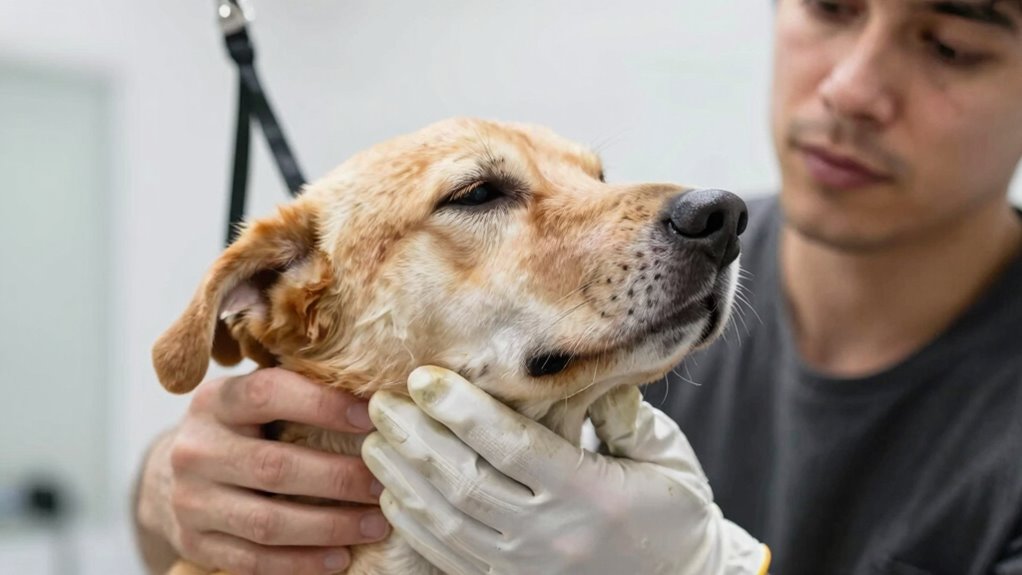

To help reduce your dog’s grooming anxiety, teaching a ‘chin rest’ can be very effective. Gently encourage your dog to rest their chin on your hand or a designated spot during grooming sessions. Use calm voice, gentle touches, and treats to reinforce this behavior, making the experience more relaxing. Watch for signs of stress and pause if needed. With patience and consistency, you’ll create a calm handling routine—keep going to learn how to master this technique smoothly.
Key Takeaways
- Teach dogs to rest their chin on a designated spot to promote calm and stability during grooming.
- Use positive reinforcement to reward the dog when they naturally or willingly offer the chin rest position.
- Gradually introduce the chin rest cue by guiding and rewarding the dog in small, controlled steps.
- Combine chin rest training with desensitization techniques to reduce overall grooming anxiety.
- Maintain a calm environment and patient approach to reinforce relaxation and build confidence during handling.
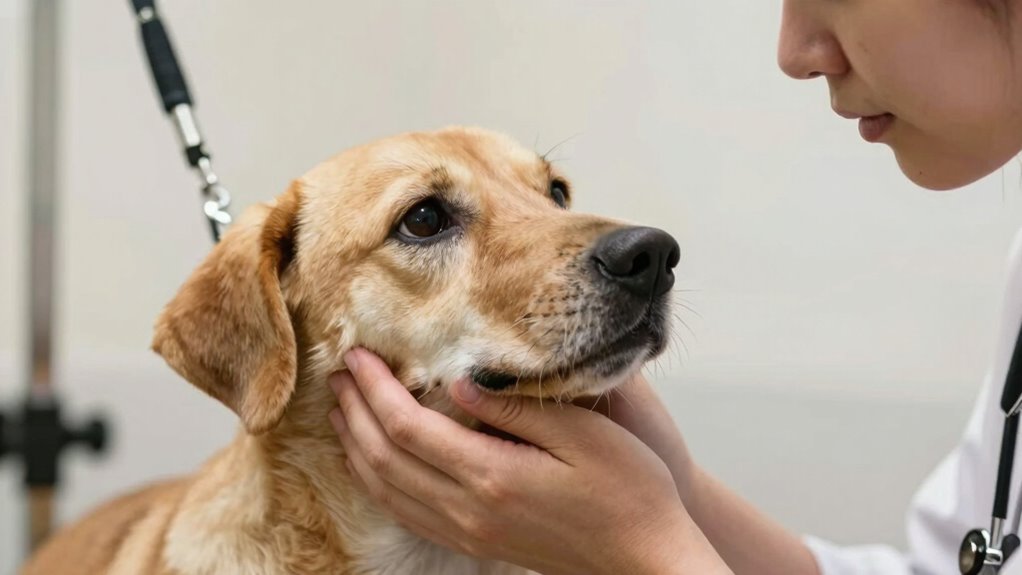
Have you ever felt a wave of anxiety before a grooming session? If so, you’re not alone. Many pets experience stress when it’s time for grooming, but you can help your dog feel more at ease by implementing simple strategies like desensitization techniques and recognizing calming signals. These approaches make grooming a more positive experience and reduce the likelihood of anxiety or resistance.
Desensitization techniques involve gradually exposing your dog to grooming-related stimuli in a controlled, positive manner. Instead of forcing your dog into uncomfortable situations, you start by touching and handling parts of their body lightly and then rewarding calm behavior. For example, gently touching their paws or ears and immediately offering praise or treats can help your pet associate these actions with positive outcomes. Over time, you increase the intensity or duration of contact, always ensuring your dog remains relaxed. This step-by-step exposure builds confidence and diminishes fear, turning grooming into a routine your dog can tolerate and even enjoy.
Gradually expose your dog to grooming, rewarding calm behavior to build confidence and reduce fear.
Equally important is learning to recognize your dog’s calming signals—subtle body language cues that reveal their emotional state. When a dog is feeling anxious or overwhelmed, they might yawn, lick their lips, or turn their head away. Spotting these signals early allows you to pause and give your pet a break before their stress escalates. Using calming signals yourself, such as slow blinking, soft voice, and relaxed posture, can also communicate to your dog that everything is okay. These signals help create a soothing environment and foster a sense of security during grooming.
Starting with desensitization and understanding calming signals goes hand in hand. By gradually exposing your dog to grooming routines and paying close attention to their body language, you can adjust your approach in real-time. For instance, if your dog begins to yawn or lick their lips during a session, you can pause, offer a calming signal like a gentle voice, and give them a moment to relax. This approach helps prevent escalation of anxiety and promotes a more cooperative attitude.
Additionally, incorporating positive reinforcement techniques during grooming sessions encourages your dog to associate grooming with pleasant experiences. Consistency is key. Regularly practicing desensitization techniques and reinforcing calming signals will help your dog become more comfortable over time. Remember, patience and positive reinforcement are essential. When your dog shows signs of calmness, reward them generously. Over time, they’ll learn that grooming isn’t something to fear but a routine that can be approached with confidence and trust. By integrating these methods into grooming sessions, you’ll make the experience calmer, safer, and more enjoyable for both of you.
Frequently Asked Questions
How Do I Introduce the Chin Rest to a Nervous Dog?
To introduce the chin rest to a nervous dog, start with desensitization techniques by placing it nearby and rewarding calm behavior with treats and praise. Gradually move the chin rest closer, always ensuring your dog stays relaxed. Use positive reinforcement to encourage cooperation and patience. Keep sessions short and gentle, and never force the dog, so they associate the chin rest with positive experiences and feel more comfortable over time.
Can the Chin Rest Be Used for Cats or Other Animals?
Yes, you can use the chin rest for cats and other animals during grooming. Some animals, like cats, benefit from gentle restraint with a chin rest, which helps reduce stress and improve cooperation. In animal training, this technique promotes calm handling. Imagine transforming grooming into a positive experience for your pet—using a chin rest can make grooming safer and more comfortable for both of you.
What if My Pet Refuses to Use the Chin Rest?
If your pet refuses to use the chin rest, try behavior modification and positive reinforcement. Start by offering treats or praise when they approach or sniff the chin rest, making it a positive experience. Gradually encourage them to rest their chin on it by rewarding small steps. Patience is key; over time, your pet will associate the chin rest with comfort and rewards, easing grooming anxiety.
Are There Specific Breeds That Respond Better to This Method?
Certain breeds tend to respond better to the chin rest method, especially those with calmer temperaments and breed compatibility with handling. For example, breeds like Shih Tzus, Cavalier King Charles Spaniels, and Bichon Frises often accept the technique more easily. These breeds typically have gentle temperaments and are more adaptable to grooming routines. Remember, understanding your pet’s temperament considerations helps tailor the approach for a more relaxed grooming experience.
How Long Does It Typically Take for a Pet to Feel Comfortable?
It usually takes a few sessions, but every pet is different. You should use desensitization techniques, gradually exposing your pet to grooming routines, and pair them with positive reinforcement like treats and praise. This approach helps them build confidence and feel more comfortable over time. Be patient and consistent, and you’ll notice progress as your pet associates grooming with positive experiences, reducing anxiety and encouraging calm handling.
Conclusion
By practicing the ‘chin rest’ technique, you can ease grooming anxiety and create a calmer experience for your pet. Visualize gently supporting their chin, helping them feel secure and relaxed. Think of it as a bridge connecting trust and comfort, making grooming smoother for both of you. When you incorporate this simple method, you’re not just reducing stress—you’re building a stronger bond. So, give it a try and see how calm and confident your pet can become.