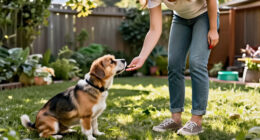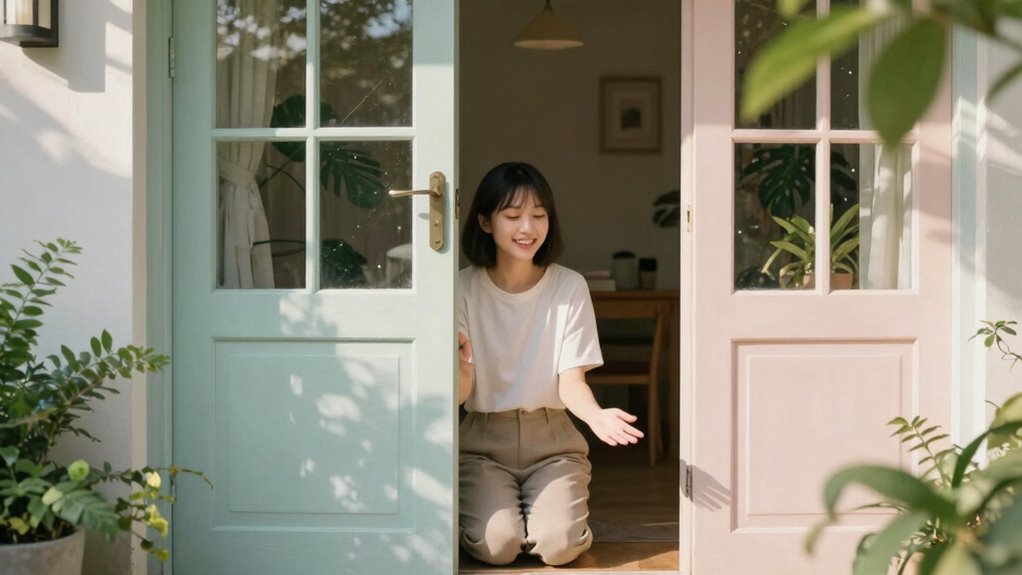

Start by taking a moment to breathe deeply and ground yourself before opening the door. Approach your dog confidently and calmly, avoiding rushing or sudden movements. Use gentle commands like sit or stay to establish control, then greet your dog softly, keeping your energy relaxed. Consistently practicing this routine helps your dog learn that calmness earns attention, quickly reducing excitement. Keep this peaceful approach consistent, and you’ll notice smoother door behavior—continue on to uncover even more effective tips.

Get pet supplies delivered free with Prime
- Fast, free delivery on millions of items
- Prime Video, Amazon Music and more included
- Member-only deals all year
Key Takeaways
- Begin with deep breathing and grounding before opening the door to set a calm tone.
- Approach the dog slowly and confidently, avoiding rushing or abrupt movements.
- Use consistent commands like sit or stay to establish control during greetings.
- Keep greetings short and controlled, rewarding calm behavior to reinforce tranquility.
- Maintain a peaceful environment and routine to promote long-term calmness during door interactions.
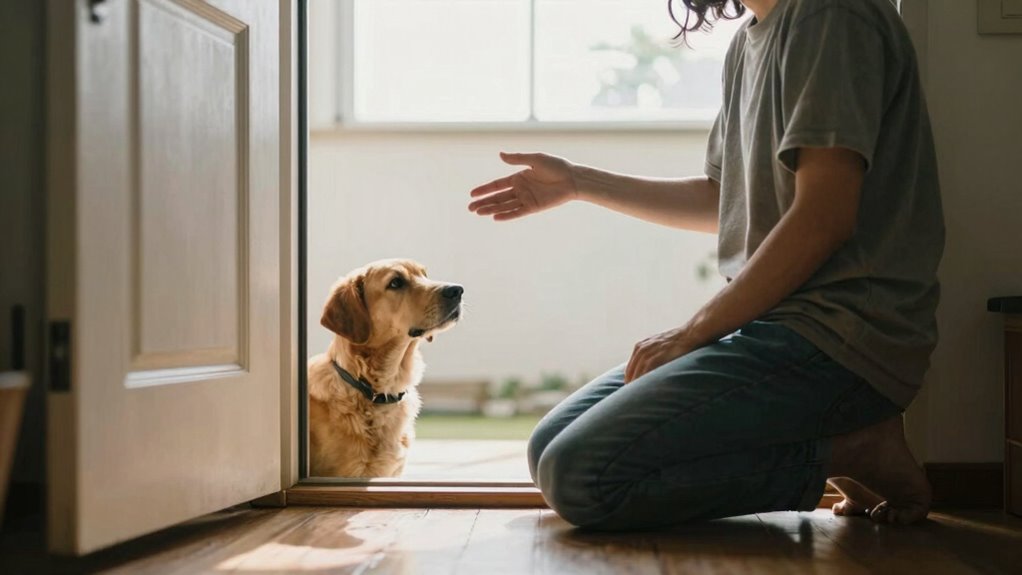
Starting your day with a calm greeting routine sets a peaceful tone and helps you feel more centered. When you approach your dog in a relaxed, confident manner, you’re not only practicing good dog training but also reducing your own stress. Dogs are highly perceptive to your emotions, so a calm demeanor encourages them to mirror that tranquility. This mindful approach aligns with Stoic principles that emphasize controlling your inner state regardless of external circumstances. Incorporating emotional regulation techniques into your routine can further enhance your ability to stay calm and composed. This routine can dramatically change how your dog reacts at the door, transforming it from a chaos-filled event into a peaceful moment for both of you.
A calm, confident greeting sets a peaceful tone and transforms doorways into tranquil moments for you and your dog.
To begin, take a few moments before opening the door. Breathe deeply, grounding yourself and releasing tension. When you’re calm, your dog senses your confidence and feels less anxious. As you approach the door, keep your movements slow and deliberate. Avoid rushing or showing impatience, since dogs pick up on those cues and may become more excited or anxious. Instead, stand still, look at your dog, and give them a gentle command to sit or stay. This small act of obedience helps establish control and makes the greeting more predictable. Incorporating a consistent greeting routine into your daily dog training not only improves door manners but also promotes stress reduction. You’re actively teaching your dog that calmness is the way to get your affection and attention. Over time, this reduces their excitement levels, making door interactions smoother and less chaotic. Remember, patience is key. Each calm, controlled greeting reinforces a peaceful behavior pattern, and your dog will begin to anticipate that calmness is the norm, not the exception. Being mindful of your emotional cues during these moments can further enhance your dog’s ability to stay relaxed and composed. Additionally, maintaining a calm environment around the door helps reinforce this peaceful routine.
As an affiliate, we earn on qualifying purchases.
Frequently Asked Questions
How Long Does the Routine Typically Take to See Results?
You can typically see results within a week or two, but timing adjustments depend on your dog’s temperament. Consistency benefits both you and your pet, so sticking to the routine daily speeds up progress. Be patient and persistent, as regular practice reinforces calm behavior. Over time, your dog will become more comfortable and responsive, making door greetings smoother and less stressful for everyone involved.
Can This Routine Be Adapted for Different Cultural Greeting Styles?
You can absolutely adapt this routine to fit different cultural greeting styles. Think of it as tailoring a suit—adjusting the gestures and tone to match local greeting customs. For example, in some cultures, a bow or cheek kiss replaces a handshake. By respecting cultural variations, you create a welcoming atmosphere that encourages positive door behavior, no matter the greeting customs. This flexibility helps build trust and comfort quickly.
What if the Other Person Doesn’T Respond Calmly?
If the other person doesn’t respond calmly, stay culturally sensitive and avoid escalating emotional triggers. You can gently adjust your tone, giving them space to reset without taking it personally. Keep your body language open and respectful, showing you’re committed to a peaceful interaction. Remember, patience and understanding help de-escalate tension, fostering a calmer response over time. Your calm persistence can influence a more positive outcome.
Are There Any Common Mistakes to Avoid During the Routine?
Think of your body language and eye contact as your handshake—firm but gentle. Avoid rushing or appearing impatient, as it can send mixed signals. Don’t forget to maintain natural eye contact and keep your posture open; these are key mistakes to avoid during the routine. If you slip, gently reset with a calm breath, showing you’re in control. This helps guarantee your greeting stays warm and effective.
Is This Routine Effective for Children or Only Adults?
This routine is effective for both children and adults, helping improve children’s behavior around doors. Kids respond well to calm, consistent adult routines, which can reduce anxiety and resistance. When you use this routine, you’re creating a predictable, soothing environment that encourages cooperation. By applying the same calm approach used in adult routines, you help children feel secure and more willing to follow door etiquette, making shifts smoother for everyone.
As an affiliate, we earn on qualifying purchases.
Conclusion
By adopting this calm greeting routine, you’re like a gentle breeze calming a restless storm at your door. Your consistent, relaxed approach can quickly change door behavior, making interactions smoother and more welcoming. Remember, just as a single ripple can calm a turbulent pond, your calmness can transform your doorway into a peaceful space. Stick with it, and watch as even the most stubborn door responds with newfound calm and cooperation.
As an affiliate, we earn on qualifying purchases.
dog treat reward for calm behavior
As an affiliate, we earn on qualifying purchases.
As an affiliate, we earn on qualifying purchases.
Halloween Picks
halloween
As an affiliate, we earn on qualifying purchases.