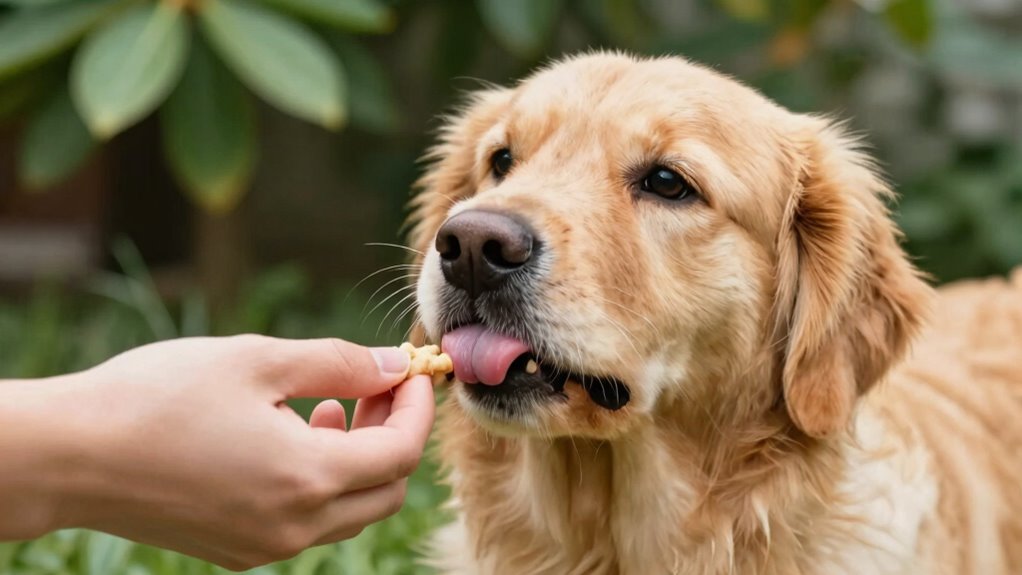

The biggest mistake that confuses dogs fast is rewarding them at the wrong time, such as too early or too late after a behavior. If you don’t give rewards immediately when the dog does something right, they struggle to connect the action with the reward. Inconsistent timing can cause frustration and slow down learning. By understanding proper timing and staying consistent, you’ll see clearer communication and faster progress—keep going to discover more helpful tips.
Key Takeaways
- Giving rewards too late weakens the connection between behavior and reinforcement.
- Rewarding too early can confuse the dog about which action is being rewarded.
- Inconsistent timing disrupts the dog’s understanding of expected behaviors.
- Delayed rewards cause the dog to associate the wrong actions with reinforcement.
- Rushing the reward process hampers clear communication and slows learning progress.
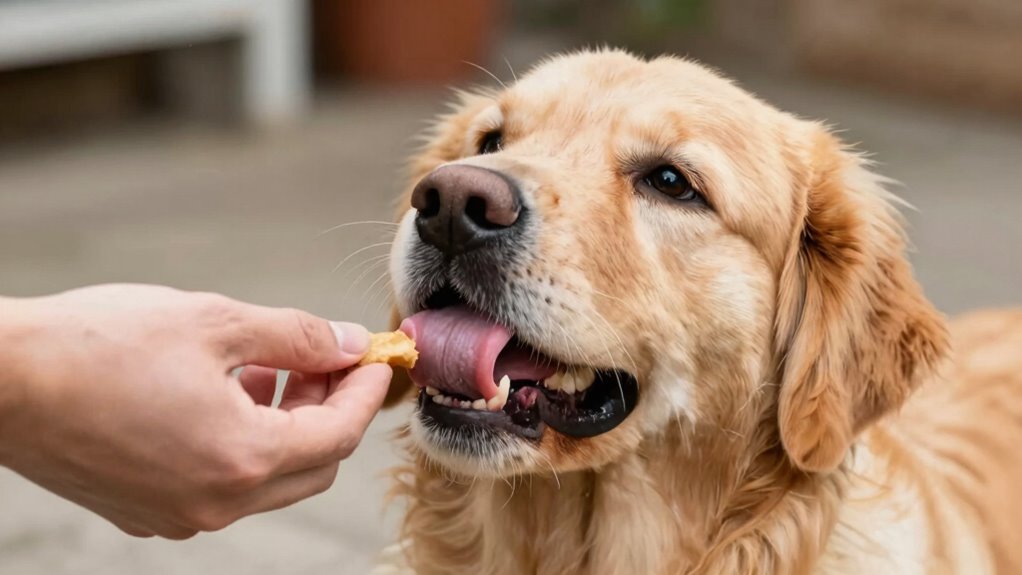
One of the most common mistakes dog owners make when training is giving rewards at the wrong time, which can confuse your dog and hinder learning. When you’re inconsistent with your timing, your dog may struggle to understand what exactly is being rewarded. To avoid this, you need to focus on training consistency, so your dog always knows what behavior earns a reward. If you’re inconsistent—pausing too long before giving a treat or rewarding too early—the dog might get mixed signals. For example, if you sometimes reward for sitting and other times for lying down without clear cues, your dog won’t develop a clear understanding of what’s expected. Consistent timing helps your dog associate the specific behavior with the reward, making learning quicker and more effective. Additionally, training consistency supports the development of trust and clear communication between you and your dog. Dog patience is equally essential. As you work through training, you must give your dog enough time to process what you’ve asked. Rushing the reward process can lead to confusion, especially if your dog doesn’t immediately perform the behavior correctly. Patience allows your dog to understand that good behavior will be rewarded, even if it takes a moment. It’s important to stay calm and avoid rewarding every tiny movement or mistake, which can create dependency or confusion. Instead, wait until your dog fully completes the command, then immediately follow up with praise or a treat. This helps your dog connect the dots between the behavior and the reward, reinforcing learning. Proper timing and patience are crucial for effective training, and it’s indispensable to reward at just the right moment—immediately after the correct action. If you wait too long, your dog might think the reward is for something else or not understand why they’re being rewarded. This is why training consistency and patience go hand in hand. When you’re consistent with your timing, your dog learns to expect rewards for specific behaviors. Patience ensures you don’t rush the process, giving your dog the time they need to succeed. Incorporating clear communication enhances the effectiveness of your training and minimizes misunderstandings. Consistent and precise communication is crucial for building trust and ensuring your dog understands your commands. Recognizing your dog’s body language can also help you gauge when they are ready for the next command or reward, further improving training outcomes. Over time, this approach builds trust and clarity, making training sessions more productive. Remember, dogs thrive on routine and clear communication. Perfect timing and steady patience will help your dog understand what you want and respond reliably, making training a smoother, more rewarding experience for both of you.

Dog Training Clicker with Sring Wrist and Keyring – Pet Dog Training Clickers for Puppy, Cat, Potty, Bird, Horse, Pet, Trainer Training Tools, Behavior Aids
- New Communication Tool: Enhances communication with your pet
- Versatile Pet Training: Suitable for dogs, cats, birds, horses
- Easy Behavior Marking: Press to mark desired actions
As an affiliate, we earn on qualifying purchases.
As an affiliate, we earn on qualifying purchases.
Frequently Asked Questions
Can Reward Timing Affect a Dog’s Long-Term Behavior?
Yes, reward timing considerably affects your dog’s long-term behavior. When you’re consistent with motivation and reinforcement clarity, your dog learns what’s expected and stays motivated. Delayed rewards can cause confusion and weaken the connection between actions and praise. To build reliable habits, reward your dog immediately after good behavior, ensuring they understand exactly what’s being reinforced. This consistency helps your dog learn faster and behave more reliably over time.
How Do Different Breeds Respond to Timing Inconsistencies?
Imagine a world where breeds react differently to timing inconsistencies. You’ll notice breed-specific reactions: some dogs, like Border Collies, thrive with precise training, while others, like Retrievers, might need more patience. Your training consistency is key—timing mistakes can confuse breeds and hinder progress. Adjust your approach based on your dog’s breed, and you’ll foster trust and better behaviors, turning chaos into harmony.
Is There a Perfect Timing Window for All Training Commands?
There isn’t a perfect timing window for all training commands because each dog learns differently. However, maintaining timing consistency and reward immediacy is essential. You should give the reward within a second or two after the desired behavior, so your dog links the action to the reward. Being prompt and consistent helps your dog understand what you expect, making training more effective and reducing confusion.
Can Delayed Rewards Still Be Effective in Training?
Delayed rewards can still be effective if you maintain treat consistency and patience in training. Studies show that dogs can understand delayed reinforcement if it’s given within a reasonable timeframe, around 2-3 seconds. Your role is to stay patient and avoid confusing your dog. Consistent treats help reinforce desired behaviors, even with slight delays. Remember, training patience and treat consistency are key to successful, lasting results.
How Does Reward Timing Influence a Dog’s Emotional State?
Reward timing directly influences your dog’s emotional impact and training motivation. When you reward immediately, your dog feels successful and happy, strengthening the bond and encouraging enthusiastic participation. However, delayed rewards can cause confusion, leading to frustration or disinterest. You should aim for consistent, timely rewards to boost your dog’s positive emotions and motivation, making training more effective and enjoyable for both of you.

heouvo 1.67 Cup Magnetic Dog Treat Pouch with Training Clicker (Black)
- Pro-Level Dog Training Kit: Includes treat pouch and clicker for training
- Compact Yet Spacious: Holds 1.67 cups of treats in a small size
- Magnetic Closure Design: Strong magnets prevent treat spillage
As an affiliate, we earn on qualifying purchases.
As an affiliate, we earn on qualifying purchases.
Conclusion
Remember, timing is everything when rewarding your dog. If you delay, you risk confusing them and muddying the learning process. Keep your rewards immediate and consistent to build a clear connection. Think of it as hitting the nail on the head—get it right, and your dog will understand quickly. When you’re precise with your timing, training becomes smoother, and your furry friend will be barking up the right tree in no time.

Buddy Biscuits Trainers Training Bites Soft & Chewy Dog Treats, Bacon, 10 oz. Pouch
- Flavor: Made with natural pork liver
- Treat Quantity: 500 treats per bag
- Calorie Content: Only 1.5 calories per treat
As an affiliate, we earn on qualifying purchases.
As an affiliate, we earn on qualifying purchases.

E-Collar Educator FT-330 Finger Clicker Dog Training Tool, Yellow
- Positive Reinforcement Tool: Helps dogs learn behaviors faster
- Adjustable Sound Levels: Four customizable sound settings
- Portable & Lightweight: Easy to carry for training anywhere
As an affiliate, we earn on qualifying purchases.
As an affiliate, we earn on qualifying purchases.