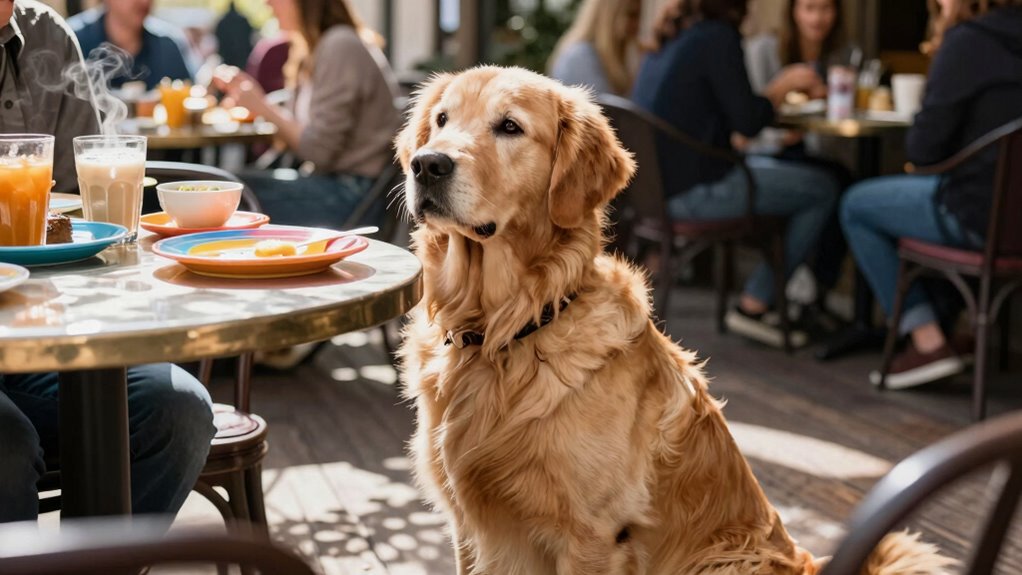
Many dogs struggle with outdoor dining spots because their senses become overwhelmed by unfamiliar sights, sounds, and smells. Bright sunlight, passing cars, loud conversations, and strong food aromas can cause anxiety or overstimulation. If your dog starts barking, pacing, or trying to retreat, they’re reacting to this overload. Understanding these signs helps you manage their environment better. Keep exploring, and you’ll discover more ways to help your dog feel comfortable in busy outdoor settings.

Get pet supplies delivered free with Prime
- Fast, free delivery on millions of items
- Prime Video, Amazon Music and more included
- Member-only deals all year
Key Takeaways
- Dogs are overwhelmed by unfamiliar sights, sounds, and smells at outdoor dining locations.
- Bright sunlight and passing traffic increase environmental stimulation, causing stress.
- Loud background noise and aromas of food can overstimulate a dog’s senses.
- Sudden movements or unpredictable stimuli trigger anxiety and reactivity.
- Limited ability to escape or retreat can heighten a dog’s discomfort and overstimulation.
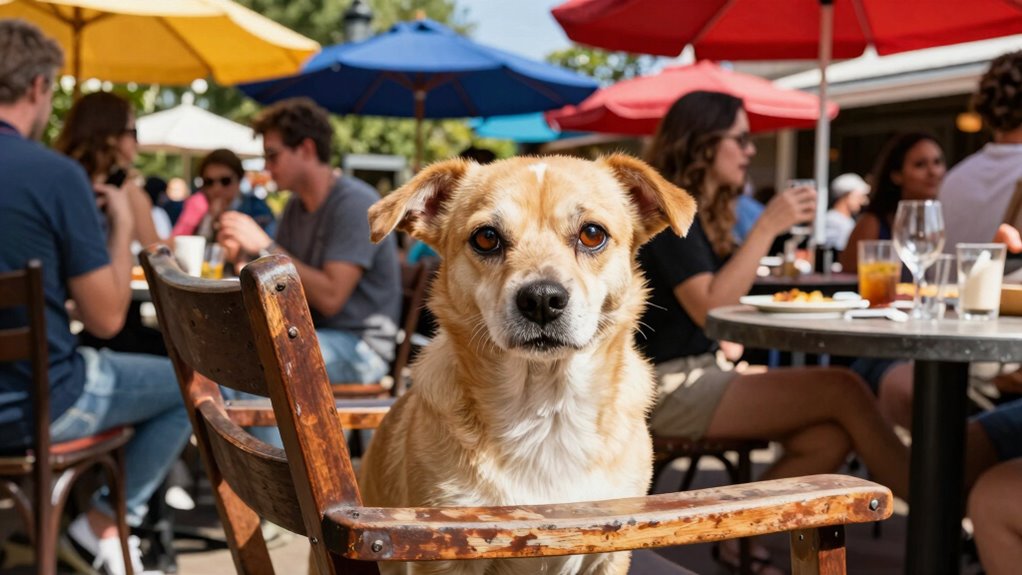
Many dogs find outdoor dining spots overwhelming because they’re exposed to a flurry of unfamiliar sights, sounds, and smells. This environment can trigger dog anxiety, making it difficult for your pet to relax or enjoy the outing. When a dog encounters so much new stimulation all at once, it often results in sensory overload. Your dog might bark, whine, or try to retreat, feeling overwhelmed by the chaos around them. This reaction isn’t about being rude or uninterested; it’s a natural response to feeling overstimulated and unsure of what’s happening.
Sensory overload occurs when a dog’s senses are bombarded with too many stimuli simultaneously. Bright sunlight, loud conversations, passing cars, and the aroma of food all contribute to an intense environment. Dogs rely heavily on their senses to interpret the world, and when these senses are flooded, they can become overwhelmed quickly. For some dogs, this leads to signs of distress like pacing, trembling, or lip licking. Others might become more reactive, barking or trying to escape the situation altogether. These reactions can make outdoor dining stressful not only for the dog but also for you, especially if you’re trying to enjoy a peaceful meal.
Understanding why your dog struggles with outdoor dining helps you address their anxiety more effectively. It’s important to recognize the signs early and create a plan to help them cope. For example, if your dog shows signs of anxiety, consider bringing familiar items like their favorite blanket or toy to help create a sense of security. Keeping a safe space nearby, such as a shaded corner or a leash attachment, allows your dog to retreat if they feel overwhelmed. Avoid loud or crowded spots during peak hours, and gradually introduce your dog to outdoor dining environments in shorter, controlled sessions. Over time, this exposure can help desensitize them to the stimuli, reducing their anxiety and sensory overload. Recognizing sensory overload and managing it effectively can significantly improve your dog’s outdoor experiences. Additionally, understanding the concept of metaphysical guidance can help in creating a calming environment for your pet by fostering positive associations with outdoor outings. Being attentive to your dog’s body language and responses can also serve as a valuable indicator of their comfort level, guiding you to adjust your approach accordingly.
As an affiliate, we earn on qualifying purchases.
Frequently Asked Questions
How Can I Help My Dog Feel More Comfortable Outdoors?
To help your dog feel more comfortable outdoors, start with leash training so they feel secure and close to you. Gradually expose them to outdoor sounds, practicing noise desensitization by rewarding calm behavior. Keep visits short initially, offering treats and praise to build positive associations. Patience is key—over time, your dog will become more confident, making outdoor dining more enjoyable for both of you.
Are Certain Breeds More Prone to Outdoor Dining Anxiety?
Yes, certain breeds are more prone to outdoor dining anxiety due to breed tendencies and anxiety triggers. For example, smaller or timid breeds, like Chihuahuas or Dachshunds, often feel more overwhelmed by new environments and noise. Working or herding breeds may be more confident but still can be affected by unfamiliar sights and sounds. Understanding your dog’s breed tendencies helps you anticipate anxiety triggers and work on gradual exposure to outdoor dining situations.
What Training Techniques Improve a Dog’s Outdoor Social Skills?
To improve your dog’s outdoor social skills, start with consistent leash training to guarantee they stay calm and responsive. Incorporate socialization exercises by gradually introducing them to busy outdoor environments, keeping sessions short and positive. Reward good behavior with treats and praise, helping your dog associate outdoor outings with enjoyable experiences. Over time, these techniques boost their confidence, making outdoor dining spots less stressful and more enjoyable for both of you.
How Does Weather Impact a Dog’s Outdoor Dining Experience?
Weather acts like a fickle friend, impacting your dog’s outdoor dining experience. You’ll notice temperature sensitivity makes your pup shiver or overheat, causing discomfort. Noise sensitivity amplifies outdoor sounds, stressing your dog or making them anxious. Bright sunlight might overwhelm sensitive eyes, while chilly winds can chill their nerves. To help, choose shaded, calm spots, and avoid extreme weather. Your attentive care turns outdoor dining into a more enjoyable outing for your furry friend.
Can Dietary Restrictions Affect a Dog’s Outdoor Dining Behavior?
Dietary restrictions can substantially influence your dog’s outdoor dining behavior. If your dog has dietary sensitivities or feeding restrictions, they might feel uncomfortable or anxious when offered unfamiliar foods or treats outside their usual diet. This discomfort can lead to reluctance or stress during outdoor meals. To help, bring their familiar food and avoid giving them anything that might trigger sensitivities, ensuring they stay calm and enjoy the outing.
As an affiliate, we earn on qualifying purchases.
Conclusion
Remember, a dog’s comfort can make all the difference in outdoor dining. Patience and understanding go a long way in helping your furry friend adjust. Sometimes, “Rome wasn’t built in a day,” and the same applies to your dog’s outdoor confidence. With time, positive experiences, and gentle guidance, you’ll both enjoy those restaurant outings together. Keep your patience, stay consistent, and soon outdoor dining will become a shared adventure rather than a struggle.
As an affiliate, we earn on qualifying purchases.
As an affiliate, we earn on qualifying purchases.
Halloween Picks
halloween
As an affiliate, we earn on qualifying purchases.