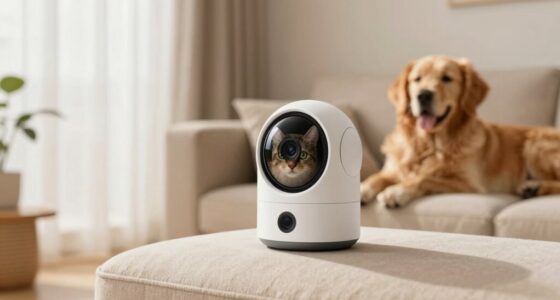

Two-way audio devices might seem comforting, but they can actually trigger anxiety in your dog. Hearing your voice unexpectedly can cause confusion, stress, or even fear, especially if your dog already struggles with separation issues. Sudden sounds and background noises may startle them or make them feel less safe, not more. If you’re curious about how these devices impact your pet, there’s more you should consider about their environment and security.
Key Takeaways
- Hearing voices can increase stress or confusion in dogs, especially those with separation anxiety.
- Dogs may perceive the two-way audio as a threat or intrusion, causing fear or startle responses.
- Poor audio quality or background noises can mislead dogs, making them feel unsafe or anxious.
- Continuous audio transmission raises privacy and security concerns, potentially disturbing the dog’s environment.
- Unsecured devices may compromise privacy, leading to unpredictable environments that heighten dog anxiety.

Many dog owners discover that two-way audio technology can markedly enhance their ability to interact with their pets, even when they’re not in the same room. You might think it’s a perfect way to soothe your dog or keep an eye on them, but it doesn’t always work out as expected. For some dogs, hearing your voice through a device can actually increase their anxiety rather than reduce it. If your dog already struggles with separation anxiety, hearing your voice might trigger more stress instead of comfort. They could become more restless, whine louder, or even bark excessively because they don’t understand where you are or why you’re not physically with them.
It’s also important to recognize that two-way audio isn’t a one-size-fits-all solution. While it can be helpful in many situations, it can unintentionally make things worse if your dog is sensitive to sound or easily startled. Some dogs might perceive your voice as a threat or an intrusion, especially if the audio device picks up background noises that seem unfamiliar or alarming to them. This can lead to increased fear or confusion, making it harder for your pet to settle down. You need to gauge your dog’s temperament and past experiences before relying heavily on two-way audio as a calming tool. Additionally, understanding your dog’s individual response can help you decide whether sound sensitivity is something you should work on gradually or avoid altogether.
Privacy concerns are another hurdle that many pet owners overlook. Having a device that constantly transmits sounds back and forth raises questions about security. You might worry about who else can listen in or access the feed, especially if the device isn’t properly secured. This isn’t just about your privacy; it’s about your pet’s comfort too. If your dog senses that there’s a constant, unpredictable intrusion into their space, they may become more anxious or wary of the device itself. The presence of the device, along with the sounds it captures, can create an environment that feels less like a safe haven and more like an intrusion, which defeats the purpose of trying to comfort your dog. Additionally, the security risks associated with connected devices can compromise both your privacy and your pet’s sense of safety.
Furthermore, understanding the potential for digital intrusion can help pet owners make more informed decisions about using these devices. Properly securing your device and understanding its privacy features is essential to maintaining your pet’s sense of security. It’s also beneficial to consider whether the device’s audio quality might impact your dog’s perception of the environment, for better or worse.
As an affiliate, we earn on qualifying purchases.
Frequently Asked Questions
Can Two-Way Audio Cause Dogs to Become More Anxious?
Yes, two-way audio can cause your dog to become more anxious, especially if they experience auditory overstimulation or hear unfamiliar voices. When your dog interacts with a stranger through the device, it might increase their stress instead of comfort. Strangers’ voices or sudden sounds can confuse or scare your dog, leading to increased anxiety. Always monitor your dog’s reactions and consider their comfort level before using two-way audio.
How Do Dogs Typically React to Unfamiliar Voices Through Two-Way Audio?
Dogs often react with curiosity or caution when they hear unfamiliar voices through two-way audio. They might bark, whine, or become anxious, especially if they don’t recognize the voice. Incorporating music therapy can help soothe them, but voice recognition plays a vital role. If they recognize a familiar voice, they’re more likely to feel comforted. Otherwise, the unfamiliar sound may increase their stress or confusion.
Is Two-Way Audio Safe for Dogs With Separation Anxiety?
Two-way audio can be risky for dogs with separation anxiety due to their sound sensitivity and difficulty distinguishing voices. If your dog has strong reactions to unfamiliar voices or loud noises, the technology might increase their stress rather than soothe them. Voice recognition features can help, but they aren’t foolproof. Monitor your dog closely when using two-way audio, and consider consulting a vet or trainer to verify it’s safe for your pet.
Do All Dog Breeds Respond Similarly to Two-Way Audio Devices?
Not all dog breeds respond the same to two-way audio devices; their reactions are like snowflakes—uniquely individual. Breed-specific communication and vocalization differences influence how your dog perceives and reacts to hearing your voice. Some breeds find comfort in the sound, while others may become more anxious or confused. Understanding these nuances helps you tailor your approach, ensuring the device supports your dog’s emotional well-being rather than inadvertently causing stress.
Can Two-Way Audio Help or Harm a Dog’s Training Process?
Two-way audio can help your dog’s training by allowing you to reinforce commands and provide reassurance. However, it can also harm the process if you create vocal interference or inconsistent communication, confusing your dog. For effective training, maintain consistency when using two-way audio and avoid overusing it, as too much vocal input may lead to dependence or anxiety. Use it thoughtfully to support, not hinder, your training goals.
As an affiliate, we earn on qualifying purchases.
Conclusion
While two-way audio might seem like a modern marvel, it’s not always a comfort for dogs. Just like a good old-fashioned telegram, hearing your voice can sometimes cause confusion or stress, especially if they don’t understand your words or tone. Remember, technology isn’t a one-size-fits-all solution—sometimes, a gentle touch or a simple glance can mean more than any device ever could. Keep your furry friend’s feelings in mind; after all, timing and context are everything, even in this digital age.
As an affiliate, we earn on qualifying purchases.
As an affiliate, we earn on qualifying purchases.