
To prevent resource guarding, start by creating positive associations around your dog’s belongings. Approach calmly, toss treats near food or toys, and reward your dog for staying relaxed. Practice sharing exercises where your dog willingly gives up items for treats, reinforcing that sharing leads to rewards. Consistently incorporate these techniques into daily routines, focusing on patience and positive reinforcement. Keep learning strategies to help your dog become more comfortable sharing and trusting around possessions.
Open a free Amazon Business account
Business pricing, bulk buying and tax-exempt orders.
As an affiliate, we earn on qualifying purchases.
Key Takeaways
- Approach your dog calmly and toss treats near valued items to promote positive associations.
- Teach your dog to stay relaxed around belongings through gradual desensitization exercises.
- Use exchange techniques, offering treats when the dog relinquishes items voluntarily.
- Reinforce sharing and calm behavior consistently with positive rewards during daily routines.
- Avoid punishment; focus on building trust and confidence to reduce guarding tendencies over time.

Resource guarding is a common behavior where dogs become protective over food, toys, or other valued items. If you notice your dog growling, snatching, or stiffening when someone approaches their belongings, it’s essential to address this behavior early. One effective way to prevent resource guarding from escalating is through possessiveness reduction techniques combined with sharing exercises. These methods help your dog learn that having valuable items around people isn’t a threat but rather a situation that can be managed calmly.
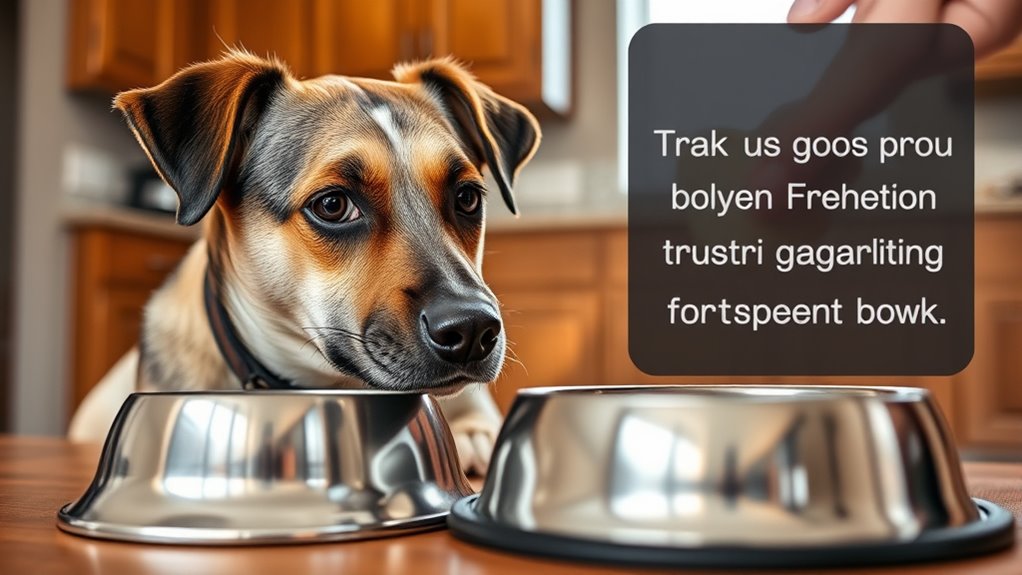
Start by implementing possessiveness reduction strategies. This involves teaching your dog to stay relaxed and confident when their belongings are approached or handled. For example, when your dog is eating, approach them calmly and toss a high-value treat near their bowl. If they remain calm and continue eating, reward their patience. Over time, gradually increase the closeness of your approach and the duration before giving the treat, reinforcing that your presence near their resources isn’t a trigger for guarding. The goal is to desensitize your dog to the idea that others can be near their valued items without causing stress or aggression.
Teach your dog to stay relaxed near belongings with calm approaches and treats.
Sharing exercises play an essential role in modifying possessiveness. These exercises involve encouraging your dog to willingly give up items in exchange for treats or other rewards, creating a positive association with sharing. For instance, offer your dog a toy and gently ask for it back, then immediately reward them with a tasty treat once they comply. Repeat these exchanges frequently, ensuring your dog sees giving up their possessions as a positive experience rather than a loss. This practice fosters trust and reduces the instinct to guard items fiercely. It teaches your dog that sharing can lead to rewards and that you’re a safe source of treats, not a threat.
Consistency is key when performing possessiveness reduction and sharing exercises. Incorporate these activities into daily routines, and always avoid punishment or harsh corrections. Instead, focus on positive reinforcement to build a sense of security around valued items. Remember, the goal isn’t to eliminate resource guarding entirely overnight but to gently shift your dog’s perceptions and reactions. Over time, your dog will become more comfortable sharing and less inclined to see valuable objects as something to fiercely defend.
dog resource guarding training treats
As an affiliate, we earn on qualifying purchases.
As an affiliate, we earn on qualifying purchases.
Frequently Asked Questions
How Can I Tell if My Dog Is Resource Guarding?
You can tell if your dog is resource guarding by observing possessiveness behavior, like growling, snatching, or stiffening around food or toys. Guarding triggers might include your approach to their bowl, bed, or possessions. If your dog shows these signs, they’re likely guarding resources. Pay attention to their body language and reactions during these situations to identify guarding tendencies early, so you can address them effectively.
Are There Specific Breeds More Prone to Resource Guarding?
Some breeds are more prone to guarding behaviors due to breed tendencies, which can make them more likely to resource guard. Dogs like German Shepherds, Doberman Pinschers, and Rottweilers often exhibit these tendencies naturally. However, individual personality and training also play significant roles. You should observe your dog’s behavior closely and address guarding early, regardless of breed, to promote a healthier, more trusting relationship.
Can Resource Guarding Be Completely Eliminated?
Absolutely, resource guarding can be completely controlled, but not always eradicated. You can achieve this through consistent behavior modification and smart environmental management. By training your dog to trust and share, you reduce the risk. Patience and persistence are key, as you gradually teach them that resources are safe to share. While complete elimination isn’t guaranteed, you can substantially minimize guarding behaviors, creating a calmer, more cooperative canine companion.
What Are Early Signs of Resource Guarding in Puppies?
You’ll notice early signs of resource guarding in puppies, like growling, stiff body language, or snatching objects away quickly. To address this, use positive training techniques and environmental modifications, such as teaching your pup to drop items willingly and offering treats during resource exchanges. These strategies help your puppy feel secure and reduce guarding tendencies. Early intervention promotes a trusting relationship and minimizes future issues.
How Does Resource Guarding Affect Dog-Dog Interactions?
Resource guarding can negatively affect dog-dog interactions by causing tension and conflict during resource sharing. Your dog might display territorial behavior, growling, or snapping when another dog approaches their food, toys, or space. This can lead to fights or avoidance, disrupting harmony. Addressing these behaviors early helps promote positive interactions, encouraging your dog to share and coexist peacefully without feeling the need to guard their resources.
dog sharing and desensitization toys
As an affiliate, we earn on qualifying purchases.
As an affiliate, we earn on qualifying purchases.
Conclusion
By proactively preventing resource guarding, you create a safer, more trusting environment for your pet. Remember, studies show that early intervention reduces aggression in 70% of cases, highlighting how vital prevention is. Keep training consistent, offer positive reinforcement, and respect your pet’s boundaries. With patience and care, you can foster a confident, stress-free relationship. Taking these steps now ensures a harmonious home where resources are shared happily and safely.
positive reinforcement dog training kit
As an affiliate, we earn on qualifying purchases.
As an affiliate, we earn on qualifying purchases.
As an affiliate, we earn on qualifying purchases.
Flea & tick season Picks
flea and tick prevention
As an affiliate, we earn on qualifying purchases.