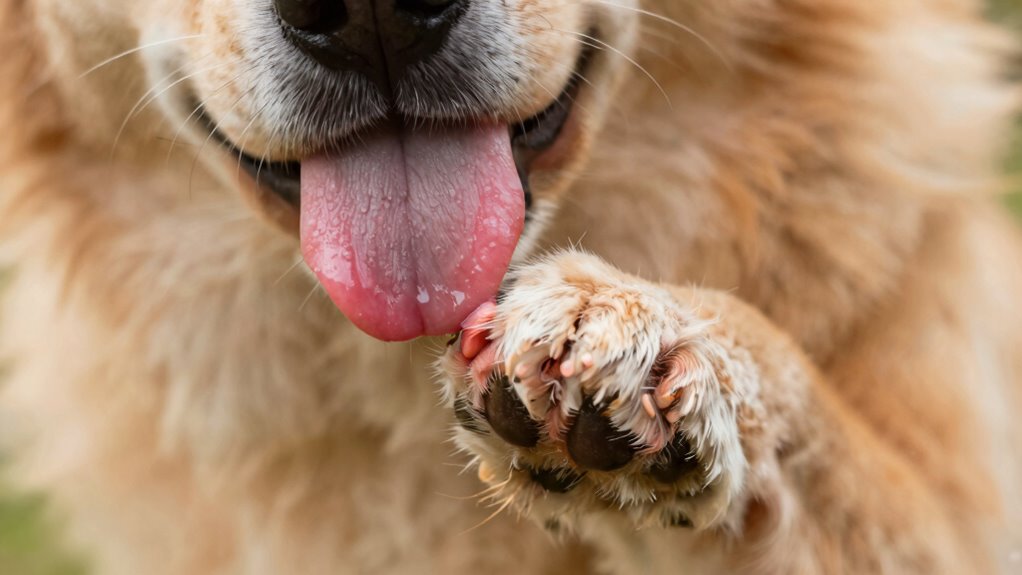

If your dog keeps licking one spot, it’s often a sign of discomfort, irritation, or an underlying health issue like allergies, parasites, or skin infections. They may lick to soothe themselves or because something is bothering them, such as an insect bite or foreign object. This repetitive behavior can lead to skin damage if untreated. To understand the cause and find a solution, it’s important to explore the common reasons behind persistent licking. Keep going to discover more.
Key Takeaways
- Repeated licking may indicate skin irritation, allergies, or underlying health issues needing veterinary evaluation.
- Persistent licking often serves as self-soothing behavior caused by stress, boredom, or anxiety.
- Skin irritation from insect bites, foreign objects, or contact with irritants can cause ongoing licking.
- Underlying conditions like allergies or parasites frequently trigger localized, repetitive licking.
- Monitoring and prompt diagnosis help prevent skin damage and address the root cause effectively.
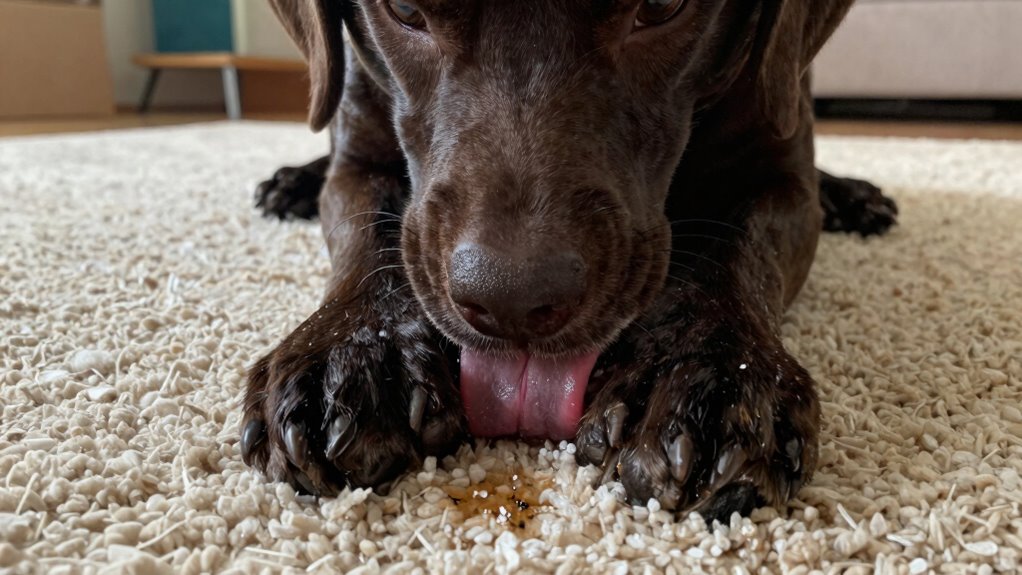
If your dog keeps licking the same spot repeatedly, it’s often a sign that something isn’t quite right. This behavior is common among dogs and can stem from various causes, but it’s vital to pay attention because it often indicates discomfort or an underlying issue. When you notice your dog fixating on one area, it’s a good idea to observe their overall behavior and check that spot closely. Dogs use licking as a way to communicate and soothe themselves, but excessive licking can point to problems like skin irritation, allergies, or even anxiety.
Dog behavior can be driven by many factors, and skin irritation is one of the most common reasons your dog might focus on a single spot. Skin irritation can result from allergies, insect bites, or contact with irritants like certain cleaning products or plants. If your dog’s skin looks red, inflamed, or has visible signs of swelling or rash, they’re likely experiencing discomfort. Licking helps to temporarily alleviate feelings of itchiness or pain, but if the underlying cause isn’t addressed, it can lead to further skin damage or infections. Sometimes, skin irritation is caused by a foreign object embedded in the skin, like a splinter or thorn, which can be very uncomfortable for your dog.
Other times, the root of the problem might be more complex. Allergies—whether seasonal, food-related, or environmental—can cause persistent itchiness that your dog tries to soothe through licking. Fleas and other parasites are also common culprits, especially if you see signs like flea dirt or bites around your dog’s tail, neck, or abdomen. Over-grooming or excessive licking can also be a sign of stress or anxiety. When your dog feels nervous or bored, they might focus their attention on a single spot to self-soothe. Recognizing pet health and how to recognize signs of skin issues can help you intervene early and prevent escalation. Recognizing common allergy symptoms can also aid in identifying the cause of their discomfort more quickly. In such cases, tackling the root cause of their stress is vital to stopping the behavior. Additionally, understanding smart home technology insights can help create a calm environment for your pet, reducing stress-related behaviors.
Ultimately, if your dog’s licking persists or worsens, consulting a veterinarian is the best course of action. They can help determine whether skin irritation, allergies, parasites, or behavioral issues are at play. Proper diagnosis allows for targeted treatment, whether that means medication, special shampoos, or behavioral modifications. Remember, while licking is natural, persistent or obsessive licking isn’t normal and often signals that your dog needs help. Paying close attention to their behavior and skin health can prevent more serious problems down the road and guarantee your furry friend stays comfortable and happy.
As an affiliate, we earn on qualifying purchases.
Frequently Asked Questions
Can Stress Cause Dogs to Lick a Single Spot Excessively?
Yes, stress can cause dogs to lick a single spot excessively. Behavioral triggers like anxiety or boredom, often linked to environmental factors such as changes in routine or new surroundings, can lead to this behavior. When your dog feels stressed or overwhelmed, licking provides a soothing distraction. Recognizing these triggers helps you address the root cause, reducing the compulsive licking and supporting your dog’s emotional well-being.
How Can I Tell if My Dog’s Licking Is Due to Allergies?
Think of your dog’s skin as a delicate garden; allergies can turn it into a patch of weeds causing constant licking. If your dog’s licking is persistent, look for signs like redness, swelling, or hair loss, which may indicate allergies rather than just normal dog grooming. Skin infections can also cause discomfort. A vet can diagnose allergies through tests, helping you keep your dog’s skin healthy and comfortable.
Is It Normal for Puppies to Lick the Same Area Repeatedly?
It’s normal for puppies to lick the same area repeatedly, especially during dog grooming or lick therapy, as they find comfort and soothe themselves. Puppies often use licking as a way to explore and self-soothe. However, if the licking becomes excessive or seems obsessive, it might indicate discomfort or stress. Keep an eye on their behavior and consult your vet if the licking persists or causes skin irritation.
When Should I See a Vet About My Dog’s Licking Habit?
When your dog’s licking becomes persistent or seems to take over their behavior, it’s time to see a vet. Think of their licking as a signal flare, highlighting underlying issues. If your dog’s licking triggers include redness, swelling, or signs of discomfort, or if the behavior lasts more than a few days, don’t wait. A vet can help identify if it’s allergies, infection, or another health concern, ensuring your pup finds relief.
Can Dietary Changes Reduce Excessive Licking Behavior?
Yes, dietary changes can help reduce your dog’s excessive licking. If nutritional deficiencies or food sensitivities are causing discomfort, switching to a high-quality, hypoallergenic diet may alleviate the issue. Consult your vet to identify specific sensitivities or deficiencies and develop a tailored plan. Proper nutrition supports healthy skin and coat, potentially decreasing the urge to lick. Remember, always seek professional advice before making significant diet modifications.
As an affiliate, we earn on qualifying purchases.
Conclusion
Remember, a little patience goes a long way. If your dog keeps licking one spot, it’s often a sign to pay closer attention rather than dismissing it. Sometimes, “A stitch in time saves nine,” meaning catching issues early can prevent bigger problems later. Keep an eye on your furry friend, and if the licking persists, consult your vet. Your attentive care guarantees your dog stays happy and healthy, just like a good neighbor always looks out for their friends.
flea and tick prevention for dogs
As an affiliate, we earn on qualifying purchases.
As an affiliate, we earn on qualifying purchases.
As an affiliate, we earn on qualifying purchases.