
To address resource guarding safely, start by recognizing early warning signs like stiffening, growling, or tense body language. Create a calm environment by removing triggers and establishing safe spaces. Use positive reinforcement—reward sharing behaviors immediately with treats and praise. Gradually expose your dog to controlled situations that mimic guarding triggers, always watching for stress signs. If behaviors escalate or persist, consulting a professional can help develop a tailored plan. Keep exploring to learn more effective techniques.
Key Takeaways
- Recognize early signs of guarding, such as stiffening or growling, to intervene before escalation.
- Remove or secure items that trigger guarding behaviors and establish safe spaces for your dog.
- Use positive reinforcement by rewarding sharing behaviors immediately with treats or praise.
- Gradually desensitize your dog to resource possession through controlled, calm exercises.
- Seek professional help if guarding persists or escalates despite training efforts.
Recognizing Early Signs of Guarding Behavior

Recognizing the early signs of guarding behavior is essential for preventing escalation and ensuring safety. Guarding isn’t just about resource sharing; it often stems from emotional triggers like fear, anxiety, or insecurity. You might notice your dog stiffening, growling, or snapping when someone approaches their food, toys, or bed. They could also show tense body language, such as raised hackles or a fixed stare, even without direct resource access. These signals indicate your dog feels threatened or uncomfortable. Paying attention to these subtle cues helps you intervene early, addressing underlying emotional triggers before the behavior worsens. Understanding these signs allows you to respond calmly and effectively, reducing the risk of aggressive outbursts and building trust over time. Additionally, being aware of the role that emotional triggers play in guarding behavior can help you develop more effective training and management strategies. Recognizing these early warning signs can also foster a stronger bond between you and your dog, facilitating better communication and mutual understanding. Recognizing and interpreting these body language cues accurately is a crucial step toward managing resource guarding safely and compassionately.
Creating a Safe Environment for Training

Creating a safe environment lays the foundation for successful resource guarding training. You need to manage resources carefully and make environmental modifications that reduce stress. This approach helps prevent escalation and builds trust. Consider removing or securing items that trigger guarding behaviors, creating clear boundaries, and providing safe spaces. These steps ensure your dog feels secure and less threatened. Incorporating seasonal variations in your training routine can also help your dog adapt to different situations and reduce anxiety. Additionally, using appropriate training tools can enhance safety and effectiveness during this process. You avoid accidental confrontations that increase guarding tendencies. Using environmental management strategies can significantly reduce triggers and create a calmer atmosphere for your dog. Recognizing the importance of resource guarding as a common behavior enables you to address it proactively and compassionately. You foster confidence with consistent routines and boundaries. You help your dog learn that sharing resources is safe and positive.
Implementing Positive Reinforcement Techniques

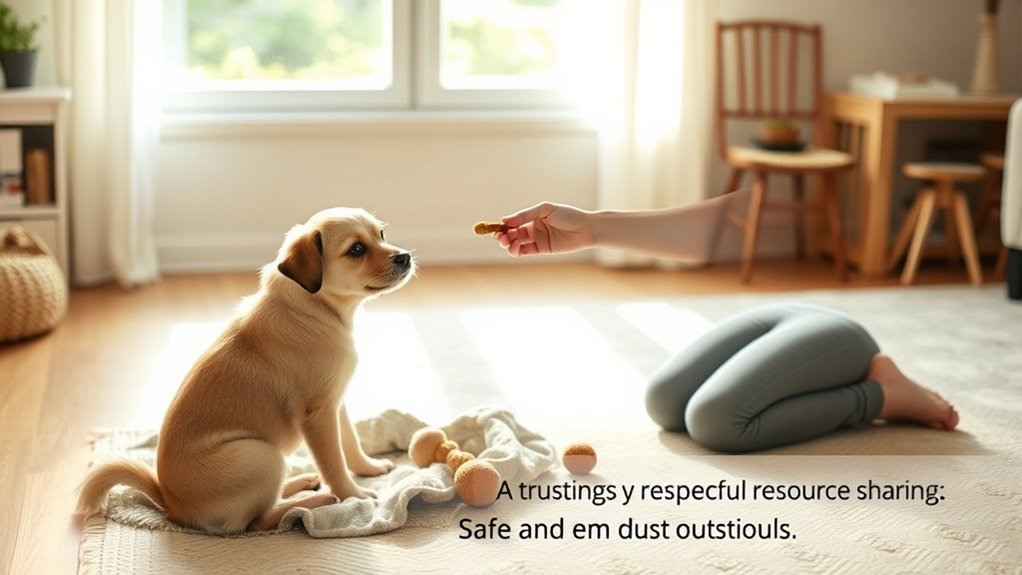
Implementing positive reinforcement techniques is a highly effective way to address resource guarding because it encourages your dog to associate sharing with rewards and positive experiences. Instead of risking treat avoidance, you focus on creating a reward system that motivates your dog to willingly share resources. When your dog calmly allows access or relinquishes a toy, immediately reward this behavior with treats or praise. Consistent, timely reinforcement helps your dog build positive associations with sharing and reduces possessiveness. Using behavioral training principles can further enhance your approach and ensure lasting positive results. Incorporating positive reinforcement techniques creates a safe environment for your dog to learn that sharing leads to positive outcomes. Additionally, understanding resource guarding triggers can help you intervene proactively and tailor your training strategies effectively. Recognizing underlying causes such as fear or possessiveness can help you address the root of the behavior more effectively.
Gradually Desensitizing Your Pet to Possessive Situations

To help your dog become more comfortable with possessive situations, start by gradually exposing them to controlled scenarios that mimic resource guarding triggers. This helps desensitize your pet to common possessiveness triggers during resource sharing. Use calm, consistent routines to reduce anxiety and build trust. Incorporate safe treats during these exercises to reinforce positive behavior. Focus on creating positive associations with sharing resources. As you introduce these situations, watch for signs of stress and slow down if needed. Remember, patience is key. Incorporating desensitization techniques can further support your efforts in reducing possessiveness. Consider these emotional moments as opportunities to strengthen your bond:
- When your dog initially reacts to your hand near their food bowl
- When they growl at someone approaching their favorite toy
- When they guard a high-value treat during training
This gentle process helps reduce their possessiveness triggers over time.
Knowing When to Seek Professional Help

Recognizing when your dog’s resource guarding behaviors require professional assistance is essential for their safety and your peace of mind. If guarding becomes intense, persistent, or escalates despite your efforts, it’s time to consult a behaviorist. Signs such as growling, snapping, or biting when approached during resource possession indicate that professional help is needed. Additionally, if guarding leads to aggressive incidents or causes stress for your dog, don’t delay seeking support. Incorporate emergency preparedness by having a plan in place for potential incidents. A professional can assess the situation, develop a tailored training plan, and help you implement safe management strategies. Understanding resource guarding behaviors can facilitate early intervention and prevent escalation. Recognizing the underlying causes and behavioral patterns can help you address the issue more effectively. Monitoring your dog’s emotional state closely can also provide valuable insight into when intervention is necessary. Being aware of training techniques proven to reduce guarding can further support your efforts. Knowing when to seek help prevents escalation and ensures both you and your dog stay safe.
Frequently Asked Questions
How Long Does It Typically Take to See Progress With Resource Guarding Training?
You’re wondering about the training timeline and how quickly progress indicators show results. Typically, it takes a few weeks of consistent effort to notice improvements, but this varies depending on your dog’s temperament and commitment. You’ll want to observe calmer behaviors around resources and decreased guarding tendencies as clear progress indicators. Patience is key; with regular training, you’ll see your dog becoming more comfortable and secure over time.
Can Resource Guarding Be Completely Eliminated or Just Managed?
Resource guarding can often be managed effectively, but complete elimination isn’t always guaranteed. Through consistent behavior modification and strategic environmental management, you can reduce or even eliminate the guarding behaviors. Your efforts focus on gradually changing your dog’s responses and creating a safe environment. While progress varies, patience and persistence typically lead to significant improvements, making the behavior less of a concern over time.
Are There Specific Breeds More Prone to Resource Guarding Issues?
Imagine if some breeds are born with a treasure chest of possessiveness, guarding their toys like pirates. Breed tendencies definitely matter; some breeds are more prone to resource guarding. Early socialization can help, but it’s not a magic wand. You need to understand your dog’s temperament and handle them with patience. While some breeds might be more prone, every dog is unique, and management is often the key to harmony.
How Do I Prevent Resource Guarding From Developing in Puppies?
To prevent resource guarding from developing in puppies, you should focus on early socialization and setting consistent boundaries. Expose your puppy to various people, animals, and environments in a positive way, teaching them that sharing is safe. Establish clear rules about resources like food and toys, making sure your puppy learns that it’s okay to share. Consistent boundaries help them feel secure and reduce the chances of guarding behaviors forming later.
What Are Common Mistakes to Avoid During Resource Guarding Interventions?
Think of resource guarding as a delicate dance—you need to move carefully. During interventions, avoid misdiagnosis pitfalls by misinterpreting your dog’s signals. Don’t use improper equipment that can escalate aggression or cause injury. Rushing the process or punishing your dog can backfire, deepening the issue. Instead, stay patient, use positive reinforcement, and seek professional guidance when needed. This keeps both of you safe and helps build trust.
Conclusion
Addressing resource guarding is essential for a safe, trusting relationship with your pet. Did you know that nearly 70% of dog bites involve resource guarding? By recognizing early signs and using positive training methods, you can prevent escalation. Remember, patience and consistency are key. If your pet’s behavior doesn’t improve, don’t hesitate to seek professional help. With the right approach, you can turn resource guarding into a manageable, safe behavior for everyone involved.