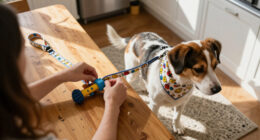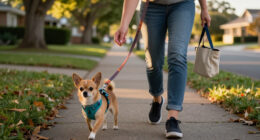

To figure out how much water your dog needs daily, multiply their weight in pounds by about 1 ounce. For example, a 50-pound dog should drink roughly 50 ounces of water each day. Keep in mind, activity level, weather, and diet can influence this amount. If you want to make certain your dog stays well-hydrated and healthy, there’s more important info to contemplate—continue exploring for helpful tips.

Get pet supplies delivered free — and shop member deals
- Fast, free delivery on millions of items
- Access to Prime Big Deal Days deals on October 6–7
- Prime Video, Amazon Music and more included
Key Takeaways
- Dogs generally need about 1 ounce of water per pound of body weight daily.
- Adjust water intake based on activity level, environment, and diet.
- Wet food reduces the amount of additional water a dog needs.
- Monitor hydration signs like dry gums or lethargy to ensure proper intake.
- Provide constant access to fresh, clean water and observe daily consumption.
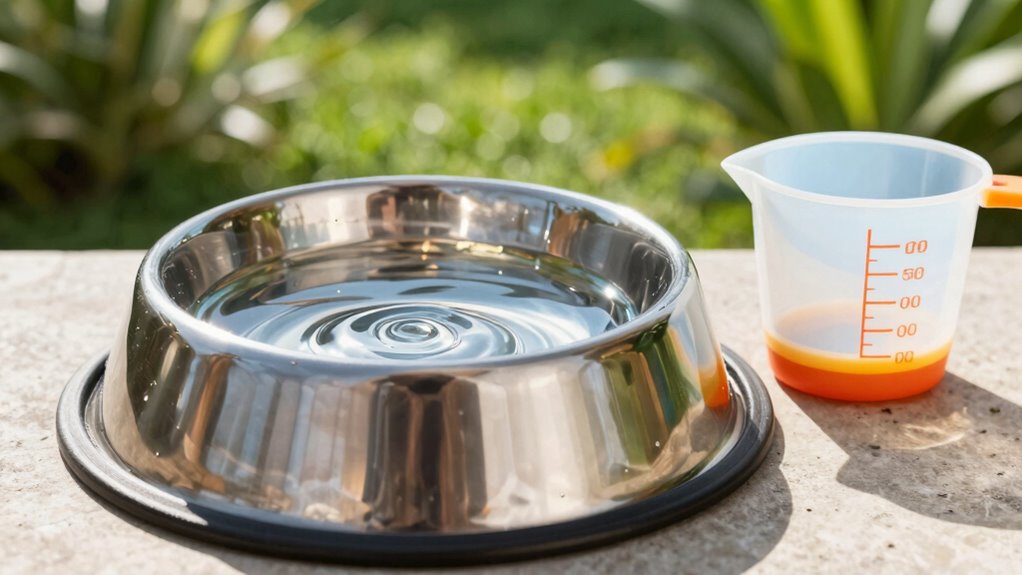
Understanding how much water you need each day can seem complex, but breaking down the math makes it manageable. When considering your dog’s hydration needs, it’s essential to understand how water consumption calculations work. Dogs have unique hydration requirements based on factors like size, activity level, age, and environment. Knowing these details helps you determine the right amount of water to keep your furry friend healthy and happy.
Typically, a good starting point is that a dog needs about 1 ounce of water per pound of body weight daily. For example, if your dog weighs 50 pounds, they should drink roughly 50 ounces of water each day. However, this is a general rule and doesn’t account for variables such as heat or exercise. During warm weather or after vigorous play, your dog’s hydration needs increase because they lose more water through panting and sweating. Conversely, if your dog is less active or in cooler temperatures, they might need slightly less.
To refine water consumption calculations, consider your dog’s diet. Dogs eating dry kibble generally require more water than those on wet food because dry kibble absorbs moisture in their digestive system. If your dog’s diet is mainly dry, you might need to provide extra water or ensure their food is adequately moistened. Also, keep in mind that older dogs or those with health issues like kidney problems may have different hydration needs, often requiring guidance from your veterinarian.
Monitoring your dog’s water intake is a practical way to ensure they’re staying properly hydrated. Watch for signs of dehydration, such as dry gums, lethargy, or a loss of skin elasticity. If you notice these symptoms, it’s wise to revisit your water consumption calculations and possibly consult a vet. It’s equally important to observe their water bowl; if it’s consistently empty or overly full, it might indicate that your calculations need adjustment.
Incorporating your dog’s hydration needs into daily routines is straightforward once you understand the basics of water consumption calculations. Always provide fresh water and encourage regular drinking, especially during hot days or after physical activity. Remember, the goal isn’t just to meet a specific number but to ensure your pet stays well-hydrated and healthy. By paying attention to their specific needs and adjusting water intake accordingly, you help your dog maintain good health and avoid dehydration-related issues. Making hydration management a regular part of your dog’s care routine can significantly improve their overall well-being. With a little math and observation, you can keep your dog properly hydrated every day.
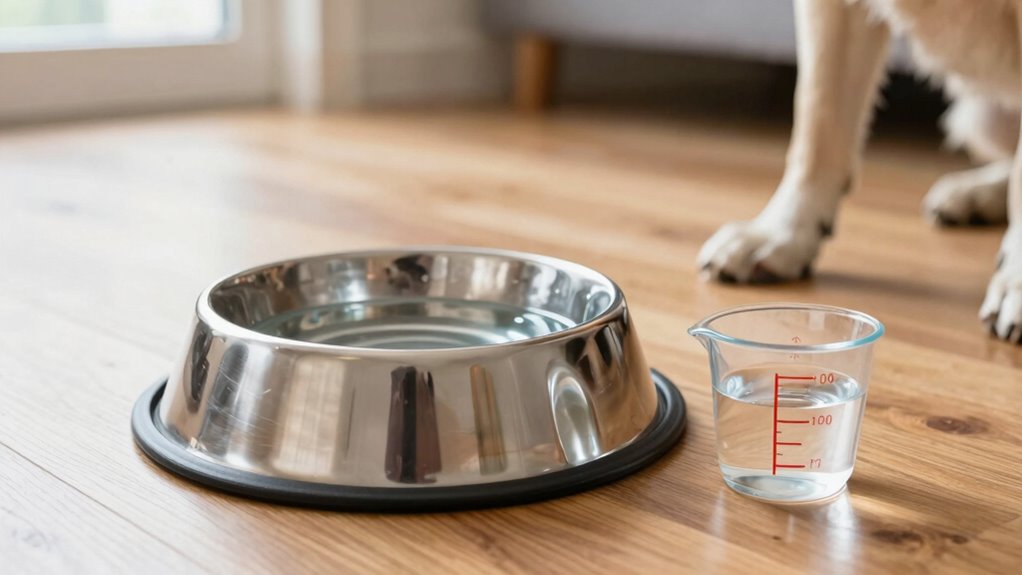
dog water bowls with measurement marks
As an affiliate, we earn on qualifying purchases.
As an affiliate, we earn on qualifying purchases.
Frequently Asked Questions
How Does Activity Level Affect a Dog’s Water Needs?
Your dog’s activity level directly impacts their water needs. When they exercise more, they require extra hydration to prevent exercise dehydration. Active dogs lose more fluids through panting and sweating, so you should offer them water frequently before, during, and after activity. Ensuring proper exercise hydration helps keep your dog healthy and comfortable, reducing the risk of dehydration and supporting their energy and recovery.
Do Breed or Size Variations Change Hydration Requirements?
Think of your dog’s hydration needs as a puzzle—breed differences and size variations complete the picture. Smaller breeds often need less water, but their metabolic rates can boost their requirements. Larger dogs, on the other hand, drink more to stay balanced. So, yes, breed and size changes influence how much water your dog should drink daily, making it essential to tailor their hydration to their unique body and breed traits.
Should I Adjust Water Intake for Puppies or Senior Dogs?
Yes, you should adjust water intake for puppies and senior dogs. Puppy hydration needs are higher because they’re growing fast, so make certain they drink plenty of fresh water. Senior dog needs may decrease slightly, but they still require adequate hydration to support joint health and organ function. Keep an eye on their behavior and water availability, and consult your vet for personalized advice. Proper hydration keeps your dog healthy at every life stage.
How Does Climate Impact a Dog’s Daily Water Consumption?
Climate substantially affects your dog’s water requirements, so you should monitor hydration closely. In hot or humid weather, your dog will drink more, so keep an eye on their water temperature and make certain fresh water is always available. During colder months, they might drink less, but consistent hydration monitoring remains essential to prevent dehydration. Adjust water intake accordingly to maintain ideal health regardless of climate conditions.
Are There Signs My Dog Isn’T Drinking Enough Water?
If your dog isn’t drinking enough water, you’ll notice dehydration symptoms like dry gums, lethargy, and sunken eyes. To prevent this, monitor your water intake closely and watch for any signs of dehydration. Make sure fresh water is always available, especially during hot days or after exercise. If you see symptoms of dehydration, get your vet involved promptly to ensure your dog stays healthy and well-hydrated.
As an affiliate, we earn on qualifying purchases.
Conclusion
So, there you have it—your dog’s daily hydration needs boiled down to simple math, because who doesn’t love a good calculation? Just remember, if your pup starts hoarding water like a secret agent with a stash, it’s time to consult the vet. After all, ensuring your furry friend stays hydrated isn’t just good sense; it’s the ultimate act of canine benevolence—minus the need for a PhD in hydration science.
As an affiliate, we earn on qualifying purchases.
As an affiliate, we earn on qualifying purchases.
Halloween Picks
halloween
As an affiliate, we earn on qualifying purchases.