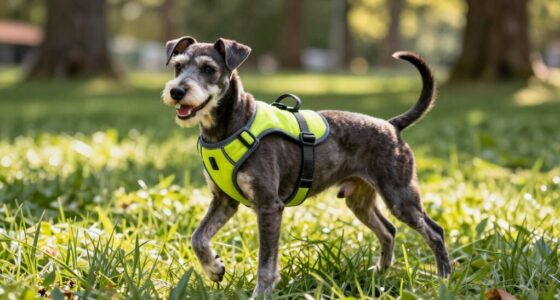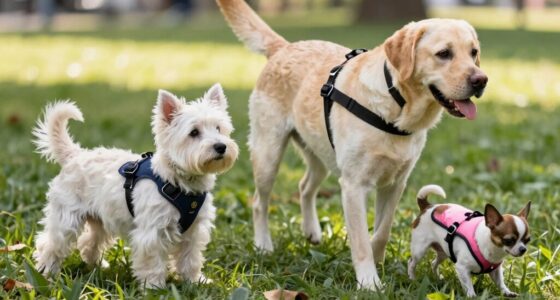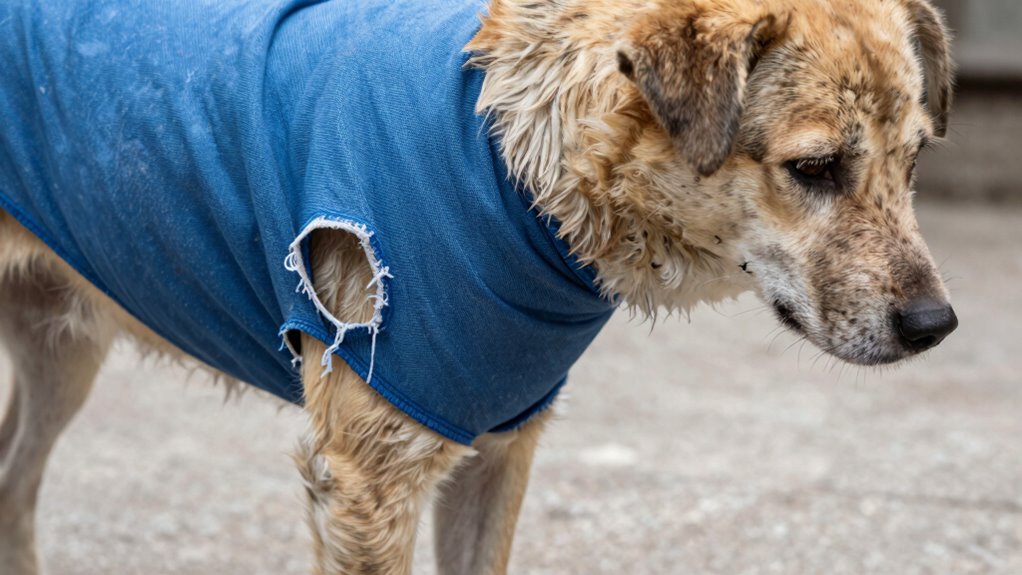
The biggest mistake when using a hind leg sling is forcing it onto your dog too quickly or without proper introduction. This can cause discomfort or fear, making your dog resist help. If you don’t introduce the sling gradually and praise your dog, they’ll associate it with pain or restraint. To foster cooperation, focus on positive reinforcement and gentle handling. Keep practicing patiently—there’s more you can do to guarantee your dog feels safe and comfortable.
Key Takeaways
- Applying the sling abruptly or forcefully can cause fear and resistance in dogs.
- Using the sling without gradual introduction and positive reinforcement fosters distrust.
- Ignoring the dog’s comfort and pain signals leads to negative associations with the sling.
- Forcing the sling during mobility exercises increases resistance and frustration.
- Not training or acclimating the dog beforehand makes the sling experience stressful and uncooperative.
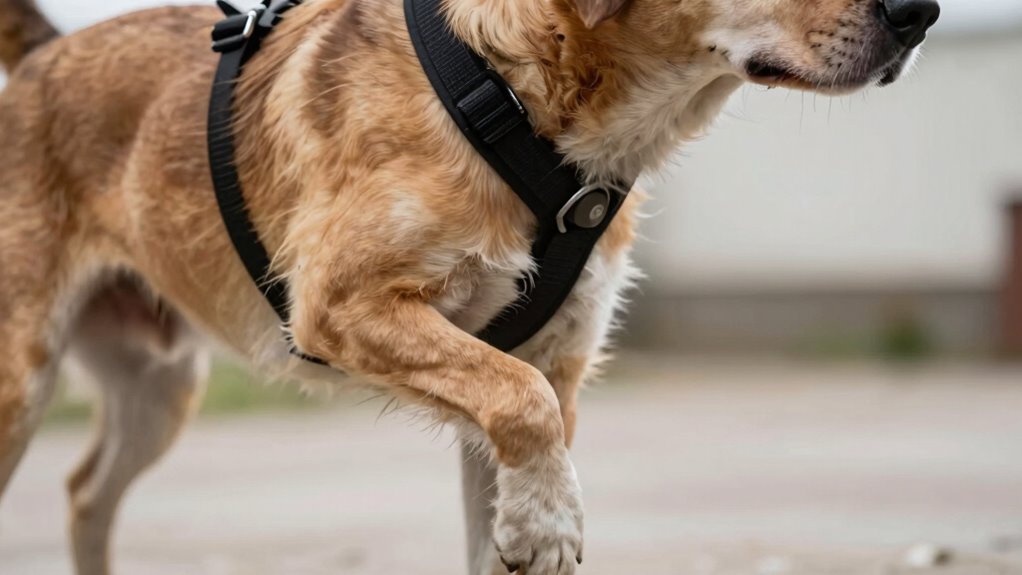
Using a hind leg sling might seem like a straightforward way to assist an injured horse, but if not used correctly, it can do more harm than good. The same principle applies when you’re trying to help a dog with a hind leg injury. Many pet owners think that simply placing a sling under their dog’s leg will encourage healing, but without proper technique and consideration, it can create resistance rather than compliance. Dogs often resist help because they associate the sling with discomfort or restraint, which can make recovery more difficult.
The key to effective use of a hind leg sling is understanding your dog’s comfort and behavior. You need to gradually introduce the sling, making it a positive experience through gentle handling and positive reinforcement. If your dog feels pain or discomfort when the sling is applied, they’ll associate it with distress, leading to resistance during future use. That resistance can stem from fear or frustration, making it harder for you to assist with essential activities like exercise routines or daily mobility. Instead of forcing the sling on your dog, help them associate it with praise and treats, encouraging cooperation rather than opposition.
Incorporating a well-structured exercise routine is essential to your dog’s recovery. Light, controlled exercises can improve circulation, strengthen muscles, and prevent stiffness. However, these routines should be tailored to your dog’s injury and comfort level. Overdoing it can increase pain or delay healing, so always follow your veterinarian’s advice. Incorporate short, frequent walks or gentle range-of-motion exercises, gradually increasing intensity as your dog tolerates. Using the sling correctly during these activities ensures your dog feels supported and safe. Understanding the importance of proper training techniques can also help reduce your dog’s resistance and make recovery smoother. Additionally, employing positive reinforcement methods can significantly enhance your dog’s willingness to cooperate during recovery.
Nutritional tips also play an important role in recovery. Providing a balanced diet rich in essential nutrients, such as omega-3 fatty acids, promotes inflammation reduction and tissue repair. Supplements like glucosamine or chondroitin might also support joint health if recommended by your vet. Proper nutrition can make a real difference in how quickly your dog recovers and how resistant they become to help. Avoid high-calorie treats or foods that could lead to weight gain, which puts extra strain on healing joints. Instead, opt for nutrient-dense, easily digestible options that support healing and mobility.
Ultimately, the goal is to foster a trusting environment where your dog feels safe during recovery. Using the sling correctly, implementing appropriate exercise routines, and providing proper nutrition will help your dog heal faster and reduce their resistance to help. Patience and gentle handling are essential—resistance often stems from fear or discomfort, so your job is to make the experience as positive as possible.
dog hind leg sling with positive reinforcement
As an affiliate, we earn on qualifying purchases.
As an affiliate, we earn on qualifying purchases.
Frequently Asked Questions
How Do I Know if My Dog Needs a Hind Leg Sling?
You’ll know your dog needs a hind leg sling if they struggle with mobility, especially when walking or standing. Look for signs like limping, weakness, or reluctance to move. Using a sling safely helps support their hind legs without causing discomfort or resistance. Make certain proper sling safety by fitting it correctly and avoiding too much pressure. If you’re unsure, consult your vet for guidance tailored to your dog’s specific needs.
Are There Alternatives to Using a Hind Leg Sling?
Did you know nearly 60% of dog owners seek alternatives to hind leg slings? Yes, there are options. You can explore dietary supplements to support joint health, or try specialized training techniques that encourage mobility and strength. Physical therapy, harnesses, or even modifying your home environment can also be effective. These alternatives help your dog feel more comfortable and confident without relying solely on a hind leg sling.
Can Improper Sling Use Cause Further Injury?
Yes, improper sling use can cause further injury. Poor sling safety or incorrect positioning may put unnecessary strain on your dog’s muscles and joints, leading to pain or worsening the injury. To guarantee injury prevention, always follow proper technique, support the limb correctly, and monitor your dog’s response. Using the sling carefully and correctly helps avoid additional harm and promotes safe, effective recovery.
How Long Should a Dog Stay in a Sling Daily?
You shouldn’t leave your dog in a sling for too long—usually about 10 to 15 minutes at a time, several times a day. Overuse can cause discomfort or stress. To keep your dog comfortable and promote healing, combine proper sling use with nutrition tips and gentle training techniques. Watch for signs of fatigue or distress, and always consult your vet for personalized advice to guarantee your dog’s well-being.
What Signs Indicate My Dog Is Uncomfortable With the Sling?
If your dog shows signs like whining, trying to escape, or tense muscles, they’re uncomfortable with the sling. Look for signs of puppy anxiety, such as panting or restlessness, which can indicate distress. During leash training, if your dog pulls hard or avoids the sling, stop and reassess. Always watch for signs of discomfort, and gradual, positive experiences help your dog feel secure and reduce resistance.
dog mobility support sling for injury recovery
As an affiliate, we earn on qualifying purchases.
As an affiliate, we earn on qualifying purchases.
Conclusion
Don’t let a doubtful dilemma derail your dog’s recovery. By avoiding the hind leg sling mistake, you empower your pup with patience and proper support. Remember, a well-worn sling fosters faith and fosters a faster, safer fix. Stay savvy, stay supportive, and steer clear of slipping into shortcuts. Your consistent care and caution cultivate confidence, creating a caring, confident canine. Keep kindness and knowledge close, and watch your dog’s healing happen happily and healthily.
dog rehabilitation sling for hind leg
As an affiliate, we earn on qualifying purchases.
As an affiliate, we earn on qualifying purchases.
gentle dog leg support harness
As an affiliate, we earn on qualifying purchases.
As an affiliate, we earn on qualifying purchases.