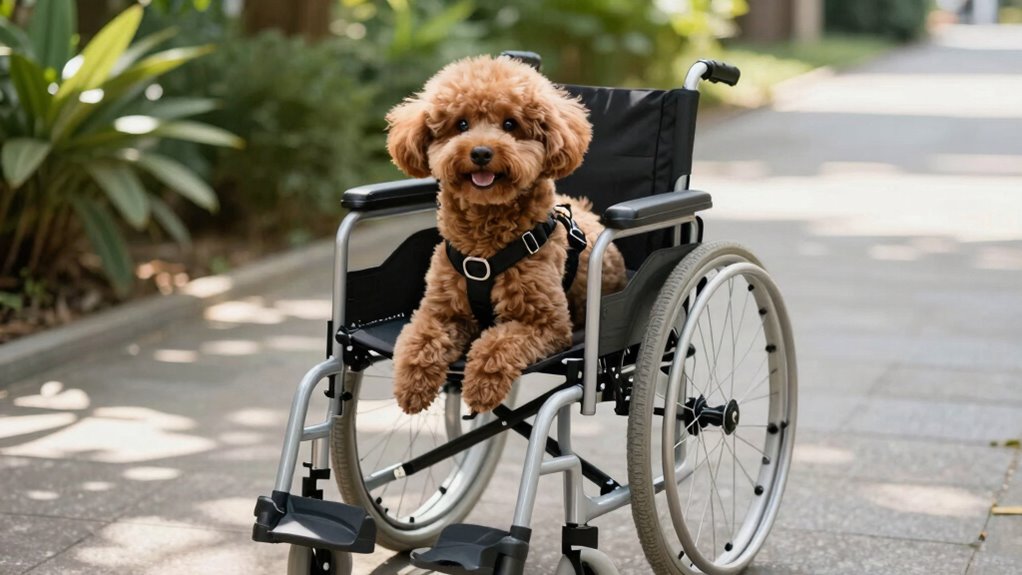

A properly fitting dog wheelchair is crucial for your dog’s comfort, safety, and mobility. It provides the right support without causing pain or restricting movement, helping your dog regain independence and confidence. Regular veterinary assessments are necessary to ensure the fit stays perfect as your dog’s needs change. An ill-fitting wheelchair can lead to discomfort or even harm, so prioritizing fit is key. Keep going to discover how to choose the best fit for your dog’s unique needs.
Key Takeaways
- Properly fitting dog wheelchairs ensures comfort, prevents injury, and enhances mobility and confidence.
- Veterinary assessment is essential to select and adjust the wheelchair for the dog’s specific anatomy and health needs.
- An improper fit can cause pain, pressure sores, muscle atrophy, and reduced movement, undermining the wheelchair’s benefits.
- Correct fit promotes stability, encourages activity, and supports joint health, improving quality of life.
- Regular evaluations and adjustments are necessary to maintain optimal fit as the dog’s condition evolves.
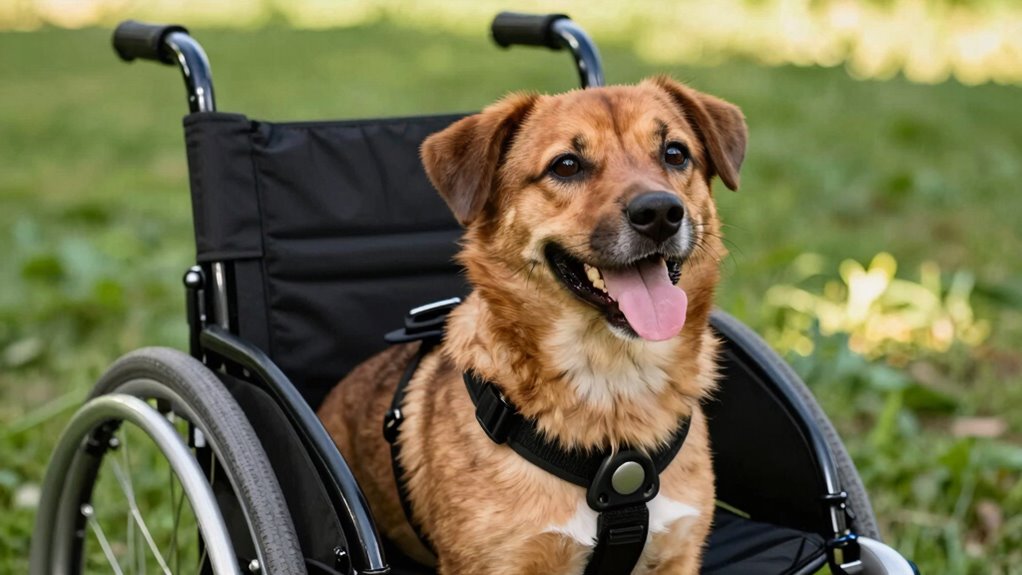
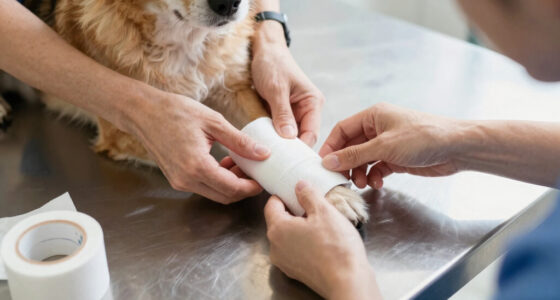
Have you ever wondered why the right fit matters so much when choosing a dog wheelchair? It’s because the goal is to provide effective mobility enhancement without causing additional discomfort or injury. When a dog’s mobility is compromised, a well-fitted wheelchair can restore independence, reduce pain, and improve quality of life. But achieving that perfect fit isn’t just about size—it’s about understanding your dog’s unique needs and making sure the wheelchair supports their body correctly. That’s where a veterinary assessment becomes essential. A vet can evaluate your dog’s physical condition, identify any underlying issues, and recommend the most suitable wheelchair type and fit. They can also help you understand the specific adjustments needed to accommodate your dog’s posture, weight distribution, and activity level.
Proper fit and veterinary guidance are key to ensuring your dog’s comfort, support, and mobility.
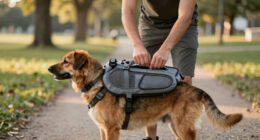
Choosing a wheelchair without proper veterinary input can lead to discomfort or even worsen existing problems. A vet’s assessment helps you avoid these pitfalls by making certain the device aligns with your dog’s anatomy and health status. It guides you in selecting a wheelchair that offers proper support to the hips, spine, and limbs, preventing unnecessary strain. Proper fit and support are crucial for your dog’s overall well-being and mobility success. Once you have a professional assessment, you’re better equipped to choose a wheelchair that provides the right level of support and mobility enhancement, tailored specifically for your dog. Remember, a dog’s comfort depends heavily on the fit; a poorly fitted wheelchair can cause chafing, pressure sores, or restrict movement, defeating its purpose altogether.
The importance of a good fit extends beyond just comfort—it impacts your dog’s confidence and willingness to move. When a wheelchair fits properly, your dog can walk, run, or play with less pain and more stability. This encourages physical activity, which is essential for maintaining muscle strength and joint health. It also reduces the risk of secondary issues like muscle atrophy or joint deterioration. Keep in mind that your dog’s needs may change over time, so regular veterinary assessments are necessary. They ensure the wheelchair continues to fit well and adapt as your dog’s condition evolves. Understanding gadget fit considerations can greatly improve your ability to make informed decisions about your dog’s mobility aids.
In short, a dog wheelchair can be a game-changer, but only if it’s the right fit. Prioritize the veterinary assessment and proper sizing to guarantee your furry friend not only gains mobility but also maintains comfort and health. When fitted correctly, the wheelchair becomes more than just a mobility aid—it’s a tool that restores your dog’s independence and happiness.
dog wheelchair adjustable fit
As an affiliate, we earn on qualifying purchases.
As an affiliate, we earn on qualifying purchases.
Frequently Asked Questions
How Long Does It Take for a Dog to Get Used to a Wheelchair?
It typically takes your dog a few days to a week to get used to a wheelchair. During this time, you’ll see gradual improvements in their mobility and comfort as they adapt to the new support. Consistent wheelchair adaptation and positive reinforcement help your dog build confidence. Keep sessions short initially, and monitor their progress closely, ensuring they don’t get discouraged. Patience and gentle encouragement make the shift smoother.
Can All Dog Breeds Safely Use Wheelchairs?
Think of a dog wheelchair like a custom suit—it’s not one-size-fits-all. Not all breeds are suited, especially considering breed suitability and weight considerations. Small, sturdy breeds often adapt faster, while larger or fragile dogs may need special adjustments. I’ve seen tiny Chihuahuas glide effortlessly, but a giant breed might struggle. Always consult your vet to guarantee your dog’s breed and weight fit the wheelchair’s design for safety and comfort.
Are Dog Wheelchairs Adjustable Over Time?
Yes, dog wheelchairs are often adjustable over time thanks to customization options and ergonomic design. You can modify the fit as your dog’s size or condition changes, ensuring comfort and support. Many models feature adjustable straps, height, and wheel positions, allowing you to tailor the wheelchair to your dog’s evolving needs. This flexibility helps maintain their mobility and quality of life, making the wheelchair a long-lasting, supportive investment.
How Do I Clean and Maintain a Dog Wheelchair?
Did you know regular cleaning extends your dog wheelchair’s lifespan? To clean and maintain it, follow simple routines like wiping it down with a damp cloth weekly and checking for loose parts. Use gentle soap and water for stubborn dirt. Maintenance tips include inspecting straps and wheels for wear, lubricating moving parts, and storing it in a dry place. Proper care keeps your dog comfortable and the wheelchair functioning smoothly.
What Signs Indicate a Wheelchair Isn’t Fitting Properly?
If your dog’s wheelchair isn’t fitting properly, watch for signs like chafing, sores, or restricted movement—similar to issues in pediatric mobility devices. You might also notice discomfort during use or reduced canine agility. To guarantee a good fit, check that the harness isn’t too tight or loose, and adjust as needed. Proper fit supports your dog’s mobility and comfort, helping them regain confidence and activity levels.
dog mobility support wheelchair
As an affiliate, we earn on qualifying purchases.
As an affiliate, we earn on qualifying purchases.
Conclusion
Choosing the right dog wheelchair truly transforms your pet’s quality of life, enabling mobility and independence. While it might seem like a simple fit issue, research suggests that proper support can even boost a dog’s confidence and emotional well-being. It’s worth questioning if the right fit not only alleviates physical discomfort but also promotes psychological recovery, making sure your furry friend gets back to enjoying life’s little adventures. Prioritize fit, and watch your pet thrive.
veterinary recommended dog wheelchair
As an affiliate, we earn on qualifying purchases.
As an affiliate, we earn on qualifying purchases.
ergonomic dog wheelchair for arthritis
As an affiliate, we earn on qualifying purchases.
As an affiliate, we earn on qualifying purchases.