
If your smart dog is destroying toys, it’s often because they’re exploring, teething, or bored. Their natural curiosity drives them to chew, shred, and tear as a way to relieve gum discomfort or seek entertainment. They might also do it to get your attention or because they need mental stimulation. Understanding these patterns helps you provide better alternatives, so your belongings stay safe. Keep exploring how to prevent this behavior for a happier, more balanced pup.

Get pet supplies delivered free with Prime
- Fast, free delivery on millions of items
- Prime Video, Amazon Music and more included
- Member-only deals all year
Key Takeaways
- Smart dogs often destroy toys due to natural curiosity and exploration behaviors.
- Teething discomfort prompts excessive chewing on accessible objects, including toys.
- Boredom and lack of mental stimulation lead to destructive behaviors as self-entertainment.
- Attention-seeking dogs may tear toys to elicit reactions from owners.
- Providing appropriate toys and enrichment channels natural instincts constructively.
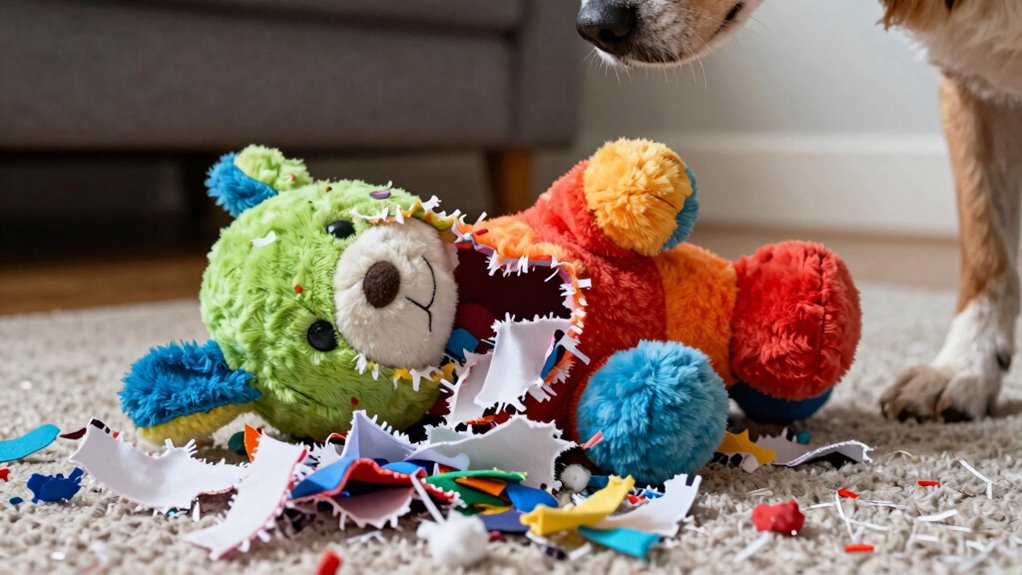
Smart dogs often find ways to turn their toys into torn-up messes, which can be surprising given their intelligence. If you’ve ever watched your clever pup chew through a toy in minutes, you might wonder what’s driving this destructive behavior. Often, it’s a combination of puppy teething, boredom, and an innate need to explore their environment. Understanding these underlying causes can help you address the pattern in a way that keeps your dog happy and your belongings intact.
Smart dogs’ toy destruction often stems from teething, boredom, and their natural curiosity.
Puppy teething is a significant factor in toy destruction, especially in young dogs. During this stage, their gums are sore and sensitive, prompting them to chew relentlessly to soothe discomfort. Any toy within reach becomes a target for relief, regardless of its durability. If you notice your puppy gnawing on everything, it’s likely a response to teething pain. Providing appropriate chew toys, frozen or textured, can help ease their discomfort and redirect their chewing instinct away from your furniture or shoes. Ignoring this natural urge can lead to more destructive behaviors, as your pup seeks relief wherever they can find it. Additionally, understanding the innate needs of smart dogs** can help you better cater to their natural instincts and reduce destructive tendencies. Recognizing that mental stimulation is essential for smart dogs can help prevent boredom and destructive behavior before it starts. Incorporating mental enrichment activities** into their routine can significantly decrease their urge to destroy toys out of boredom.
Boredom is another powerful motivator behind toy destruction. Smart dogs are quick learners and need mental stimulation to stay content. When left alone with nothing to do, they often turn to their toys—or even your belongings—to entertain themselves. This isn’t just mischief; it’s a sign they’re craving engagement. If your dog seems restless or constantly seeks out new ways to chew or shred, you may need to increase their activity levels. Interactive toys, puzzle feeders, and regular play sessions can help channel their intelligence into constructive outlets. Without enough mental and physical stimulation, even the brightest dogs resort to destructive behaviors as a way to alleviate boredom.
Furthermore, some dogs develop a pattern of destruction simply because they’ve learned it gets a reaction from you. If they see tearing up a toy as a way to get your attention, they’ll keep doing it—especially if they’re lonely or anxious. Addressing this requires consistent training and positive reinforcement for appropriate chewing. Teaching your dog what’s acceptable to chew and rewarding them when they choose their designated toys helps break the cycle.
In the end, understanding the pattern behind toy destruction in smart dogs involves recognizing their needs for teething relief, mental engagement, and attention. By providing suitable chew toys, increasing their mental stimulation, and addressing emotional needs, you can help curb destructive tendencies. Remember, their intelligence is a gift, and with the right guidance, it can be channeled into positive behaviors rather than torn-up toys.
Products Worth Considering

PETLIBRO Granary 2 Wi-Fi Automatic Pet Feeder with Smart Scale, 5L

PETLIBRO Automatic Cat Feeder with 1080p Camera and Night Vision

PETLIBRO Granary 2 Vision Duo Automatic Cat Feeder for Two Cats
As an affiliate, we earn on qualifying purchases.
Frequently Asked Questions
What Breeds Are Most Prone to Toy Destruction?
You’ll find that breeds like retrievers, terriers, and hounds are most prone to toy destruction. These smart dogs love interactive play and often get bored quickly, leading them to chew aggressively. To keep up, choose chew toys with high durability designed for tough chewers. Regularly rotating toys and engaging in active play can also help reduce their urge to destroy, making playtime more enjoyable for both of you.
How Does Age Influence Toy Destruction Tendencies?
As your dog ages, age-related curiosity, maturity, and behavior influence toy destruction tendencies. Puppies often chew more out of teething discomfort and exploration, while adult dogs may destroy toys due to boredom or heightened energy levels. Mature dogs typically display better impulse control, resulting in less destruction. Understanding these age-related behaviors helps you choose appropriate toys, providing mental stimulation and preventing frustration for your smart dog.
Are Certain Toy Materials More Resistant to Smart Dogs?
Certain toy materials are more resistant to smart dogs. During durability testing, you’ll find that rubber, nylon, and reinforced fabrics stand up better against their chewing habits. Always prioritize material safety, ensuring no toxic or small parts pose a risk. By selecting toys made from these durable, safe materials, you help prevent early destruction and keep your dog engaged longer, reducing the chance of harmful ingestion or choking.
Can Training Reduce Destructive Behavior in Intelligent Dogs?
Yes, training can reduce destructive behavior in intelligent dogs. You should incorporate dog enrichment activities and behavioral modification techniques to keep your dog mentally stimulated and satisfied. Regular mental challenges, puzzle toys, and consistent training sessions help redirect your dog’s energy and curiosity away from destructive habits. By engaging their mind and addressing underlying issues, you can foster better behavior, reduce destruction, and build a stronger bond with your smart dog.
What Signs Indicate a Dog Is Bored or Anxious?
You’ll notice signs like excessive barking, chewing, pacing, or pawing, which indicate boredom or anxiety. To address this, focus on dog enrichment activities that stimulate their mind and body, reducing destructive tendencies. Incorporate anxiety management techniques like calming routines, providing safe spaces, and using puzzle toys. Recognizing these signs early helps you keep your dog engaged and comfortable, preventing destructive behaviors and promoting overall well-being.
Conclusion
So, next time your smart pup tears through their toys, remember—they’re just showcasing their intelligence in the most destructive way. Ironically, their cleverness fuels their mischief, turning simple squeakers into shredded trophies. Instead of frustration, see it as a sign of their sharp mind and boundless energy. After all, a smart dog isn’t just destroying toys—they’re testing limits, exploring, and, in a way, teaching you patience. Who knew destruction could be so insightful?