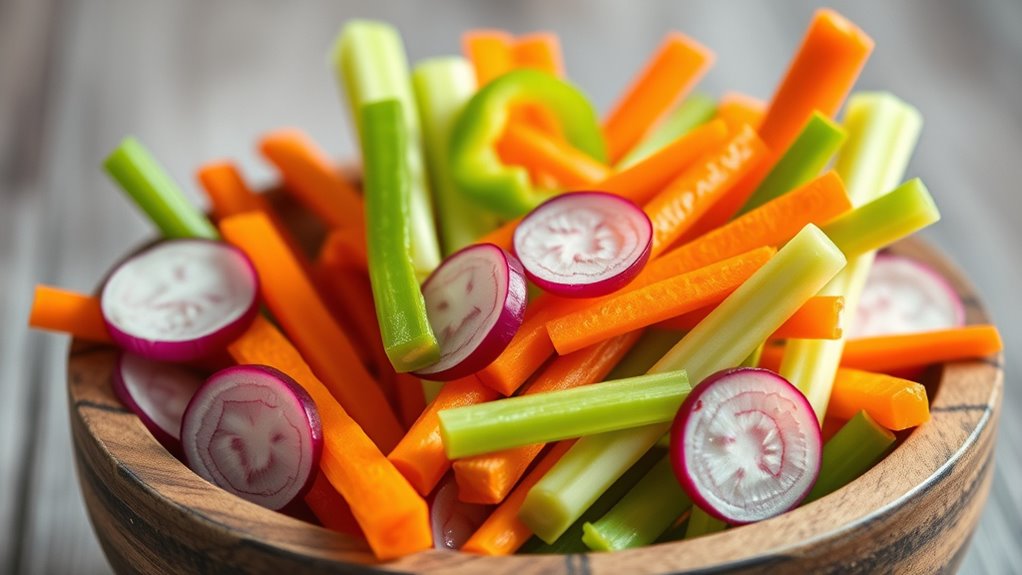

Safe vegetables like carrots, green beans, bell peppers, and spinach make great dog snacks because they’re nutritious, low in calories, and easy to prepare. Wash thoroughly, cut into bite-sized pieces, and lightly steam or boil to soften. Avoid harmful vegetables like onions or garlic. Incorporating these vegetables can boost your dog’s health and provide a tasty, healthy alternative to commercial treats. Keep going to discover more tips for serving the best veggie snacks for your pup.

Get pet supplies delivered free with Prime
- Fast, free delivery on millions of items
- Prime Video, Amazon Music and more included
- Member-only deals all year
Key Takeaways
- Carrots are a nutritious, crunchy snack rich in beta-carotene and easy for dogs to chew.
- Green beans provide fiber and low-calorie options, supporting digestion and weight management.
- Bell peppers offer vitamin C and antioxidants that help reduce inflammation and boost immunity.
- Spinach supplies iron and calcium, promoting strong bones and healthy blood levels.
- Always prepare vegetables by washing, cutting into manageable pieces, and steaming without seasoning for safety and digestibility.
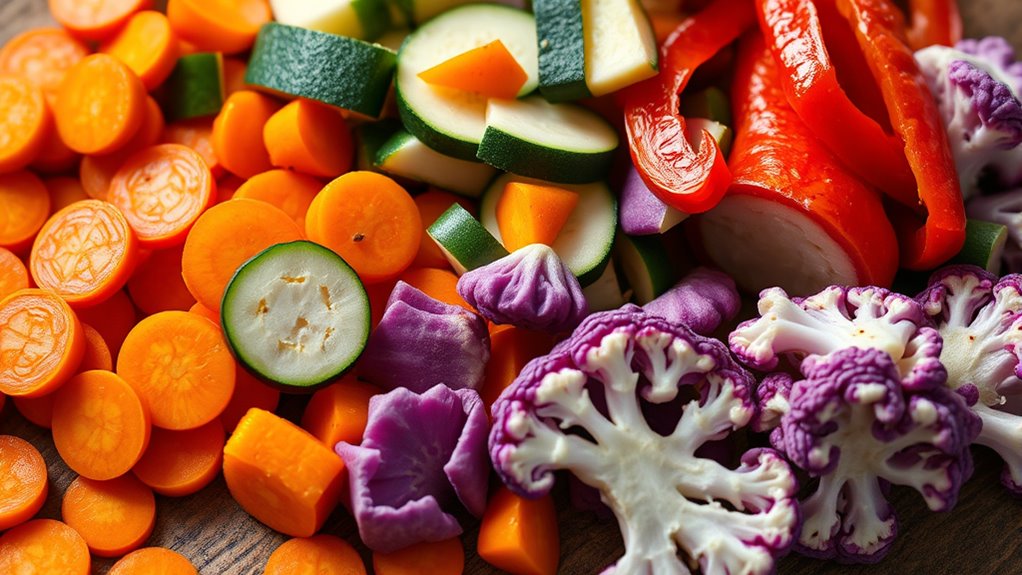
Many dog owners are turning to vegetables as healthy and natural snacks for their pets. If you’re considering incorporating vegetables into your dog’s diet, you’ll find that home preparation plays an essential role in ensuring these snacks are both safe and appealing. Before offering any vegetable, you should wash them thoroughly to remove dirt and pesticides. Cutting vegetables into manageable, bite-sized pieces makes them easier for your dog to chew and digest. Steaming or boiling vegetables can help soften them, making them safer for dogs, especially those with dental issues or limited chewing strength. Avoid seasoning or adding oils, as these can upset your dog’s stomach or contain ingredients harmful to canines. By preparing vegetables at home, you retain control over what goes into your dog’s snack, avoiding preservatives or unwanted additives often found in commercial treats. This simple step enhances safety and allows you to customize snacks based on your pet’s preferences and dietary needs.
Additionally, using proper food safety practices during preparation helps prevent bacterial contamination and keeps your dog healthy. The nutritional benefits of vegetables are impressive, and incorporating them into your dog’s diet can provide a boost of essential vitamins, minerals, and fiber. Vegetables like carrots are rich in beta-carotene, which supports your dog’s eyesight and immune health. Green beans are a good source of fiber, helping with digestion and maintaining a healthy weight. Bell peppers offer vitamin C and antioxidants that can reduce inflammation and support overall health. Spinach contains iron and calcium, contributing to strong bones and healthy blood. Including a variety of these vegetables ensures your dog receives a broad spectrum of nutrients that promote vitality and well-being. Unlike processed treats, vegetables are low in calories and free of artificial ingredients, making them an ideal healthy snack option.
You’ll want to observe your dog’s response to new vegetables and introduce them gradually. Start with small amounts to see if your pet enjoys the taste and to monitor for any adverse reactions, such as allergies or stomach upset. Remember, not all vegetables are safe for dogs—onions, garlic, and certain others should be avoided. When you prepare vegetables at home, you can ensure they are safe and appropriate for your dog’s dietary needs. Incorporating vegetables as snacks can also help manage weight and provide mental stimulation during snack time. With a little effort in home preparation, you’re giving your furry friend a nutritious, tasty treat that benefits their health and happiness. By choosing vegetables carefully and preparing them properly, you can turn snack time into an opportunity to support your dog’s overall wellness while satisfying their natural cravings for something crunchy and delicious.
As an affiliate, we earn on qualifying purchases.
Frequently Asked Questions
Can All Vegetables Be Safely Given to Dogs?
Not all vegetables are safe for your dog, so you should be cautious. You can include some vegetables from your human diet, but always prepare them properly—avoid seasoning, oils, and harmful additives. Steaming or serving raw in small, manageable pieces works best. Research which vegetables are safe, like carrots or green beans, and steer clear of toxic ones like onions or garlic. Always consult your vet if unsure.
How Often Should I Feed Vegetables to My Dog?
Think of feeding your dog vegetables as watering a delicate plant—you want just enough to nourish, not drown. You should feed vegetables in moderation, about 2-3 times a week, ensuring you keep portion control in check. This way, you provide variety and nutrients without upsetting your pup’s digestion. Remember, consistency is key, and always tailor amounts to your dog’s size and health needs.
Are Cooked or Raw Vegetables Better for Dogs?
You should generally give your dog raw vegetables for maximum nutritional benefits, as cooking can reduce vitamins and enzymes. However, some vegetables, like carrots or sweet potatoes, are better cooked to improve digestibility and flavor. Always consider preparation methods, such as steaming or boiling, to preserve nutrients while ensuring your dog’s safety. Avoid adding seasonings or oils, and introduce new vegetables gradually to monitor for any sensitivities.
Can Vegetables Replace Regular Dog Food?
Vegetables can’t fully replace regular dog food, but they make healthy snack options to supplement your dog’s diet. They provide essential nutrients and dietary fiber benefits that support digestion. You should feed vegetables in moderation, ensuring they’re appropriate for your dog’s size and health. Always consult your vet to confirm which vegetables are safe and how much to include, so your pet stays balanced and healthy.
Which Vegetables Should Be Avoided Completely?
You should avoid giving your pup onions, garlic, and chives—they’re like tiny toxic landmines with toxicity concerns and can trigger digestive sensitivities. Also, stay away from grapes, raisins, and avocados, which pose serious health risks. These veggies may seem innocent, but they can cause everything from upset stomachs to life-threatening conditions. Keep your canine companion safe by steering clear of these hazardous vegetables—your dog’s health depends on it.
dog-safe steamed vegetable treats
As an affiliate, we earn on qualifying purchases.
As an affiliate, we earn on qualifying purchases.
Conclusion
So, next time you’re munching on carrots or green beans, remember—your dog might actually prefer your vegetable snacks over their usual kibble. Who knew that crunchy, healthy treats could become their favorite? It’s almost funny how you’ve been hiding veggies in their food, only to realize they love them plain and simple. Turns out, the best treats aren’t always the fattiest or most processed. Sometimes, the most surprising snacks are right in your fridge.
dog food grade carrots green beans bell peppers
As an affiliate, we earn on qualifying purchases.
As an affiliate, we earn on qualifying purchases.
dog snack containers for vegetables
As an affiliate, we earn on qualifying purchases.
As an affiliate, we earn on qualifying purchases.
Halloween Picks
halloween
As an affiliate, we earn on qualifying purchases.