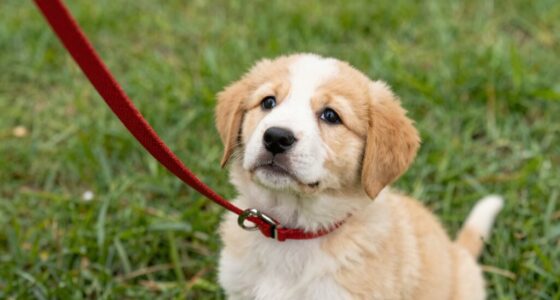

Your puppy follows you everywhere because it’s their natural way to feel safe, secure, and connected with you. They see you as a protector and leader, especially in new environments, and rely on your presence for comfort. This behavior also reflects their attachment and desire for reassurance. By understanding this, you can help your puppy build confidence and independence over time. If you want to learn how to encourage healthy balance and trust, there’s more to discover here.
Key Takeaways
- Puppies follow their owners to feel safe, secure, and strengthen their attachment and trust.
- Consistent routines and positive reinforcement encourage confidence, reducing excessive dependence.
- Natural instincts and early socialization influence their desire to stay close for comfort.
- Social experiences and controlled independence training help balance attachment and exploration.
- Their behavior signifies trust in their owner as a protector and leader.

Having a puppy follow you everywhere is one of the most endearing experiences you’ll encounter as a pet owner. It’s a sign that your puppy feels safe and trusts you completely. But beyond the cuteness, it’s also a behavior that’s rooted in their need for security and attachment. When your puppy sticks close, it’s their way of staying close to the person they see as their protector and leader. This behavior is natural, especially in the early stages of their life, but it can also be influenced by how you approach training techniques and socialization tips. Understanding biodiversity and the importance of varied social experiences can also help your puppy feel more comfortable in different environments.
If you want to encourage your puppy’s attachment in a healthy way, start with consistent training techniques that foster confidence and independence. Use positive reinforcement to reward your puppy when they stay calm and explore new environments on their own. This helps them learn that being close is comforting, but venturing out on their own isn’t a bad thing. Gradually, you can introduce commands like “stay” or “go play,” which teach your puppy that it’s okay to be apart from you for short periods. This reduces excessive clinginess and promotes independence while still maintaining their bond with you.
Socialization tips play an essential role in helping your puppy feel comfortable in different settings, which can lessen their reliance on constant proximity to you. Expose your puppy to new people, animals, and environments in a controlled, positive manner. When they realize that the world is a safe place and that they can explore without fear, they’re less likely to follow you obsessively out of anxiety or uncertainty. During socialization, it’s important to set boundaries gently but firmly, so your puppy learns that following you isn’t the only way to feel secure. Instead, they develop confidence in their ability to navigate their surroundings independently. Incorporating positive reinforcement techniques during socialization can greatly enhance their comfort and trust.
You’ll also find that establishing routines can help your puppy feel more secure, reducing their need to stick to your side constantly. Consistent feeding, potty breaks, and playtime create a stable environment that reassures your puppy. When combined with effective training techniques and socialization tips, this consistency helps your puppy build trust and confidence.
In the end, your puppy following you everywhere is a natural part of their development. It’s a sign of attachment and trust, but it shouldn’t hinder their growth into a well-adjusted, independent dog. By applying positive training techniques and socialization tips, you guide your puppy to balance their desire for closeness with the confidence to explore on their own. This way, you nurture a healthy, happy relationship that allows your puppy to feel secure both with you and in the wider world.

Dog Training Clicker with Sring Wrist and Keyring – Pet Dog Training Clickers for Puppy, Cat, Potty, Bird, Horse, Pet, Trainer Training Tools, Behavior Aids
New communication tool about you and your puppy.
As an affiliate, we earn on qualifying purchases.
As an affiliate, we earn on qualifying purchases.
Frequently Asked Questions
Does Constant Following Indicate Separation Anxiety?
Constantly following you doesn’t always mean separation anxiety; it could be behavioral conditioning or your puppy seeking comfort and security. If your pup shows signs like excessive barking or destructive behavior when alone, it might indicate separation anxiety. Observe their behavior closely. If separation anxiety is suspected, gradually desensitize your puppy to being alone and use positive reinforcement to help them feel more secure, reducing their dependence on constant proximity.
Can a Puppy’s Age Affect Their Following Behavior?
Yes, a puppy’s age influences their following behavior. Younger puppies often seek constant social bonding and reassurance, which makes them clingy. As they grow, their puppy independence increases, and they tend to explore more on their own. During this developmental stage, you’ll notice changes in their attachment; understanding this helps you support their social bonding needs while encouraging healthy independence.
Is It Normal for Puppies to Follow During Sleep?
It’s like your puppy’s heart beats in sync with yours, even during sleep. Yes, it’s normal for puppies to follow you during sleep, as part of their social bonding. This behavior shows their desire for security and comfort, not a lack of puppy independence. Your puppy finds peace knowing you’re near, turning sleep into a shared space of trust and connection.
How Does Training Influence a Puppy’s Following Habits?
Training remarkably influences your puppy’s following habits by strengthening social bonding and managing territorial instincts. When you train consistently, your puppy learns to see you as a trusted leader, reducing excessive following driven by insecurity. Positive reinforcement encourages independence while maintaining a strong bond. Over time, your puppy will follow you because they trust and respect you, not solely out of territorial instinct or attachment.
Could Health Issues Cause Excessive Following Behavior?
Health concerns can definitely cause your puppy to follow you more than usual, as they may seek comfort or reassurance when feeling unwell. Behavioral causes, like anxiety or attachment issues, also play a role. If your puppy’s excessive following suddenly starts or worsens, it’s wise to consult a vet to rule out health issues. Addressing both health concerns and behavioral causes helps your pup feel secure and confident.

PETSTA Dog Puzzle Toys, Treat Dispensing Dog Enrichment Toys for IQ Training and Brain Stimulation, Interactive Mentally Stimulating Toys as Gifts for Puppies, Cats, Dogs
【PRODUCT SIZE】10 inch*10 inch*1.3 inch.
As an affiliate, we earn on qualifying purchases.
As an affiliate, we earn on qualifying purchases.
Conclusion
So, next time your puppy trails you around the house, remember it’s likely a mix of instinct and attachment. Think of it like a loyal shadow, always nearby to protect and bond. Imagine your puppy’s trust as a magnet, pulling them toward you. Their constant follow isn’t just about curiosity — it’s their way of saying, “You’re my person.” Embrace it, knowing you’re building a lifelong friendship rooted in love and loyalty.

Puppy Crate Training Tools: Complete Guide on How to Raise a Puppy Safely Using Successful Crate Training Tools—Teach Your New Puppy to Love Its Crate (The First Puppy Guide Series)
As an affiliate, we earn on qualifying purchases.
As an affiliate, we earn on qualifying purchases.

Buddy Biscuits Trainers Training Bites Soft & Chewy Dog Treats, Bacon, 10 oz. Pouch
Highly Palatable with natural pork liver base
As an affiliate, we earn on qualifying purchases.
As an affiliate, we earn on qualifying purchases.