
To prevent weak spots in your in-ground fence, follow a continuous, straight wire layout without breaks, keeping the wire smooth and tightly secured along your yard’s perimeter. Use gentle curves at corners instead of sharp turns, and avoid crossing over or overlapping wires. Keep the wire away from metal objects and electronics to reduce interference. Properly grounding your system also enhances signal strength. If you want to make sure your boundary is reliable, keep these tips in mind as you improve your setup.
Key Takeaways
- Maintain a continuous, unbroken loop of wire following the yard perimeter for consistent boundary coverage.
- Use gentle curves at corners instead of tight angles to prevent wire tension and weak spots.
- Keep wires away from metal objects and electronic devices to minimize signal interference.
- Regularly inspect and tighten wires, replacing damaged sections to ensure boundary integrity.
- Properly ground the transmitter and insulate connectors near interference sources for optimal signal strength.

Are in-ground fences the right solution for keeping your pets safe and contained? If you’re considering one, understanding the wire layout is vital to prevent weak spots that could allow your furry friend to escape. In-ground fences rely on a wire that encircles your yard, transmitting wireless signals from a transmitter unit installed indoors. These signals create a boundary, and when your pet approaches it, a collar emits a correction to discourage crossing. To ensure the system works effectively, proper fence installation is essential, especially when laying out the wire.
Proper wire layout is key to an effective in-ground pet fence.
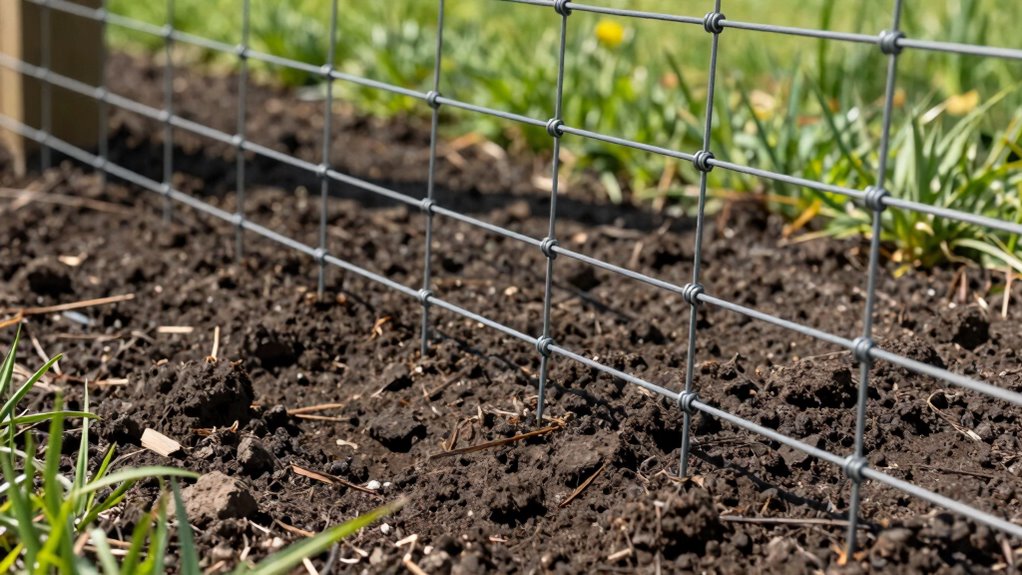
When setting up your in-ground fence, you want to make certain that the wire is laid out in a continuous loop without breaks or sharp turns that could compromise the boundary. Avoid crossing over or overlapping wires, as these can disrupt the wireless signals and create gaps. Instead, keep the wire as straight and smooth as possible, following the perimeter of your yard. When navigating corners, use gentle curves rather than tight angles to prevent the wire from pulling or stretching, which could weaken the signal coverage. This meticulous wire layout helps maintain a consistent boundary, reducing chances of weak spots that might go unnoticed but could be exploited by your pet.
During fence installation, it’s also important to consider areas where the wire might run close to metal objects or other electronic devices. Metal can interfere with wireless signals, causing dead zones or inconsistent correction responses. Keep the wire away from such objects, or use insulated connectors to minimize interference. Proper grounding of the transmitter unit is equally important; a poorly grounded system can weaken the signals transmitted through the wire, creating potential weak spots. Double-check your connections and grounding points to ensure a stable, reliable signal throughout your yard. Additionally, consult wire layout best practices to optimize coverage and prevent weak spots.
Regular inspections are vital once your fence is installed. Walk around the perimeter and look for any signs of damage or sagging wire, which could impair the signal. If you notice any weak points, address them promptly—replacing damaged sections or tightening loose wires will restore the integrity of your boundary. Remember, the effectiveness of your in-ground fence depends on a seamless wire layout and a well-installed system that maintains strong wireless signals. By paying close attention to these details, you provide a safe, secure environment for your pets, giving you peace of mind knowing they won’t wander beyond the boundary you’ve set.
Frequently Asked Questions
How Do I Troubleshoot a Non-Functioning In-Ground Fence?
If your in-ground fence isn’t working, start by checking for grounding issues and signal interference. Make certain the wire is properly connected and not damaged, as weak spots can cause problems. Turn off the system, inspect the transmitter and wiring, and look for any potential sources of interference like other electronic devices. Reset the system and test the boundary. If issues persist, consult your manual or a professional for further troubleshooting.
Can I Install an In-Ground Fence Myself or Hire a Professional?
You can definitely tackle a DIY installation if you’re comfortable with basic wiring and reading instructions, much like assembling furniture with a clear manual. However, for a seamless, reliable setup that mimics a professional job, hiring a pro guarantees proper wire layout and fewer weak spots. Consider your skills and the fence’s complexity—while DIY saves money, professional installation offers peace of mind and peak performance.
What Are the Best Materials for Wire Durability and Conductivity?
You should choose a wire gauge of at least 14 or 16 for durability, ensuring it can withstand underground conditions. Look for wires with corrosion resistance, like those coated with PVC or polyethylene, to prevent rust and damage over time. These materials maintain conductivity and longevity, reducing the need for repairs. Properly selecting a sturdy gauge and corrosion-resistant coating keeps your in-ground fence reliable and effective for years.
How Do I Integrate Multiple Boundary Zones Effectively?
To integrate multiple boundary zones effectively, you should carefully plan boundary overlap to guarantee smooth handovers and avoid weak spots. Connect zones at common points and use seamless wiring to prevent gaps. Make certain each zone’s wiring is consistent, and test the entire system after setup. Proper zone integration enhances containment and minimizes the risk of escape, providing a reliable boundary that works cohesively across all areas.
What Maintenance Is Required to Keep the Fence Operational Long-Term?
You should perform routine inspections of your in-ground fence to catch any damage or wear early. Check for areas with corrosion, especially at connections and exposed wire sections, and clean or replace parts as needed. Regularly test the system to confirm the transmitter is functioning correctly. Taking these steps helps prevent weak spots, keeps the wire in good condition, and ensures your fence remains operational and effective for the long term.
Conclusion
Now that you know the wire layout secrets, your in-ground fence will be an unstoppable fortress for your pup. No weak spots, no sneaky escapes—your yard will be as secure as a secret vault guarded by laser beams! Just follow these basics, and your furry friend will be safely contained, happily exploring without a single daring escape. With a perfect layout, you’ll turn your yard into the ultimate pet paradise—impenetrable and perfectly protected!