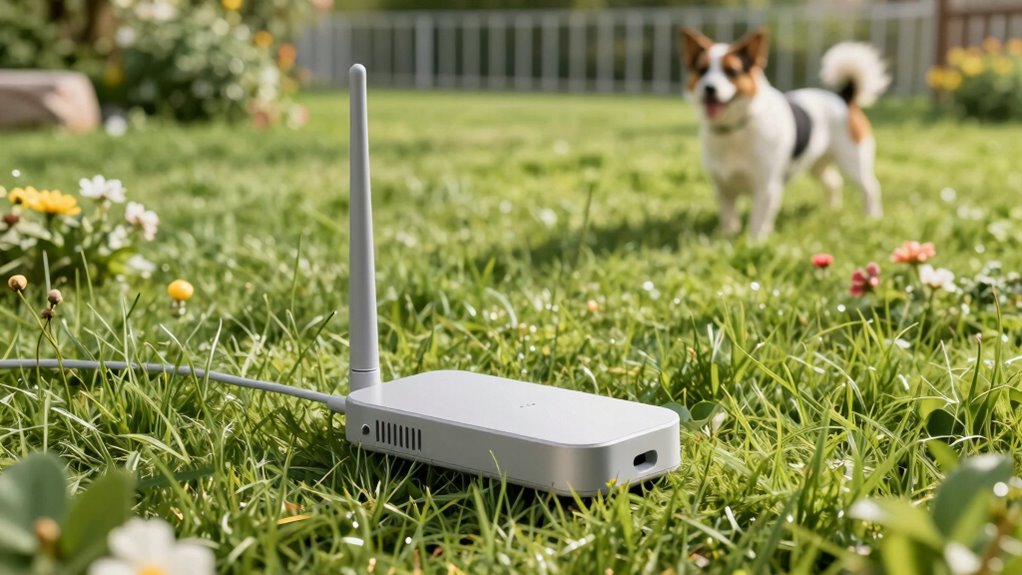

Wireless fences often fall short in remote areas because unstable power, tricky terrain, and weak signals make setup difficult. You may face dead zones where the boundary isn’t reliable, or interference that disrupts signals. Installing extra equipment can add to costs and complexity. If your property isn’t open or obstacle-free, these systems may not keep your pet safe. Keep exploring to discover how these limitations might affect your plans.

Get pet supplies delivered free — and shop member deals
- Fast, free delivery on millions of items
- Access to Prime Big Deal Days deals on October 6–7
- Prime Video, Amazon Music and more included
Key Takeaways
- Wireless fences require a stable, unobstructed signal, which is difficult to maintain in remote or obstacle-rich environments.
- Signal strength diminishes over distance and terrain, creating dead zones and unreliable boundary enforcement.
- Power supply limitations and interference from natural features can cause boundary failures and inconsistent pet containment.
- They are less effective in irregular terrains like hills or wooded areas, reducing coverage and fence reliability.
- Additional equipment like signal boosters increases complexity and cost, making wireless fences less practical in challenging locations.
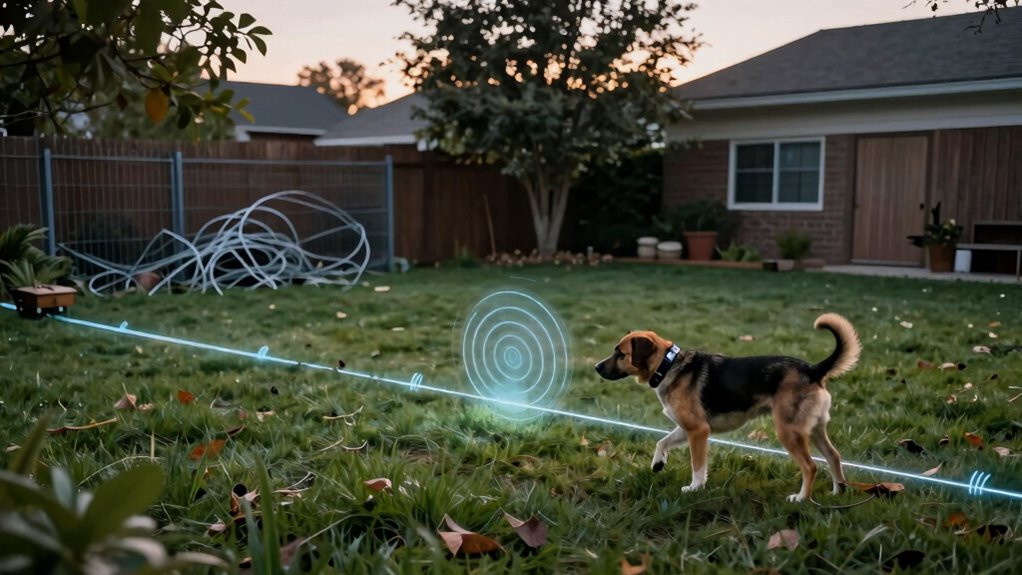
Wireless fences have gained popularity as a convenient alternative to traditional underground systems, but they often fall short of expectations. If you’re considering one, especially in a remote area, it’s important to understand their limitations. Unlike underground fences, which require digging trenches and installing wires, wireless fences rely on radio signals to create a boundary. This simplicity appeals to many, but it can lead to unexpected challenges, particularly when setting up in remote locations.
One of the biggest hurdles you’ll face is installation challenges in a remote area. These areas often lack the stable power sources or robust signal coverage that wireless fences depend on. You might find that the signal strength varies or weakens over distance, making it difficult to establish a reliable boundary. Plus, the installation process itself can be tricky. You need to position the transmitter correctly, ensuring it has an unobstructed line of sight and isn’t affected by interference from trees, buildings, or other electronic devices. In remote areas, these obstacles are common, and they can compromise the fence’s effectiveness right from the start.
Remote areas can hinder wireless fence installation due to weak signals and interference.
Another issue with setting up wireless fences in such locations is that they may require additional equipment or adjustments to work properly. You might have to invest in signal boosters or repeaters to extend the range, which adds complexity and cost. Furthermore, because remote areas often have less infrastructure, maintaining consistent power supply becomes a concern. If the transmitter’s power source isn’t reliable, your fence’s boundary could become inconsistent or fail altogether, leaving your pet vulnerable.
Additionally, wireless fences aren’t always as flexible as they seem. They work best in open, unobstructed spaces, but in remote areas, the terrain can be uneven, wooded, or hilly. These features can disrupt radio signals, creating gaps in the boundary that your pet could escape through. You might think you’re installing a perimeter that covers your entire property, but in reality, signal dead zones might develop, undermining your fence’s purpose.
In essence, while wireless fences offer a quick and modern solution, they’re not a one-size-fits-all answer. If your property is in a remote area, expect to face installation challenges that require extra effort, equipment, and patience. Without proper planning and understanding of these limitations, you risk ending up with a fence that’s unreliable or ineffective. Before making a decision, weigh these factors carefully to ensure you choose the right fencing option for your specific environment.
Furthermore, considering high-quality technology can make a significant difference in overcoming these hurdles and ensuring your wireless fence functions reliably in remote settings.
wireless pet fence signal booster
As an affiliate, we earn on qualifying purchases.
As an affiliate, we earn on qualifying purchases.
Frequently Asked Questions
Are Wireless Fences Suitable for All Dog Sizes and Breeds?
Wireless fences aren’t suitable for all dog sizes and breeds. You should consider dog size limitations—larger or more energetic breeds might push through or damage the system. Breed suitability also matters; some breeds are more likely to test boundaries or ignore warnings. If you have a small or stubborn dog, a wireless fence may not provide reliable containment. Always assess your dog’s behavior and size before choosing this fencing option.
How Does Weather Affect the Performance of Wireless Fences?
Weather interference can substantially impact your wireless fence’s performance. Heavy rain, snow, or thunderstorms may cause signal degradation, making the boundary less reliable. Extreme weather conditions can lead to false triggers or missed alerts, so you should regularly check the system during such times. Keep in mind that consistent weather interference reduces the fence’s effectiveness, and you might need to consider alternative containment methods for ideal safety and security of your dog.
Can Wireless Fences Be Used Indoors or in Urban Areas?
You can use wireless fences indoors, but they’re often less effective in urban areas. Indoor installation works if you set up the system properly, but walls and furniture can interfere with signals. In urban environments, limitations like signal interference from tall buildings or dense signals can reduce effectiveness. So, while indoor use is possible, expect some challenges, especially in cities where signals might be obstructed or weakened.
What Is the Typical Lifespan of a Wireless Fence System?
A wireless fence system typically lasts around 3 to 5 years, depending on battery longevity and signal durability. As the batteries age, you’ll notice decreased performance, so replacing them regularly is essential. Signal strength can also weaken over time, especially if the device faces interference or gets damaged. To guarantee your system works effectively, keep an eye on these factors and perform routine maintenance, replacing batteries when needed.
Are There Any Health Risks Associated With Wireless Fence Signals?
You might wonder about health concerns related to wireless fence signals. Current research shows that electromagnetic exposure from these systems is generally low and considered safe for humans and pets. However, if you have existing health issues or are concerned about electromagnetic fields, it’s wise to consult a healthcare professional. Overall, wireless fences are designed to emit minimal signals, making health risks unlikely but worth considering for sensitive individuals.
remote area pet containment system
As an affiliate, we earn on qualifying purchases.
As an affiliate, we earn on qualifying purchases.
Conclusion
So, before you rush to buy that shiny new wireless fence, remember it’s not a magic wand. Like a trusty rotary phone, it has its limits—no perfect solution, no all-powerful shield. It’s great for basic containment, but don’t expect it to replace traditional methods or handle every situation flawlessly. Keep your expectations grounded, and don’t fall for the hype. After all, even the best tech is only as good as its user—just like a good ol’ compass in a sea of uncertainty.
wireless dog fence with obstacle detection
As an affiliate, we earn on qualifying purchases.
As an affiliate, we earn on qualifying purchases.
As an affiliate, we earn on qualifying purchases.
Halloween Picks
halloween
As an affiliate, we earn on qualifying purchases.