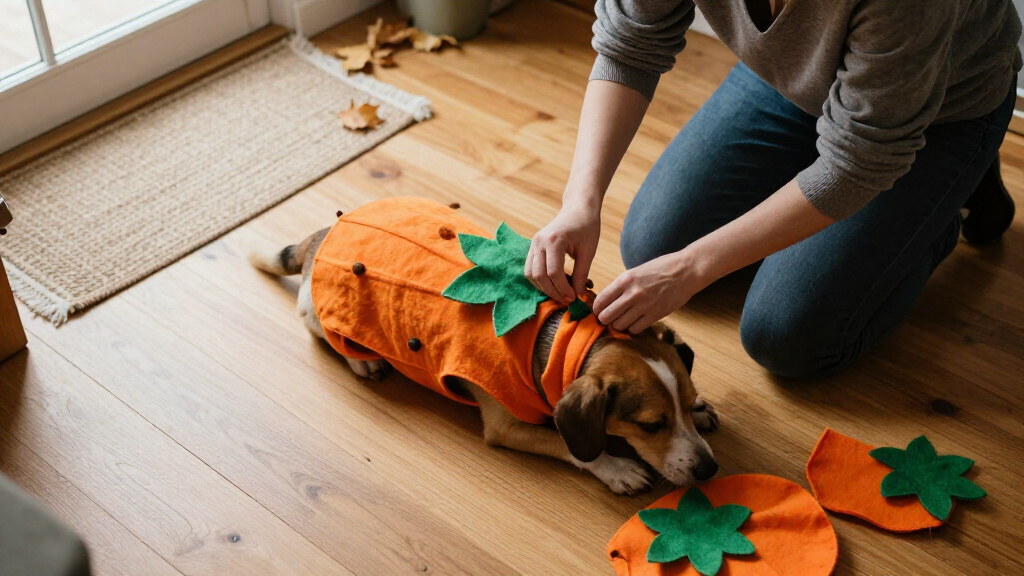

This guide walks you through the complete process of dressing your dog in a Halloween costume: picking or making a design that fits your dog’s body and temperament, checking the fit for safety, and training your dog to wear it without stress. By the end, you will have a dog who is safely and comfortably costumed and calm enough to pose for photos or join Halloween activities. The guide is written for beginners — no sewing experience is required unless you choose the homemade route, and every step works for both store-bought and DIY costumes. Expect to spend an hour or two on the costume itself and a few days of short practice sessions before Halloween night. If your dog has never worn anything beyond a collar or harness, start the training steps at least a week before the event.

Get pet supplies delivered free — and shop member deals
- Fast, free delivery on millions of items
- Access to Prime Big Deal Days deals on October 6–7
- Prime Video, Amazon Music and more included
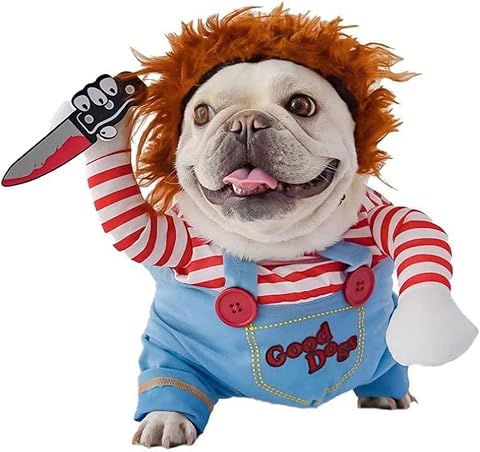
Pet ‘Deadly Dog’ Costume for Small, Medium, and Large Dogs
- ✔ Material: Cotton and polyester fiber
- ✔ Selected size: Medium
- ✔ Medium chest girth: 18–20 in
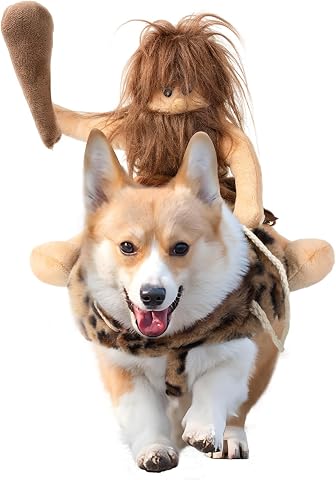
DELIFUR Primitive Man Cowboy Riding Dog Costume, Medium
- ✔ Material: Polyester
- ✔ Size: Medium
- ✔ Chest girth: 20–26.5 in

NACOCO Green Dinosaur Costume for Dogs, Size S
- ✔ Brand: NACOCO
- ✔ Color: Green
- ✔ Size: Small
Difficulty: Beginner | Time: 1-3 hours (plus several short training sessions over 3-5 days)
What You’ll Need
Tools & Materials:
- Soft measuring tape (or a piece of string and a ruler)
- The costume itself: store-bought, or materials such as an old t-shirt, fleece, felt, fabric glue, or a needle and thread
- Scissors
- Small, soft treats your dog loves (use pea-sized pieces)
- Your phone or camera for fit-check photos
Knowledge:
- Basic handling of your dog — being able to gently touch their legs, belly, and head
- Knowing your dog’s reactions to new objects and noises
Measure your dog before buying or making anything. Sizes vary wildly between brands, and weight-based size charts are often wrong for long-backed, deep-chested, or slim breeds like dachshunds, greyhounds, and whippets. Take three measurements: neck girth (where a collar sits), chest girth (the widest point, just behind the front legs), and back length (base of neck to base of tail). Write them down and compare them to the specific costume’s size chart.
Pet ‘Deadly Dog’ Costume for Small, Medium, and Large Dogs
For shoppers who want a recognizable Halloween gag with some room to adjust the fit, the Pet “Deadly Dog” costume is the strongest all-around option in this group. Its padded outfit and knife-shaped attachment create a more theatrical look than NACOCO’s simple dinosaur hoodie, while the attachment can be removed or adjusted when you want a less dramatic costume. That flexibility gives this pick a useful advantage for photos, parties and shorter outings where the prop is part of the joke.The listing describes soft cotton and polyester plus adjustable neck and chest slings for easier dressing. The medium size is specified for a chest of 18–20 inches, neck of 14–16 inches and back length of 11 inches, with a suggested weight of 15–30 pounds. Those measurements offer a practical starting point, but they do not replace measuring your dog: compare them carefully with DELIFUR’s different medium range, and remember that weight alone cannot confirm a good fit. Four listed sizes, S through XL, also give this costume broader stated size coverage than NACOCO’s small-only listing here.There are tradeoffs. Padding may feel warm if your dog wears it for a long stretch, and the adjustable prop does not make the body fit universal. Dogs who dislike clothing or attachments may find the costume distracting. We would choose it for a short, supervised Halloween appearance after a measurement check, and skip it for a dog that overheats easily or needs a very light layer.
Pros:
- Adjustable neck and chest slings support a more tailored fit.
- The knife-shaped prop is removable or adjustable for different costume looks.
- Soft cotton and polyester are described as breathable and skin-friendly.
- Four listed sizes, from S through XL, cover more size choices than the small-only NACOCO listing.
Cons:
- The padding may feel warm during extended wear.
- Careful neck, chest and back measurement is needed to select a size.
Best for: Owners seeking a flexible, padded Halloween look for a dog whose measurements fit one of the listed S–XL sizes.
Not ideal for: Dogs that overheat easily, resist costume attachments or need an outfit for prolonged wear.
Bottom line: We rank it first for combining a clear Halloween joke with adjustable straps, a removable prop and the broadest stated size selection in this comparison.
“We rank it first for combining a clear Halloween joke with adjustable straps, a removable prop and the broadest stated size selection in this comparison.”
DELIFUR Primitive Man Cowboy Riding Dog Costume, Medium
DELIFUR takes the most immediately comic approach: its primitive man riding design makes the dog appear to carry a small cowboy. Compared with the Deadly Dog costume’s removable prop, this outfit builds its joke into the full silhouette, so it is better suited to a planned photo or party entrance than to someone who wants a costume detail they can take off. Its listed medium chest range of 20–26.5 inches is also broader than the Deadly Dog medium’s 18–20 inches, though each dog still needs to match the neck and other fit points.The hook-and-loop closure is intended to make dressing and removal easier, and the costume is described as lightweight and padded. Its listed neck girth is 12–18.5 inches, with a recommended weight of 25–50 pounds. These figures make it a candidate for some medium and larger dogs, but the product specifically calls for checking its measurement chart. Since its size numbers differ from the other medium options, we would compare actual measurements rather than assume that “medium” means the same fit across brands.Unlike NACOCO’s hooded design, DELIFUR gives the outfit a layered riding effect without a pull-on hoodie format. The listing says it is not water resistant, so wet-weather walks are a poor match, and its polyester construction provides less material detail than the cotton-and-velvet dinosaur outfit. We see it as the best pick for owners who value a bold, easy-to-recognize visual gag and can keep wear brief and supervised. Dogs that dislike costume bulk or need a weather-ready outfit should look elsewhere.
Pros:
- The cowboy riding silhouette delivers a distinct visual joke.
- Hook-and-loop closure is designed for easier dressing and removal.
- Listed medium chest range spans 20–26.5 inches.
- Lightweight padded construction is described in the product details.
Cons:
- The listing says the costume is not water resistant.
- Sizing requires checking the measurement chart rather than relying on the medium label.
- The fixed riding design offers less visual flexibility than the removable prop on the Deadly Dog costume.
Best for: Owners planning a supervised Halloween photo or party appearance for a dog within the stated chest and neck ranges.
Not ideal for: Dogs that dislike padded or novelty outfits, or owners seeking water resistance or a simple everyday layer.
Bottom line: We place it second for its standout photo-ready design and broad stated medium chest range, with chart-dependent fit and weather limits keeping it behind the more adjustable top pick.
“We place it second for its standout photo-ready design and broad stated medium chest range, with chart-dependent fit and weather limits keeping it behind the more adjustable top pick.”
NACOCO Green Dinosaur Costume for Dogs, Size S
NACOCO is the most understated costume in this lineup: a green dinosaur hoodie made from cotton and velvet, rather than a padded character gag like the other two. That makes it a sensible choice for owners who want a soft, warm-looking outfit for a small dog’s Halloween photos or cooler-weather event. The pull-on closure also avoids separate hook-and-loop straps, although that simplicity leaves less room to fine-tune the fit than the adjustable slings on the Deadly Dog costume or DELIFUR’s closure.The listed small dimensions are a 15-inch chest, 8-inch back and 12-inch neck, with a recommended weight of 4–10 pounds. These details make the intended size range relatively specific, but the listing also notes that size details vary. Measure your dog and verify the relevant listing chart before ordering; a small label by itself is not enough. Compared with the other products, this option is clearly the most specialized: it is the only hooded design and the only one in this comparison listed specifically in size S.NACOCO’s cotton-and-velvet construction is described as soft and warm, which can be appealing for a brief costume appearance in cooler conditions. That same warmth may not suit a dog that runs hot, and the listing says the garment is not water resistant. It also requires hand washing, making cleanup less convenient than a costume with simpler care instructions. We would pick it for a small dog who tolerates hooded clothing and whose measurements line up; for a more adjustable fit or a larger dog, the Deadly Dog and DELIFUR options make more sense.
Pros:
- Cotton and velvet are described as soft and warm.
- The hooded dinosaur look offers a gentler alternative to the other costumes’ padded gags.
- Pull-on construction keeps the closure simple.
- Listed chest, back and neck dimensions give small-dog owners concrete fit points to compare.
Cons:
- The listing says it is not water resistant.
- Hand washing is required.
- The listing notes that size details vary, so fit information deserves extra checking.
Best for: Owners of small dogs weighing within the listed 4–10 lb range who want a soft dinosaur hoodie for photos or a cool-weather occasion.
Not ideal for: Dogs outside the listed small dimensions, dogs that dislike hooded pull-on clothing, or owners who need easy-care or water-resistant costume wear.
Bottom line: We rank it third as a focused small-dog hoodie choice: appealing for a softer dinosaur look, but less adjustable and more care-intensive than the other two.
“We rank it third as a focused small-dog hoodie choice: appealing for a softer dinosaur look, but less adjustable and more care-intensive than the other two.”
As an Amazon Associate we earn from qualifying purchases.
Before You Start
Safety comes first. A costume is never worth distressing your dog. Before you begin, understand these hard limits: no costumes covering the eyes, nose, or mouth; no small glued-on parts a dog can chew off and swallow; no elastic bands that dig into skin or restrict breathing; and no costumes worn unsupervised. Flat-faced breeds (pugs, bulldogs, French bulldogs) overheat easily — keep them in lightweight costumes and limit wearing time to 10-15 minutes. If your dog panics — panting heavily, freezing, frantic pawing, trying to bolt — remove the costume immediately and use a simpler alternative like a themed bandana or collar charm. A calm dog in a bandana beats a miserable dog in an elaborate outfit every time.
Step-by-Step Instructions
Step 1: Choose a costume style that matches your dog’s tolerance level
Rate the three tiers of costume complexity against your dog’s reactions to new things. Tier 1 is a themed accessory: a bandana, collar charm, or a simple bow tie — suitable for nearly all dogs. Tier 2 is a single-piece outfit like a t-shirt-style costume, tutu, or cape that fastens with Velcro on the back. Tier 3 is a full ensemble with headpieces, legs, or multiple layers — only for calm, patient dogs who already wear coats or sweaters. Pick the lowest tier that satisfies your Halloween goal. If your main goal is photos, a Tier 2 costume usually photographs just as well as a Tier 3 outfit with far less stress.
Tip: Choose costumes that fasten on the back rather than ones you pull over the head — most dogs accept them faster.
Check: You have selected one specific costume at a tolerance tier that matches how your dog reacts to new things.
Step 2: Buy or build the costume using your dog’s measurements
Match the costume to your dog’s recorded measurements before you build or buy. For a store-bought costume, compare your numbers to the manufacturer’s size chart and size up if your dog is between sizes — you can take in excess fabric with a few stitches or a clothespin, but you cannot add fabric. For a DIY costume, start with a simple base: cut an old t-shirt’s sleeves and hem them to make a quick body suit for medium and large dogs; cut a rectangle of fleece and attach Velcro straps to make a cape for any size. Attach all decoration to the back of the costume where the dog cannot see or reach it. Stitch appliqués on rather than gluing where possible; if you use fabric glue, let it cure for 24 hours and tug-test every piece before the dog wears it.
Tip: Easy high-impact DIY ideas: a white t-shirt plus felt circles makes a Dalmatian or cow; a red cape plus a felt ‘S’ makes a superhero; a tan hoodie with felt ears makes a lion.
Check: The costume matches your dog’s measurements with a little slack, and every attached decoration survives a firm tug.
Step 3: Check the full fit before any training
Put the costume on your dog for 30 seconds and inspect five areas. Neck: slide two fingers flat between the fabric and your dog’s throat — they should fit snugly but not tightly. Chest: watch that the costume does not compress the ribcage when the dog sits or lies down. Armpits and legs: feel for anything that rubs where the legs meet the body. Belly: confirm that males can urinate without the costume getting wet or blocking them. Rear: check that the costume does not block the tail or anus. Have someone hold the dog or use treats to keep them still, then remove the costume after the inspection. Take a photo from the side while it is on so you can compare later.
Tip: Watch your dog walk three or four steps in the costume. Stilted, exaggerated, or frozen movement means something is pinching or the costume is too heavy.
Check: Two fingers fit under all straps, the dog walks normally, and males can lift a leg unobstructed.
Step 4: Introduce the costume gradually with treats
Place the costume on the floor and let your dog sniff it. Drop a treat next to it whenever your dog approaches or touches it. After a few minutes, hold the costume up and feed treats near it so the dog associates it with food. Repeat this for two short sessions of 3-5 minutes. In the next session, rest the costume on your dog’s back for two seconds, feed a treat, and remove it. Keep repeating, slowly extending the time: 5 seconds, 10 seconds, 30 seconds, then fastening it loosely. Always remove the costume while the dog is still calm, never after they start fussing — otherwise you teach them that fussing makes it disappear.
Check: Within two or three sessions, your dog approaches the costume willingly and stays relaxed while it rests on their back.
Step 5: Build wearing time in short sessions
Put the costume on your dog for gradually longer periods over the next few days: 1 minute, then 5, then 10, then 20. Keep your dog busy during each session with something enjoyable — a snuffle mat, a short walk, a training game, or dinner from a puzzle feeder. Distracted dogs forget they are wearing clothes. Practice once or twice a day, and always supervise. Never leave a costumed dog alone in a crate or room.
Tip: If your dog freezes or refuses to walk in the costume, shorten the sessions and go back a step. Freezing is a signal of stress, not stubbornness.
Check: By day four or five, your dog walks, eats, and relaxes normally while wearing the costume for 20 minutes.
Step 6: Run a dress rehearsal in realistic conditions
Run a full rehearsal two or three days before Halloween. Put the costume on, add the headpiece or accessory if there is one, and expose your dog to the conditions of the actual event: go outside at dusk, have family members ring the doorbell, or walk past decorations and inflatables. Watch for stress signals: lip licking, yawning, pinned ears, tucked tail, whale eye (whites of the eyes showing). Take your event photos during this rehearsal as a backup — dogs often look their best on the second or third wearing, not the first.
Tip: If there will be a headpiece, introduce it separately from the body costume so the dog does not have to accept everything at once.
Check: Your dog remains relaxed through a 15-20 minute rehearsal that mimics the real event, and you have at least one good photo in the bank.
Step 7: Dress your dog on Halloween and manage the wearing window
Put the costume on shortly before the activity on the day itself rather than hours in advance — 20 to 30 minutes of lead time is plenty. Keep treats handy. Check the fit every 15 minutes during the event for shifting, rubbing, or chewing. Limit total wearing time to under two hours, and less for small, senior, or flat-faced dogs. Keep your dog on leash or behind a gate when the doorbell rings so they cannot bolt out in costume. Remove the costume as soon as the activity ends, do a quick skin check for red marks, and give a treat so the experience ends well.
Check: Your dog completes the event relaxed and comfortable, with no red marks or mats under the costume afterward.
Common Mistakes to Avoid
- Buying a costume based only on the dog’s weight or breed label on the packaging. — Always buy by neck, chest, and length measurements, and check reviews from owners of similar breeds. When in doubt, size up and adjust.
- Putting the costume on for the first time on Halloween night. — Start costume training at least 4-7 days before the event. A first-time costume on a busy, noisy night nearly guarantees stress.
- Using glued-on decorations, buttons, or dangling parts the dog can chew off. — Stitch decorations on, tug-test everything, and keep all small parts on the back of the costume where the dog cannot reach them.
- Leaving the costume on the dog for hours or while unsupervised. — Set a wearing-time limit of two hours maximum, check fit every 15 minutes, and remove the costume whenever you cannot directly watch the dog.
Troubleshooting
Problem: The dog freezes and refuses to move once the costume is on.
Solution: Remove the costume calmly, then restart at a lower intensity — drape it over the back without fastening, or use just the cape or bandana component. Reward every step of movement. Freezing usually means the costume is too heavy, too tight, or introduced too fast.
Problem: The dog paws at the costume or tries to pull it off.
Solution: Redirect with a treat scatter or a food puzzle the moment the pawing starts, before it escalates. If pawing continues after a week of practice, the costume likely irritates a specific spot — re-check the armpits and neck fit, or switch to a simpler style.
Problem: The costume fits in the store’s size chart but rides up or twists when the dog walks.
Solution: Add a stabilizer: connect a loop of the costume to your dog’s regular collar with a small carabiner or a strip of elastic, or take in the side seams so the fit is snugger. Twist usually means the chest measurement is too loose.
Problem: The dog is scared of the costume itself — barking at it or avoiding it.
Solution: Go back to passive exposure. Leave the costume on the floor near the food bowl for a day without any pressure. Feed meals beside it. Never force contact — most dogs accept a costume within a few days of positive association, but pushing too fast creates a lasting aversion.
What Success Looks Like
You have succeeded when: (1) the costume passes the two-finger fit test at the neck and chest with no rubbing at the armpits; (2) your dog walks, eats, and relaxes normally while wearing it for at least 20 minutes; (3) your dog shows no stress signals — no freezing, excessive pawing, lip licking, or tucked tail — during a realistic rehearsal; and (4) after Halloween you find no red marks, hair loss, or mats where the costume sat. A relaxed dog in a simple costume is a fully successful outcome; a miserable dog in an elaborate one is not.
Next Steps
After Halloween, wash the costume before storing it — treat it like dog bedding — and check the care label, since many costumes are hand-wash only. Inspect your dog’s skin under the straps once more the next morning for delayed irritation. If the costume worked well, store it in a sealed bin with your other Halloween decorations; reconditioning next year takes only one or two sessions since your dog remembers the training. If your dog enjoyed wearing clothes, consider a properly fitted raincoat or winter coat for the season. If your dog struggled badly, plan next year around a themed bandana or collar accessory instead, and if fear of handling or new objects extends beyond costumes, ask your vet or a certified trainer about desensitization work.
Frequently Asked Questions
How long can a dog safely wear a Halloween costume?
For most healthy adult dogs, keep it under two hours total, with fit checks every 15 minutes. Small dogs, seniors, puppies, and flat-faced breeds should stay closer to 15-30 minutes because they overheat faster. Never let a dog sleep in a costume or wear one unsupervised.
My dog hates wearing anything. What’s the easiest costume option?
A themed bandana or collar charm is the standard fallback. Bandanas fasten like a collar, leave the body free, and most dogs accept them within minutes. A themed tag or charm attached to the existing collar involves zero wearing adjustment at all.
Are store-bought costumes safe, or is homemade better?
Both can be safe if you inspect them. Check store-bought costumes for glued parts, elastic edges, and dangling trim before use — size charts are often inaccurate, so measure first. Homemade costumes built from a t-shirt base are frequently safer because you control the fit and can stitch rather than glue decorations.
What if my dog needs to wear a harness or leash on Halloween?
Fit the costume so the harness goes on top of it — cut a small slit in thick costumes for the leash clip to pass through, or use a costume with a built-in leash opening. Never attach a leash to a costume itself; costumes are not load-bearing and will tear or choke the dog if the dog pulls.
Can I take my costumed dog trick-or-treating?
Only if your dog is already calm around crowds, children, noises, and other dogs — Halloween adds strangers in masks, sudden movements, and candy on the ground. Keep the dog on a short leash, skip houses with scary decorations if the dog hesitates, and watch that no one feeds your dog candy. Chocolate and xylitol-sweetened gum are toxic. If your dog is unsure of strangers, keep them home behind a gate with a stuffed puzzle toy instead.
Fall Picks
fall essentials
As an affiliate, we earn on qualifying purchases.