TL;DR
Halloween dog costumes can be a fun way to include your pet when the outfit fits well, leaves breathing and senses unobstructed, and has no loose chewable parts. Measure your dog, try the costume indoors for a few minutes, and remove it if your dog seems stressed or warm; a festive bandana can be enough.
A tiny cape can turn your dog into a superhero—unless it slips over their eyes halfway down the sidewalk. Halloween dog costumes are a popular way for owners to include pets in seasonal celebrations, but comfort matters more than the photo.

Get pet supplies delivered free with Prime
- Fast, free delivery on millions of items
- Prime Video, Amazon Music and more included
- Member-only deals all year
You’ll learn how to check fit, spot signs your dog wants a break, and choose safer alternatives if a full outfit isn’t their thing. A few minutes of preparation can help keep your Halloween relaxed, festive, and focused on your dog’s comfort.
Measure your dog’s neck, chest, and back length, then use the specific costume brand’s chart.
Test the outfit indoors and check that your dog can walk, sit, turn, and toilet comfortably.
Remove the costume if your dog freezes, paws at it, tries to escape, or seems warm or stressed.
Keep eyes, nose, mouth, and movement clear; supervise your dog and watch for loose chewable parts.
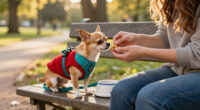
A bandana, festive collar, or themed leash can include your dog in the fun without a full outfit.
Choose a costume your dog can move in
Halloween dog costumes work best when your dog can walk, sit, turn, and toilet normally while wearing them. These movements are a practical fit check: fabric that shifts or pulls when your dog turns may also rub during a longer walk, while a tight belly or chest can make ordinary movement uncomfortable. The costume should sit comfortably around the neck and chest, and nothing should drag, rub, or snag on furniture. If your dog takes shorter steps or freezes when you put it on, pause and check both the fit and whether they accept the sensation.
Dog bodies vary widely, even among pets who weigh the same. A broad-chested bulldog and a long-backed dachshund may need very different cuts, so measure the neck, chest, and back length and compare them with that brand’s chart. Measurements help narrow down a size, but they cannot show how a particular cut sits on your dog; use the chart, then check the actual fit. For example, if your terrier falls between sizes, look for the maker’s advice and favor enough room to breathe and move. A looser costume can shift or snag, so secure it as directed and recheck it while your dog walks.
- Check that you can slide your fingers comfortably beneath the neck and chest fabric. This gives a quick indication that the costume isn’t pressing tightly, though it doesn’t replace watching your dog move.
- Look for seams or straps that rub under the legs, where repeated movement can turn a small irritation into soreness.
- Skip long capes, trailing pieces, or decorations that could catch on a chair or leash. A simpler outfit may be less dramatic in a photo, but it is easier to keep clear of snags.
A label such as “medium” doesn’t tell the whole story. Brands size costumes differently, so the tape measure is a more useful starting point than the tag. The final test is whether your dog can move naturally without the outfit slipping or pressing on them.
Products Worth Considering

Whisker Litter-Robot 4 Automatic Self-Cleaning Litter Box Bundle, Black

PetSafe ScoopFree Crystal Pro Legacy Self-Cleaning Litter Box, Uncovered

PetSafe Electronic Pet Door with Collar Key Sensor, Large
As an affiliate, we earn on qualifying purchases.
Use this quick indoor test before Halloween night
Halloween dog costumes are easier to evaluate in a familiar room than in a noisy crowd. At home, you can tell whether a change in posture comes from the costume itself or from the excitement of strangers, traffic, and unfamiliar surroundings. Introduce the outfit in short steps, reward calm curiosity with treats, and watch how your dog moves. A costume that looks adorable on the hanger still needs to pass a real-world comfort check.
- Let your dog inspect it. Place the costume on the floor and let your dog sniff it; don’t pull it over their head right away. This gives them time to approach voluntarily and helps avoid turning the first contact into a struggle.
- Try it briefly. Put it on for a short indoor trial and offer a treat or a favorite toy. A calm response is useful information, but one treat doesn’t prove the costume will stay comfortable over time.
- Watch the movement. Ask your dog to walk, sit, turn, and lie down. Check that straps stay in place and fabric doesn’t block the face. Movement can reveal pressure points or slipping that are hard to spot while your dog stands still.
- Take it off and inspect. Look for red marks, tangled fur, loose stitches, or signs your dog wants out. These checks can reveal friction or a damaged part before it becomes a bigger problem.
For example, your beagle may stroll comfortably in a soft superhero cape but paw at a bulky lion hood. Keep the cape and ditch the hood: the dog can still join the celebration without the part that bothers them. A shorter trial also helps you spot issues before you head out for an evening walk, when there may be fewer quiet chances to adjust the outfit.
Costumes should be worn under direct supervision and removed whenever your dog is unattended. Supervision lets you respond if fabric shifts, catches, or becomes something to chew, but it doesn’t make an uncomfortable outfit suitable for all-evening wear. Plan breaks so your dog can cool down and relax without the costume.
Spot the signs that your dog needs a break
Halloween dog costumes should come off if your dog repeatedly paws at them, freezes, tries to escape, or holds their body in a tucked, tense posture. These behaviors can mean the outfit is unfamiliar or uncomfortable; they are a reason to stop and reassess, even if you can’t tell which part is bothering your dog. Repeated scratching and panting unrelated to heat can also signal discomfort. Don’t wait for a dramatic reaction: small changes in movement or behavior can be enough to call it a night.
Some dogs wear clothes without a fuss, while others dislike even a light bandana. Age, health, body shape, coat, and past experience can all affect what feels comfortable. A thick costume may hold warmth, especially on a dog with a dense coat or during active play, while a close fit can be harder for a dog with limited mobility. If your senior dog walks stiffly in a jacket, or your puppy keeps chewing a collar decoration, remove it and let them relax. The tradeoff is simple: a less elaborate look may mean fewer pictures in costume, but it avoids asking your dog to tolerate something that affects comfort or movement.
After taking the costume off, give your dog space and see whether their posture and movement return to normal. If they settle, choose a lighter alternative or let them participate without clothing. If unusual behavior continues after removal, consider whether something else is bothering them and contact your veterinarian if you’re concerned. A quick check can prevent a cute costume from turning into a stressful event, and an easy way out lets your dog’s comfort guide the plan.
Your dog’s comfort is the dress code. If they keep trying to get out of the costume, let them out of it.
Keep faces, paws, and small parts safe
Halloween dog costumes need to leave your dog’s nose, mouth, eyes, and movement clear. Those areas support breathing, eating, seeing, and communicating through normal body language, so a mask or hood that covers them can create both physical discomfort and a harder-to-read dog. Avoid masks or hoods that cover the face, and check that fabric doesn’t slip toward the eyes when your dog lowers their head. Buttons, bells, elastic, and decorations can become chewing or swallowing hazards if they come loose; fewer detachable parts make the outfit easier to inspect and supervise.
Imagine your dog greeting a neighbor at the door: a dangling bell catches on the leash, and the dog turns to chew it. The example shows how a detail that seems harmless indoors can snag or attract attention during a busy evening. Simple outfits with fewer loose pieces are easier to supervise. If your dog starts mouthing a decoration, take the costume off rather than hoping they’ll ignore it, since chewing can loosen the piece further.
Evening visibility matters on a dark street. Reflective trim or a small light can help others see your dog, but it doesn’t replace a secure leash, harness, or identification tag: visibility helps people notice your dog, while those other measures help you maintain control and identify them. Keep your dog away from chocolate, sweets containing xylitol, lit candles, and glow-stick contents, and manage open doors during trick-or-treating. A costume can add visibility or festive style, but it does not reduce these household risks.
For health or behavior concerns, ask your veterinarian for guidance. If your dog may have eaten something toxic or is hurt, contact a veterinarian or an emergency veterinary clinic promptly.
Pick a costume style that suits your dog
Halloween dog costumes come in full outfits, simple accessories, and matching looks for families or multiple pets. The right choice depends on your dog’s comfort, the weather, and how long you expect them to wear it. A full outfit can create a stronger character look, but it covers more of the body and can add warmth or restrict movement. A lightweight bandana may be a better celebration outfit than a warm, padded suit, especially for a dog who only tolerates clothing briefly.
For example, if your golden retriever joins a brief outdoor photo on a cool evening, a simple cape may be comfortable. On a mild afternoon walk, that same dog may get too warm in a thick costume because the coat and activity already retain heat. Consider your dog’s coat and the conditions, and stop if they seem hot or tired. Match the outfit to the actual activity: a quick photo allows a different level of clothing than a long walk or a crowded gathering.
| Style | What it offers | What to check |
|---|---|---|
| Full costume | A bold character look for photos or a short visit | Fit, warmth, clear senses, and free movement |
| Bandana or festive collar | A light touch of seasonal color | Comfort around the neck and secure decorations |
| Themed leash | A simple detail for a walk | Secure attachment and safe walking control |
Each option involves a different balance of appearance and practicality. A bandana or themed leash may offer less of a transformation, but it covers less of your dog and can be easier to remove. A full costume can make a more striking photo, yet calls for closer checks of heat, fit, and movement. Matching owner-and-pet outfits and pop-culture looks are common seasonal styles, but exact bestsellers vary each year. Check a costume’s materials, care label, sizing chart, and return policy before buying; the product photo can’t tell you how it will fit your dog.
Make a simple DIY costume without risky extras
A DIY dog costume can be as simple as a soft cape made from lightweight fabric, secured so it cannot tighten around the neck. Keep the design short and smooth, with no sharp edges, tight ties, or small detachable decorations. Each extra strap or ornament adds another place that could rub, catch, or become tempting to chew, so a simple design is often easier to check and remove. Try it indoors before Halloween and watch how your dog moves.
For instance, you could attach a broad piece of felt to a comfortable harness for a quick superhero look, then check that your dog can turn and lie down. Attaching fabric to a harness avoids putting a tight tie around the neck, but the added material still needs to stay clear of the legs and leash. Avoid pinning pieces directly where they might poke or rub. If you aren’t sure whether a material or attachment will be safe, ask your veterinarian for advice.
Store the costume out of reach when it isn’t being worn. Before each use, check for loose parts, damaged fabric, and fraying that your dog could chew. A design that passes the first trial can change with wear, so repeat the check before putting it on again.
Frequently Asked Questions
How do I choose the right size Halloween costume for my dog?
Measure your dog’s neck, chest, and back length, then compare those measurements with the specific brand’s sizing chart. Since labels vary across makers, don’t rely on weight or a size name alone. Choose a fit that leaves breathing and movement unrestricted.
How can I tell if my dog is uncomfortable in a costume?
Repeated pawing, freezing, trying to escape, tucked posture, and persistent scratching are signs to take seriously. Remove the outfit if you see them, and watch for panting that isn’t explained by heat or activity. A relaxed dog should move and behave normally.
Can my dog wear a Halloween costume outside?
Yes, if the weather suits the outfit and your dog can walk, see, hear, and breathe freely. Keep your dog leashed and supervised, and consider reflective details or a light for an evening walk. Remove the costume if your dog gets warm, tired, or uncomfortable.
What can my dog wear if they hate costumes?
Try a lightweight bandana, festive collar, or themed leash if your dog accepts it comfortably. Some dogs prefer no extra accessory at all, and that’s fine. You can include them in the celebration with a photo or a calm visit instead.
What Halloween hazards should I keep away from my dog?
Keep chocolate, sweets containing xylitol, lit candles, and glow-stick contents out of reach. Watch open doors while guests or trick-or-treaters come and go, and keep your dog securely leashed outside. Contact a veterinarian promptly if you think your dog has eaten something toxic.
Conclusion
Choose a costume your dog can move in, try it briefly at home, and take it off at the first sign of discomfort. If your dog would rather wear a bandana—or nothing at all—let them enjoy Halloween their own way, with a wagging tail and room to roam.