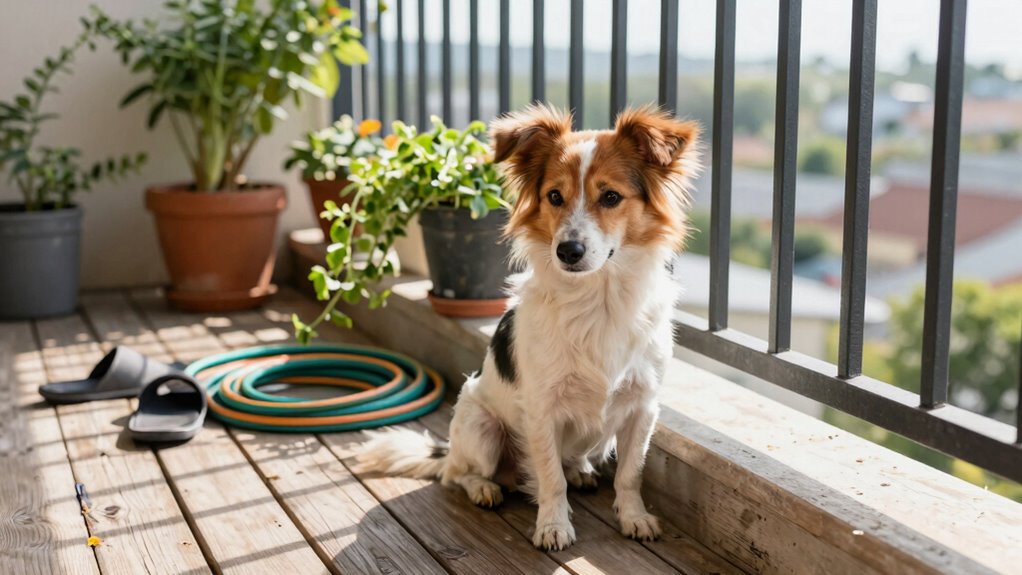

Balcony dogs need more management than you might expect because their natural curiosity and impulsiveness can lead to accidents if you’re not vigilant. Simple barriers often aren’t enough, as sudden noises or distractions can cause jump risks or escapes. You must actively supervise their environment, plan for triggers like wind or loud sounds, and create safe, sheltered areas. If you want to keep your dog safe and happy, you’ll discover key tips for better management that go beyond the basics.

Get pet supplies delivered free — and shop member deals
- Fast, free delivery on millions of items
- Access to Prime Big Deal Days deals on October 6–7
- Prime Video, Amazon Music and more included
Key Takeaways
- Dogs’ natural curiosity and impulsiveness make them prone to risky behaviors on balconies, requiring proactive safety measures.
- Environmental factors like wind, noise, and temperature can trigger stress or panic, demanding attentive management.
- Supervised outdoor time and mental stimulation prevent boredom, destructive behaviors, and anxiety.
- Simple barriers may be insufficient; sturdy screens or netting are essential for preventing escapes or falls.
- Continuous supervision and environmental awareness are crucial to ensure safety and emotional well-being.

Are you unsure how to keep your balcony dogs safe and happy? If so, you’re not alone. Many pet owners underestimate how much attention and management balcony dogs require. While it might seem straightforward to let your dog enjoy the outdoor space, understanding dog behavior is essential. Dogs are naturally curious, energetic, and sometimes impulsive, which can make balconies risky if proper safety precautions aren’t in place. Without active management, your dog could slip, jump, or get into something harmful. That’s why balcony dogs need more oversight than many owners expect.
You might think a simple gate or barrier is enough, but dog behavior can be unpredictable. Even the most well-behaved dogs can be startled or tempted to explore beyond safe boundaries. For example, a sudden loud noise or a passing bird might trigger a jump or a dash, risking a fall. It’s vital to anticipate these reactions and implement safety precautions such as sturdy barriers, secure screens, or netting. These measures help prevent accidental escapes or falls, especially when your dog is excited or distracted. Remember, a dog’s curiosity doesn’t always align with your safety concerns, so proactive management is key. Recognizing dog behavior and how environmental factors influence them can significantly improve your management strategies and help prevent accidents.
Beyond physical safety, managing your balcony dog also involves understanding their behavior and emotional well-being. Dogs crave mental stimulation and physical activity, but their environment can limit those needs. Without proper management, boredom can lead to destructive behavior or increased anxiety. To keep your dog happy, provide engaging toys, regular playtime, and supervised outdoor time. Never leave your dog unattended for long periods on a balcony, especially if it’s not fully secured. Constant supervision ensures you can intervene if your dog shows signs of distress or attempts risky behavior. Additionally, understanding behavioral triggers that may cause stress or agitation can help you develop more effective management routines.
Additionally, be aware of environmental factors that might influence your dog’s behavior. Wind, extreme temperatures, or loud noises can cause stress or panic. Recognize these signs early and adjust your management approach accordingly. For example, if your dog seems anxious during windy days, limit balcony access or create a sheltered area. This attentive care not only keeps your dog safe but also fosters trust and calmness. Implementing environmental management strategies can help reduce the likelihood of your dog becoming overwhelmed or frightened.
Furthermore, understanding environmental factors and how they influence dogs can significantly improve your management strategies and help prevent accidents. In essence, managing a balcony dog demands more than just a few barriers. It involves understanding their natural instincts and behavior, taking appropriate safety precautions, and staying vigilant. Your role isn’t just to provide access to a view but to actively guarantee your dog’s safety and happiness. With consistent attention and thoughtful management, your balcony can become a secure, enjoyable space for your furry friend—one where they can explore freely without putting themselves at risk.
As an affiliate, we earn on qualifying purchases.
Frequently Asked Questions
Are Balcony Dogs More Prone to Anxiety Than Indoor Dogs?
Yes, balcony dogs are often more prone to anxiety than indoor dogs. You might notice increased noise sensitivity, as they react strongly to sounds outside, and territorial behavior, as they see the balcony as their territory. The open space and unfamiliar sights can heighten their stress levels. To keep them calm, you should provide a secure environment, perhaps with calming techniques and supervised outdoor time, to reduce their anxiety.
How Can I Train My Balcony Dog to Stay Safe?
You can train your balcony dog to stay safe by using consistent training techniques and reinforcing boundaries. Start with positive reinforcement when they stay away from the edge, and gradually introduce supervised balcony time. Always guarantee balcony safety by installing barriers or netting. Coincidentally, these precautions protect your dog and give you peace of mind, making training both effective and enjoyable. Regularly monitor their behavior to reinforce safe habits and prevent accidents.
What Are the Long-Term Health Risks for Balcony Dogs?
Balcony dogs face long-term health risks like joint issues, stress, and injuries from falls if balcony safety isn’t maintained. You might notice anxiety or behavioral problems if they feel confined or unsafe. To protect their long-term health, guarantee the balcony is secure, provide plenty of mental stimulation, and monitor their activities. Regular vet check-ups are essential to catch any health issues early and promote their well-being over time.
How Do Weather Conditions Affect Balcony Dog Management?
Weather conditions considerably impact how you manage your balcony dog. Weather hazards like extreme heat, cold, or wind demand extra attention for temperature regulation. You should monitor the weather closely, providing shade and water during hot days, or warmth and shelter during cold spells. Sudden weather changes can pose risks, so it’s essential to adjust your management strategies to keep your balcony dog safe and comfortable regardless of the elements.
Can Balcony Dogs Develop Behavioral Issues Without Proper Management?
Yes, without proper management, your balcony dog can develop behavioral issues that feel like they’ll take over your entire life. Neglecting balcony safety and behavioral development can lead to anxiety, aggression, or destructive tendencies, turning your peaceful space into chaos. Consistent supervision, secure barriers, and positive reinforcement are essential. Otherwise, your dog’s behavior could spiral out of control, making balcony management a nightmare rather than a safe, enjoyable outdoor retreat.
As an affiliate, we earn on qualifying purchases.
Conclusion
Remember, managing balcony dogs isn’t just about keeping them safe—it’s about creating a secure haven where they can happily explore the open air without fear. Picture yourself gently guiding your furry friend back from the edge, a warm breeze ruffling their fur, while you both enjoy the tranquil view beneath a protective barrier. With careful management, your balcony becomes a peaceful sanctuary, turning potential chaos into a serene space where your dog can thrive and you can breathe easy.
outdoor dog playpen with netting
As an affiliate, we earn on qualifying purchases.
As an affiliate, we earn on qualifying purchases.
As an affiliate, we earn on qualifying purchases.
Fall Picks
fall essentials
As an affiliate, we earn on qualifying purchases.