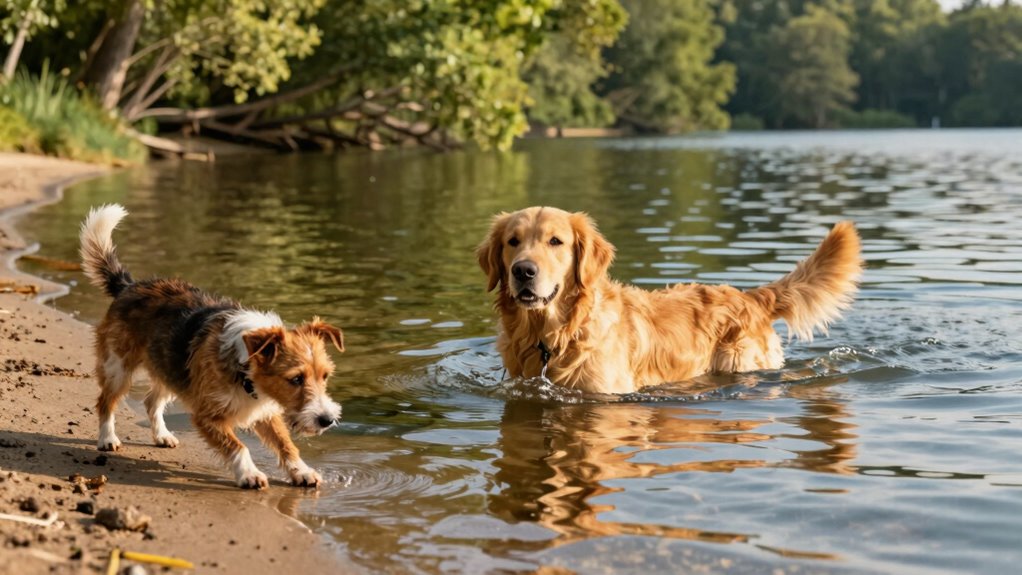
Regardless of your dog’s swimming skills, water safety is essential. Even good swimmers can become exhausted, panic, or struggle silently, leading to drowning. Using a proper flotation device adds a layer of protection, but supervision is always necessary. Recognize early signs of distress to intervene quickly. Understanding these critical safety tips can help prevent accidents. To keep your dog safe and confident by the water, explore these fundamental guidelines further.
Key Takeaways
- Being a confident swimmer does not eliminate drowning risks; supervision and safety precautions are essential.
- Properly fitted flotation devices support safe swimming and reduce fatigue, but do not prevent all water accidents.
- Recognizing silent struggle signs like panic and exhaustion allows for quick intervention to prevent drowning.
- Even skilled swimmers can become exhausted or panic; constant vigilance is critical during water activities.
- Immediate response to signs of distress can save a dog’s life, emphasizing the importance of supervision and quick action.
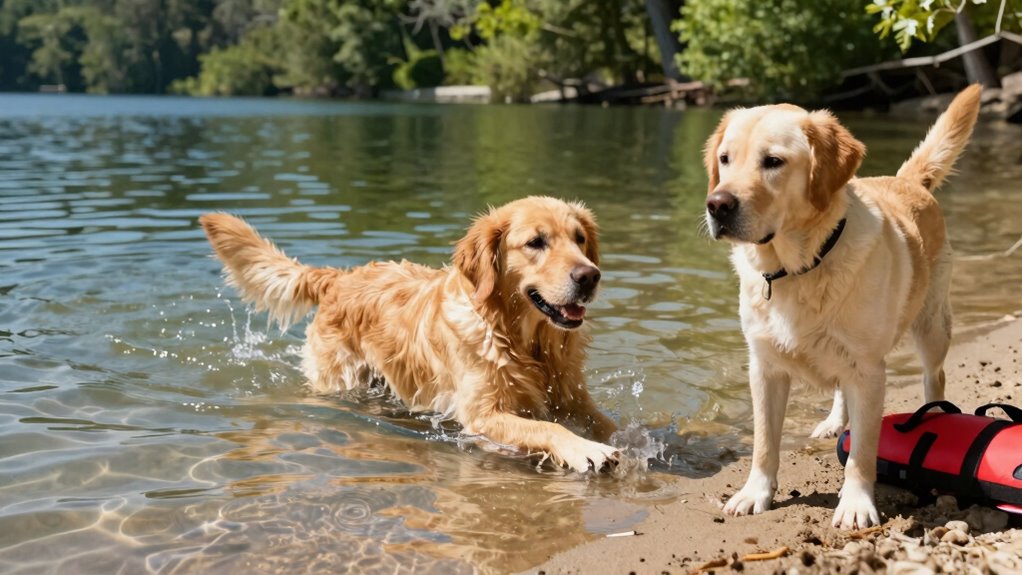
Water safety is crucial for keeping your dog healthy and happy, especially during outdoor activities or trips to the lake, pool, or beach. Even if your dog is a confident swimmer, you shouldn’t assume they’re entirely safe without proper precautions. Using dog flotation devices can greatly reduce the risk of accidents, but they aren’t a guarantee your pet won’t get into trouble. It’s imperative to stay vigilant and watch for signs of drowning, which can happen quickly and silently. Drowning isn’t always obvious; your dog may struggle, panic, or become exhausted without making much noise, so knowing what to look for helps you act fast if needed.
Dog flotation devices are an excellent safety tool, especially for dogs that aren’t natural swimmers or are unfamiliar with water. These devices help keep your dog afloat and reduce fatigue, giving you peace of mind during water outings. When selecting a flotation device, confirm it fits well and is designed specifically for dogs, with secure straps and buoyant materials. Properly fitted equipment prevents chafing and slipping, making your dog more comfortable and confident in the water. Keep in mind that even the best flotation device isn’t a substitute for supervision. You should always keep a watchful eye on your dog, regardless of their swimming ability. Additionally, understanding water safety principles can help prevent accidents and ensure enjoyable outings.
Knowing the signs of drowning is critical because many pet owners don’t realize their dog is in distress until it’s too late. Common signs include frantic paddling, inability to keep the head above water, and rapid exhaustion. If your dog appears to be struggling, you must act immediately. Call them out of the water if you can, or use a reaching stick or pole if they’re too far away. If you see your dog suddenly becoming unresponsive, stop paddling, or showing signs of exhaustion, these are urgent indicators that they’re in trouble. The sooner you intervene, the better your chances of preventing a tragedy.
Frequently Asked Questions
Can All Dog Breeds Safely Swim in Any Water Conditions?
Not all dog breeds can safely swim in any water conditions. Breed differences matter; some breeds, like retrievers, are natural swimmers, while others may struggle. You should always consider water temperature, as cold water can cause hypothermia, especially for small or short-haired breeds. Always supervise your dog, assess their comfort level, and avoid extreme conditions. Proper training and gradual exposure help guarantee your dog’s safety around water.
How Can I Tell if My Dog Is a Strong Swimmer?
You can tell if your dog has strong swimming ability by observing their water confidence and comfort level. Watch how smoothly they paddle, whether they stay afloat without struggle, and if they seem enthusiastic to swim rather than hesitant. A confident swimmer quickly adapts to water, stays calm, and moves efficiently. If your dog exhibits these signs, they likely have good water confidence and are a strong swimmer.
Are There Specific Safety Gear Recommended for Dog Swimming?
If you’re taking your dog near water, using safety gear like a life jacket or flotation device is essential. For example, a Labrador named Max struggled in deep water until his owner fitted him with a bright orange life jacket. These devices keep your dog afloat, making swimming safer and easier. Always choose a well-fitting flotation device designed for dogs, ensuring comfort and maximum safety during water activities.
What Signs Indicate My Dog Is in Distress While Swimming?
If your dog shows signs of distress while swimming, like panicked splashing, trying to climb out, or vocalizing, it’s a clear warning. Watch for signs of dog water anxiety, such as trembling or quick fatigue, which indicate they’re struggling. If your dog’s swimming endurance drops suddenly, or they seem exhausted, it’s time to get them out and offer reassurance. Always supervise closely to keep your dog safe and comfortable.
How Often Should I Supervise My Dog During Water Activities?
You should supervise your dog constantly during water activities to guarantee their swimming safety awareness. Never leave them unattended, especially in unfamiliar or open water. Keep a close eye on their behavior, and be ready to intervene if they show signs of distress. Regular supervision helps prevent accidents, fatigue, or panic, making sure your dog stays safe and enjoys water activities responsibly. Remember, proactive dog water supervision is key to their safety.
Conclusion
Remember, not all dogs are natural swimmers—about 10% struggle in water, even if they seem confident. Always supervise your pup around water and know their limits. Just because they love to play in the pool or lake doesn’t mean they’re safe without precautions. By understanding your dog’s swimming abilities and staying alert, you can guarantee water fun remains safe and enjoyable for everyone. Keep safety in mind, and make every splash a happy memory.