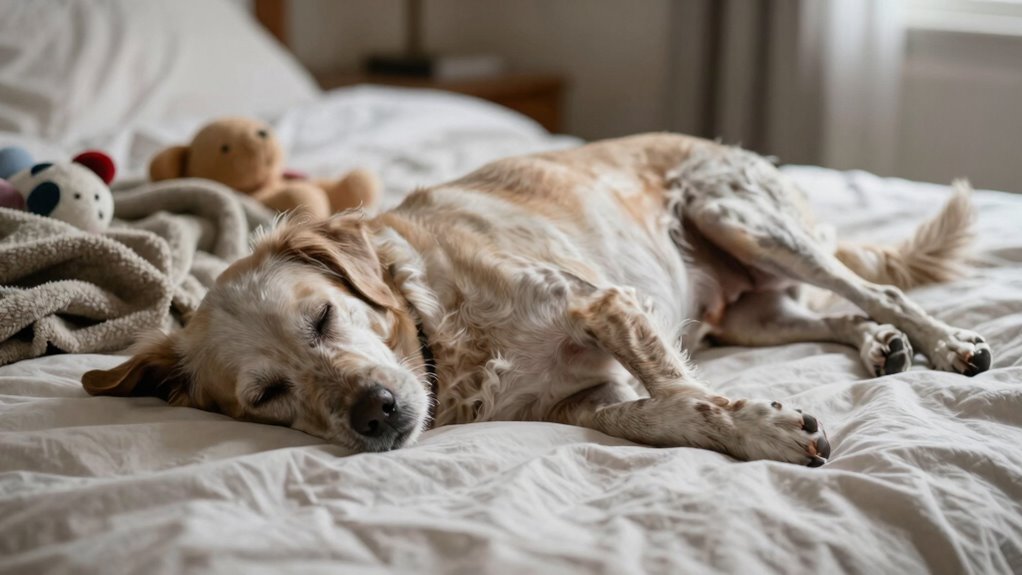
As your senior dog ages, you may notice them changing sleep positions more often. This usually happens because they’re trying to find relief from discomfort caused by issues like arthritis, joint stiffness, or muscle soreness. Shifting positions helps them soothe sore areas and find comfort, especially as their sleep becomes lighter. These movements are signals that your dog may need extra support or care. Keep paying attention—there’s more to understand about what these changes mean for their health.

Get pet supplies delivered free — and shop member deals
- Fast, free delivery on millions of items
- Access to Prime Big Deal Days deals on October 6–7
- Prime Video, Amazon Music and more included
Key Takeaways
- Senior dogs often shift positions more due to discomfort from arthritis or joint pain.
- Increased restlessness and lighter sleep cause frequent repositioning in older dogs.
- Changes in sleep posture may reflect aging-related physical or health issues.
- Discomfort or muscle soreness prompts senior dogs to adjust their sleeping positions for relief.
- Monitoring sleep behavior helps identify underlying health concerns requiring veterinary attention.

As dogs age, their sleep positions often change, signaling shifts in their physical comfort and health. You might notice your senior dog constantly shifting or adopting different sleeping postures throughout the night. This behavior isn’t just random; it’s closely tied to their evolving needs and health. As dogs grow older, their bodies undergo changes that affect how they feel comfortable resting. These adjustments in sleep position can be a window into their aging behavior and overall well-being.
Older dogs tend to change positions more frequently because they experience discomfort or pain that wasn’t as noticeable when they were younger. Arthritis, joint stiffness, or muscle soreness can make certain sleeping postures uncomfortable, prompting your dog to reposition to find relief. When your dog shifts often, it’s a sign that they’re trying to find a position that alleviates discomfort. This behavior is a natural response to age-related aches, but it’s also an important cue for you to monitor their health. If your dog’s sleep becomes restless or if they seem unable to settle, it could indicate underlying issues like joint problems or other health concerns that need attention.
Older dogs shift positions often, signaling discomfort or pain that needs attention.
In addition, changes in sleep position can reflect broader shifts in your dog’s physical health. Senior dogs sometimes adopt more curled-up or sprawled-out postures, depending on what’s bothering them or how they’re trying to regulate their body temperature. For example, if your dog is frequently curled tightly, it might be an attempt to conserve warmth due to reduced body temperature regulation, which often occurs with aging. Conversely, stretching out may help relieve pressure on sore joints. These subtle shifts tell you a lot about their physical state and comfort level, making it essential to observe and understand these changes. Biodiversity and conservation practices can also highlight the importance of understanding natural aging processes across species, including dogs.
Aging behavior also influences your dog’s sleep patterns. As they grow older, they may sleep more lightly, waking more often during the night, which leads to frequent position changes. This can be linked to their increased need for comfort and reassurance, especially if they’re experiencing health issues. It’s also common for senior dogs to become more anxious or restless, which can cause them to shift positions repeatedly in an effort to find peace or comfort. These behaviors aren’t just about comfort—they’re also signals that your dog might need a little extra support, whether through orthopedic bedding, gentle massage, or veterinary care.
orthopedic dog bed for senior dogs
As an affiliate, we earn on qualifying purchases.
As an affiliate, we earn on qualifying purchases.
Frequently Asked Questions
Do Health Issues Cause Seniors to Change Sleep Positions Frequently?
Yes, health issues can cause seniors to change sleep positions more often. When your dog experiences discomfort from conditions like arthritis or joint pain, they shift positions to find relief. Diet concerns and environmental factors also play a role, as they can affect your dog’s comfort and sleep quality. Paying attention to these signs helps you address potential health problems early, ensuring your senior dog stays as comfortable as possible.
How Can I Tell if My Senior Dog’s Sleep Changes Are Concerning?
Coincidentally, noticing your senior dog’s sleep changes can signal concern. If they seem uncomfortable, wake frequently, or show signs of pain, it’s time to evaluate their health. Consider how dietary habits and exercise routines might influence their sleep—poor nutrition or limited activity can cause discomfort. If these changes persist or worsen, consult your vet to rule out underlying issues, ensuring your dog stays comfortable and healthy.
Are Certain Sleep Positions Better for Aging Dogs’ Comfort?
Certain sleep positions can enhance your aging dog’s comfort. Encourage your dog to sleep in a supportive dog bed that cushions pressure points, especially if they prefer lying on their side or curling up. Maintaining consistent sleep routines helps them feel secure and relaxed. Watch for signs of discomfort, and adjust their sleeping spot accordingly. Prioritizing comfy positions and routines guarantees your senior dog sleeps peacefully and stays comfortable.
Does Anxiety Influence Sleep Position Changes in Senior Dogs?
Yes, anxiety triggers can cause senior dogs to change their sleep position more often. When your dog feels anxious, they might shift positions to find comfort or relieve sleep discomfort. These changes help them manage stress or physical discomfort, making it easier to relax. If your senior dog’s sleep position changes frequently and seems linked to anxiety, consider consulting your vet to address underlying issues and improve their comfort.
When Should I Consult a Vet About My Senior Dog’s Sleep Habits?
You should consult a vet if your senior dog’s sleep habits suddenly change or seem unusual. Notice if they’re having trouble sleeping, waking frequently, or showing signs of discomfort. Discuss dietary adjustments and environmental factors that might affect their sleep. A vet can evaluate for underlying health issues and recommend lifestyle changes to improve their comfort and sleep quality, ensuring your dog stays healthy and happy as they age.
As an affiliate, we earn on qualifying purchases.
Conclusion
As your senior dog changes their sleep positions more often, remember that flexibility is key—just like the old saying, “A rolling stone gathers no moss.” Their shifting sleep habits show their body’s way of adapting and comfort-seeking. Keep a close eye on any new or persistent changes, and consult your vet if you notice discomfort. Embrace these small adjustments with patience and love, knowing they’re part of your furry friend’s journey toward peaceful, healthy rest.
dog calming and pain relief products
As an affiliate, we earn on qualifying purchases.
As an affiliate, we earn on qualifying purchases.
senior dog arthritis pain relief
As an affiliate, we earn on qualifying purchases.
As an affiliate, we earn on qualifying purchases.
Fall Picks
fall essentials
As an affiliate, we earn on qualifying purchases.