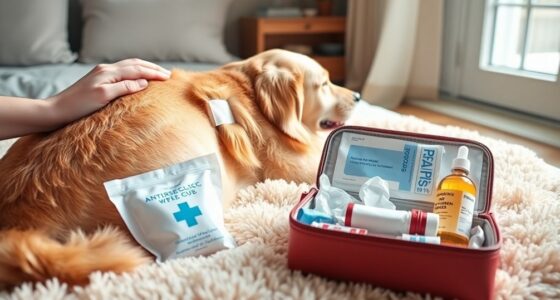

First aid for dog owners involves staying calm, controlling bleeding with gentle pressure, and cleaning wounds with warm water and mild soap if possible. Wear gloves if available and cover the injury with a sterile bandage. Recognize signs of aggression like growling or stiff body language to prevent bites. Keep emergency vet contacts handy and monitor your dog’s condition closely. By mastering these basics, you’ll be prepared to handle emergencies effectively and protect your pet—learn more to be even better equipped.
Key Takeaways
- Wear gloves and use sterile materials when treating a dog bite to prevent infection.
- Apply gentle, firm pressure with a clean cloth to control bleeding, avoiding squeezing or probing.
- Clean the wound with warm water and mild soap, then cover with a sterile bandage.
- Monitor for signs of severe injury such as heavy bleeding, swelling, or difficulty breathing.
- Seek immediate veterinary care for deep wounds, persistent bleeding, or if the dog shows signs of distress.
Accidents can happen unexpectedly, and as a dog owner, knowing basic first aid can make a vital difference in your pet’s recovery. One of the most common emergencies involves dog bites, which can occur during play, out of fear, or when your dog feels threatened. To effectively handle such situations, it’s essential to focus on dog bite prevention, recognizing the signs of aggressive behavior, and understanding how to manage the injury until you can reach professional help. Preventing bites starts with socializing your dog properly, avoiding rough play, and respecting your pet’s boundaries. If you notice warning signs like growling, baring teeth, or stiff body language, it’s best to calmly separate everyone and give your dog space. Educate yourself on how to de-escalate aggressive behavior, so you can reduce the risk of bites before they happen.
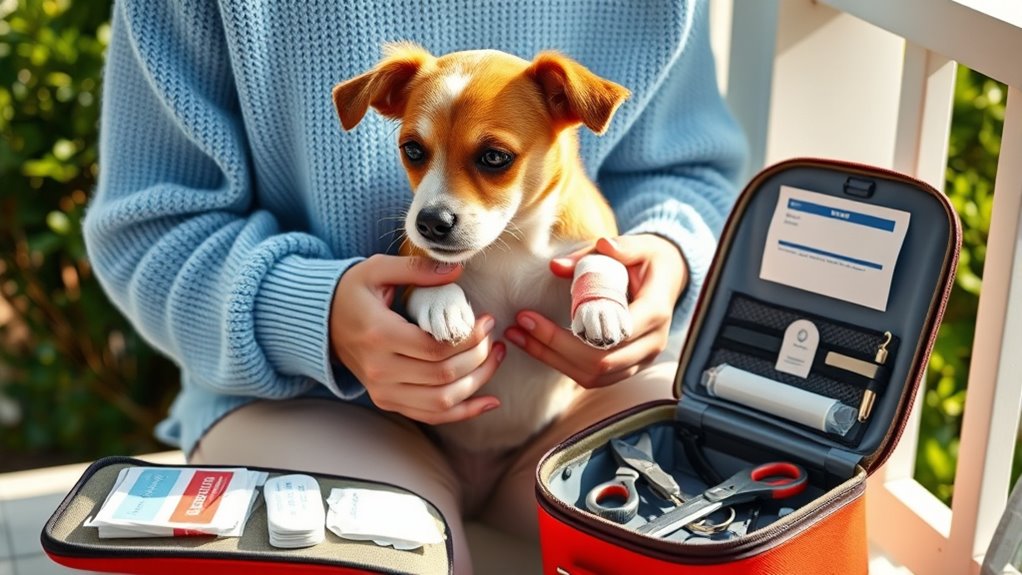
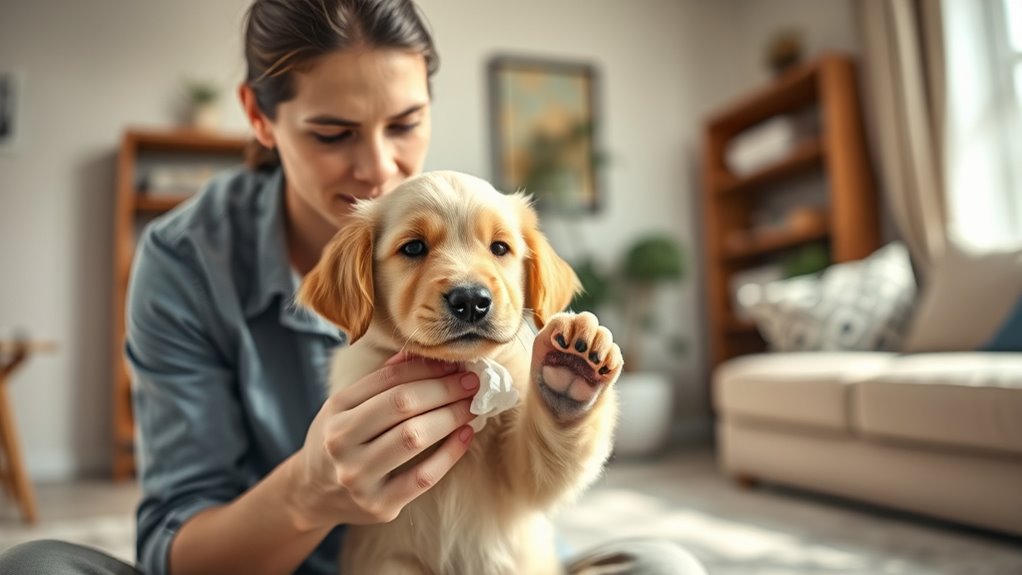
In the event of a bite, your immediate priority is to control bleeding and prevent infection. Wear gloves if available, and gently but firmly apply pressure to the wound with a clean cloth or sterile gauze. Avoid squeezing or probing the injury, as this can worsen tissue damage or push bacteria deeper. Once the bleeding is under control, clean the wound with warm water and mild soap, if possible. Cover it with a sterile bandage and seek veterinary care promptly. Even minor bites can become infected, so don’t delay professional evaluation. Keep your dog calm and confined to prevent further injury or agitation, and be prepared to share details about the incident, including the circumstances that led to the bite and your dog’s vaccination status.
Having a list of emergency vet contacts saved in your phone is vital. In urgent situations like bites or other injuries, quick access to professional help can save your dog’s life. When calling the vet, provide as much detail as possible about the injury, your dog’s behavior, and any potential triggers. If your dog shows signs of severe pain, swelling, or difficulty breathing, or if the wound is deep and bleeding heavily, seek emergency veterinary care immediately. Remember, swift action, combined with a calm approach and preparedness, can greatly impact your dog’s recovery process. Being knowledgeable about dog bite prevention and maintaining a ready list of emergency vet contacts empower you to respond confidently, ensuring your pet’s safety and well-being in those unpredictable moments. Additionally, understanding the importance of contrast ratio in projectors can help you choose the best display for your home cinema setup, ensuring clear and vibrant images even in low-light conditions.
Frequently Asked Questions
How Can I Prevent My Dog From Ingesting Harmful Substances?
To prevent your dog from ingesting harmful substances, dog proof hazards in your home and yard by keeping toxic food and plants out of reach. Train your dog to avoid eating unknown items, and supervise them closely, especially during walks or in new environments. Store chemicals, medicines, and trash securely. By practicing toxic food avoidance and dog proofing hazards, you protect your furry friend from potential poisoning or health issues.
What Are Signs of Shock in Dogs?
You notice your dog’s gums turn pale or bluish, their breathing slows, and they seem unresponsive—these are signs of shock. Recognizing these symptoms quickly is vital for emergency response. Stay calm, keep your dog warm, and seek immediate vet care. Your prompt action can make all the difference, so learn symptom recognition now to act swiftly and effectively during this essential moment.
How Do I Perform CPR on a Dog?
To perform CPR on a dog, first guarantee the canine airway is clear by opening their mouth and removing any obstructions. If needed, gently extend the neck to open the airway. Check for breathing; if there’s none, give rescue breaths by sealing your mouth over the dog’s nose and mouth, then blow to make the chest rise. Follow with chest compressions, pressing firmly over the heart area. Continue until help arrives.
When Should I Seek Emergency Veterinary Care?
You should seek emergency veterinary care if your dog shows signs of severe allergic reactions like difficulty breathing, swelling, or collapse, or if a dog bite causes deep wounds, excessive bleeding, or signs of infection. Always practice dog bite prevention to reduce risks. Prompt vet attention guarantees your dog gets necessary treatment quickly, minimizing complications and ensuring their safety and well-being in urgent situations.
Are There First Aid Supplies I Should Always Carry?
You should always carry a well-stocked pet first aid emergency kit, because unexpected moments can arise. Essential supplies include gauze, antiseptic wipes, adhesive tape, and tweezers. Having these on hand allows you to provide immediate care, helping your dog until professional help arrives. Keep your kit in an accessible spot, and regularly check to guarantee all supplies are fresh and complete, so you’re prepared for any situation.
Conclusion
Knowing first aid for your dog is like having a safety net when life throws surprises your way. While emergencies can be frightening, your quick action can make all the difference. Just as a gentle pat reassures your pup, confident first aid knowledge comforts you. Remember, being prepared isn’t about fearing accidents but embracing the joy of caring for your furry friend with love and readiness. Stay alert, stay calm, and keep your dog safe.