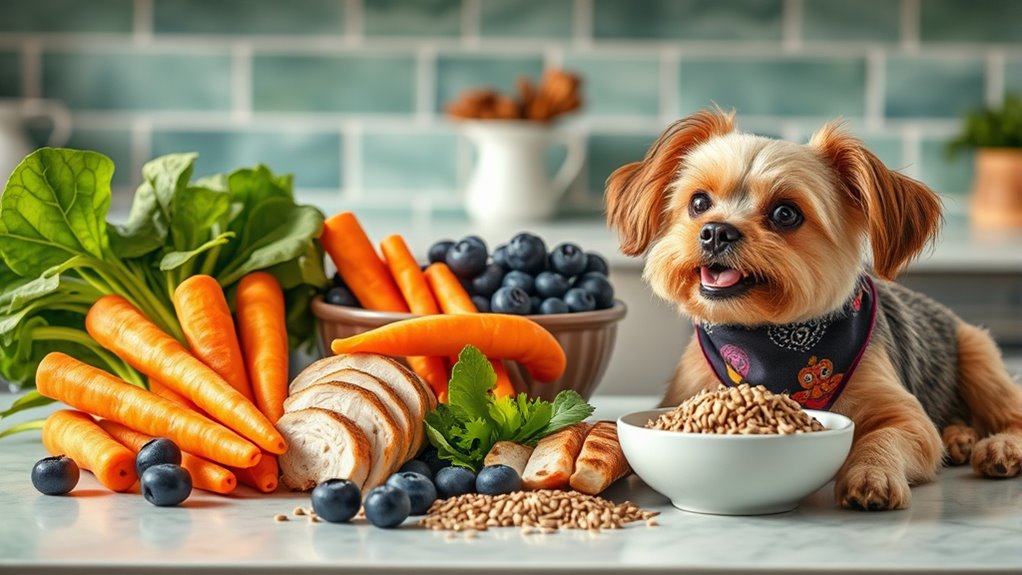

To help prevent cancer in your dog, focus on feeding nutrient-rich, antioxidant-dense foods like colorful fruits and vegetables, and choose high-quality, grain-free ingredients with healthy fats such as omega-3s from fish oil or flaxseed. Avoid fillers, artificial additives, and processed foods, and guarantee their diet supports the immune system and overall health. Staying informed about balanced nutrition can make a real difference—discover more tips to support your dog’s wellness.

Get pet supplies delivered free with Prime
- Fast, free delivery on millions of items
- Prime Video, Amazon Music and more included
- Member-only deals all year
Key Takeaways
- Incorporate antioxidant-rich foods like blueberries, spinach, and carrots to neutralize free radicals and support immune health.
- Choose a balanced diet with high-quality proteins, healthy fats, and minimal artificial additives to promote overall health and cancer prevention.
- Include omega-3 fatty acids from fish oil or flaxseed to reduce inflammation and support cell health.
- Consider grain-free diets if suitable, focusing on whole, natural ingredients tailored to your dog’s needs.
- Regular veterinary consultation ensures the diet remains nutrient-dense and aligned with your dog’s specific health requirements.

While no diet can guarantee your dog won’t develop cancer, choosing foods rich in antioxidants, healthy fats, and essential nutrients can help support their immune system and reduce risk factors. One effective approach is to incorporate antioxidant-rich foods into their diet. These foods help neutralize free radicals, unstable molecules that can damage cells and contribute to cancer development. Including a variety of colorful fruits and vegetables like blueberries, spinach, and carrots supplies indispensable antioxidants such as vitamin C, vitamin E, and beta-carotene. These nutrients bolster your dog’s natural defenses and may slow down the progression of abnormal cell growth.
Incorporate colorful fruits and vegetables rich in antioxidants to support your dog’s immune health and combat cell damage.
Many pet owners turn to grain-free diets, believing that eliminating grains reduces inflammation and improves overall health. While research is ongoing, some dogs do better on grain-free options, especially if they have food sensitivities. When selecting a grain-free diet, look for options that emphasize whole, natural ingredients and avoid fillers or artificial additives. These diets often contain higher levels of quality proteins and healthy fats, which are essential for maintaining cell integrity and supporting immune function. Be cautious, though—grain-free doesn’t automatically mean healthier. Always check for balanced nutrient profiles and consult your veterinarian to determine the best diet for your dog’s specific needs.
Healthy fats play an indispensable role in cancer prevention. Omega-3 fatty acids, found in fish oil and flaxseed, have anti-inflammatory properties that can reduce chronic inflammation, a known risk factor for cancer. Incorporating these fats into your dog’s diet can also support brain health, skin, and coat condition. Look for high-quality sources of omega-3s and consider supplementing if your veterinarian recommends it. Remember, moderation is key—excessive fat intake can lead to other health issues, so always follow dosage guidelines.
In addition to specific foods, focus on providing a balanced diet that includes lean proteins, fiber, and essential vitamins and minerals. Feeding your dog a variety of nutrient-dense foods ensures they receive a broad spectrum of antioxidants and phytochemicals that work synergistically to protect against cellular damage. Avoiding processed foods with artificial preservatives and opting for fresh, whole ingredients can make a significant difference. Regular check-ups with your vet will help tailor your dog’s diet to their evolving health needs, giving them the best chance at a long, healthy life free from cancer risks.
dog antioxidant supplement blueberries spinach carrots
As an affiliate, we earn on qualifying purchases.
As an affiliate, we earn on qualifying purchases.
Frequently Asked Questions
Are There Specific Dog Breeds More Susceptible to Cancer?
Yes, some dog breeds have breed predispositions and genetic susceptibility to cancer. For example, boxers, golden retrievers, and Bernese mountain dogs are more prone to certain cancers due to their genetics. You should be aware of these risks if you own these breeds. Regular veterinary check-ups and a healthy diet can help detect issues early and reduce cancer risks, giving your dog a better chance at a longer, healthier life.
How Do Age and Genetics Influence a Dog’s Cancer Risk?
Age and genetics influence your dog’s cancer risk like a blueprint built over time. Genetic predisposition makes some breeds more likely to develop cancer, while age acts as a ticking clock, increasing risk as your dog gets older. You can’t change genetics, but regular vet checkups help catch issues early. Being aware of these factors allows you to take proactive steps to protect your furry friend’s health.
Can Supplements Replace a Balanced Diet for Cancer Prevention?
Supplements can’t replace a balanced diet for cancer prevention because their efficacy varies, and they lack the thorough nutrients your dog needs. A proper diet provides dietary balance, supporting overall health and immune function. While some supplements may offer added benefits, they should complement, not substitute, a nutritious, well-rounded diet. Focus on quality foods first, and consult your vet before adding supplements to ensure they’re safe and effective.
What Are the Signs of Early Cancer Detection in Dogs?
Imagine you’re a detective in a noir film—early cancer signs can be subtle. Watch for mammary tumors, which may appear as lumps, or skin nodules that don’t heal. Changes in your dog’s behavior, appetite, or energy levels are clues. Early detection is vital, so regularly check for unusual bumps or persistent sores. If you notice anything suspicious, consult your vet promptly to catch potential issues before they develop further.
How Often Should Dogs Undergo Cancer Screenings?
You should schedule regular veterinary checkups at least once a year, or more often if your dog is at higher risk. During these visits, your vet can perform cancer screenings and assess for early signs. Incorporate dietary antioxidants into your dog’s diet, as they help support immune health and may aid in cancer prevention. Consistent checkups and a nutritious diet are key to catching issues early and maintaining your dog’s well-being.
grain-free dog food with high-quality proteins and healthy fats
As an affiliate, we earn on qualifying purchases.
As an affiliate, we earn on qualifying purchases.
Conclusion
By choosing a cancer-preventive diet for your dog, you’re giving them a better shot at a healthy, happy life. Incorporate antioxidant-rich foods, lean proteins, and plenty of fruits and vegetables to boost their immunity. Remember, isn’t their well-being worth the small effort? Taking proactive steps now can make all the difference later. So, why not start today and help your furry friend live their best, healthiest life?
As an affiliate, we earn on qualifying purchases.
natural dog food with antioxidants and no artificial additives
As an affiliate, we earn on qualifying purchases.
As an affiliate, we earn on qualifying purchases.
Fall Picks
fall essentials
As an affiliate, we earn on qualifying purchases.