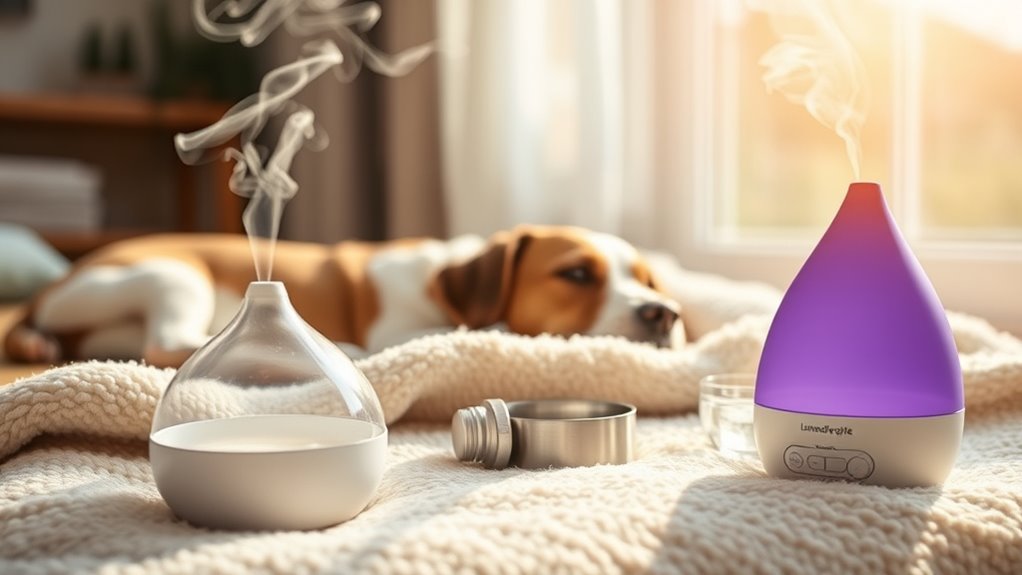
When using aromatherapy for your dog, always diffuse essential oils in a well-ventilated area at a low, controlled rate, limiting sessions to about 15-20 minutes. Avoid toxic oils like tea tree, eucalyptus, and cinnamon, and never apply oils directly to your dog’s skin. Watch for signs of discomfort, and consult with a veterinarian experienced in aromatherapy beforehand. If you keep these tips in mind, you can help guarantee your dog’s safety and comfort.
Key Takeaways
- Diffuse essential oils at low rates and for limited durations (15-20 minutes) in well-ventilated areas away from your dog’s resting spots.
- Always research and verify that specific oils are safe for dogs before use, avoiding known toxic options like tea tree and eucalyptus.
- Monitor your dog closely for signs of discomfort, stress, or adverse reactions during and after diffusion sessions.
- Consult with a veterinarian experienced in aromatherapy to ensure safety and proper application tailored to your dog’s needs.
- Never apply essential oils directly to your dog’s skin or coat; use diffusing as a safer alternative.
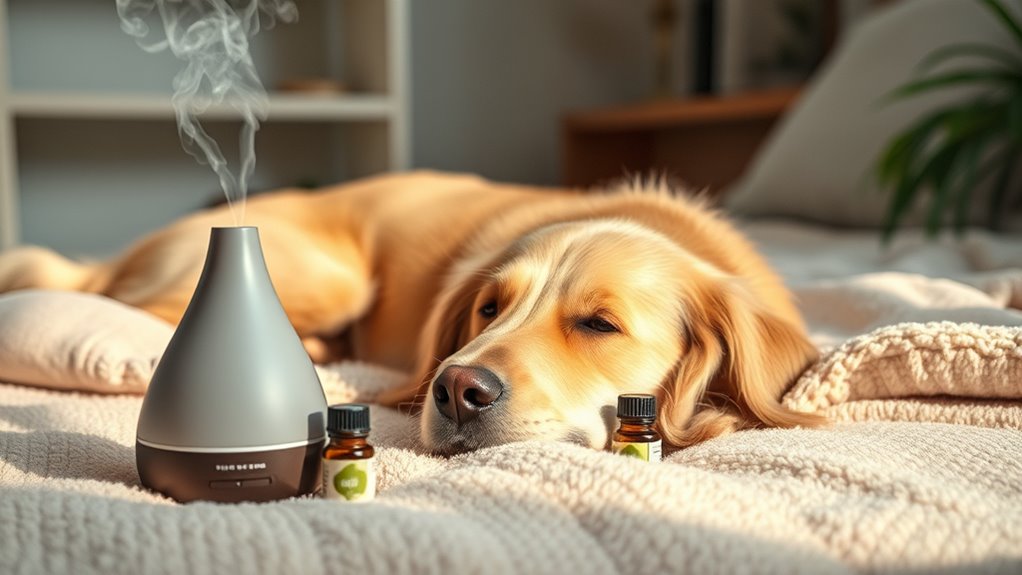
Aromatherapy can be a gentle way to promote relaxation and well-being in your dog, but it’s essential to use essential oils safely. One of the most common methods is diffusing, but you need to approach this with caution. Diffusing diffidently, meaning at a low and controlled rate, helps prevent overwhelming your dog’s sensitive senses or causing adverse reactions. When you set up a diffuser, place it in a well-ventilated area, away from your dog’s immediate resting spot, and start with just a few drops of essential oil. Observe how your dog reacts over the next few hours—if they seem relaxed, comfortable, and unaffected, you can continue with cautious diffusion. But if your dog shows signs of distress, such as coughing, sneezing, or agitation, turn off the diffuser immediately.
Essential oil safety is paramount, especially considering that dogs have a much more sensitive sense of smell than humans. Some oils that are safe for us can be toxic or irritating to them. Always research each oil thoroughly and consult with a veterinarian experienced in aromatherapy before introducing any new scent to your home. Never apply essential oils directly to your dog’s skin or coat unless directed by a professional. Instead, use diffusing as a safer alternative, ensuring the oils are dispersed in the air rather than on your pet’s body. Keep in mind that some oils, like tea tree, eucalyptus, and cinnamon, are particularly toxic to dogs, even in small amounts, so avoid using them altogether.
When diffusing essential oils around your dog, make sure to follow the recommended guidelines for dilution and duration. Limit diffusing sessions to about 15-20 minutes, and do not leave the diffuser running continuously. Regularly check in with your dog to see if they’re comfortable or showing any signs of discomfort. It’s also wise to ensure your dog has access to fresh air and the option to leave the area if they wish. Remember, the goal of aromatherapy is to promote relaxation, not to cause stress or harm. Additionally, understanding dog’s sensitive senses can help you choose the right oils and diffusion practices to keep your pet safe.
Frequently Asked Questions
Can Dogs Develop an Allergy to Certain Essential Oils?
Yes, dogs can develop essential oil allergies or scent sensitivities. You might notice symptoms like sneezing, itching, or redness after exposure. It’s important to watch for these signs and stop using the oil if they occur. Always introduce new scents gradually and in small amounts. Consulting your vet before using essential oils helps guarantee your dog’s safety and prevents potential allergic reactions or scent sensitivities.
How Long Should I Wait Before Reapplying Aromatherapy?
You should wait at least a few hours before reapplying aromatherapy, depending on your dog’s scent duration and reaction. Observe your dog’s behavior and check for any signs of discomfort or allergies. Reapplication timing varies, but typically, reapply only if the scent has faded and your dog seems unaffected. Always monitor closely, as overuse can cause irritation or stress, so patience is key for safe and effective aromatherapy.
Are There Any Essential Oils Completely Safe for All Dog Breeds?
There are no essential oils completely safe for all dog breeds due to breed sensitivities and individual reactions. Always prioritize essential oil safety by consulting your vet before use. Some oils, like lavender and chamomile, are generally safer when properly diluted, but others can be toxic. Keep a close eye on your dog for any adverse signs, and never assume safety across all breeds.
What Signs Indicate My Dog Is Experiencing an Adverse Reaction?
When it rains, it pours—so stay alert for signs of toxicity or allergic reactions in your dog. Watch for symptoms like excessive drooling, vomiting, diarrhea, difficulty breathing, or swelling around the face or paws. If your dog shows any of these signs, act quickly. These reactions are your dog’s way of saying, “Something’s wrong,” so stop the aromatherapy and consult your vet immediately to keep your pup safe.
Can Aromatherapy Be Used Alongside Traditional Veterinary Treatments?
Yes, you can use aromatherapy alongside traditional veterinary treatments, but always consult your vet first. Aromatherapy is considered a complementary therapy that may support your dog’s well-being. Your veterinarian can advise on safe essential oils and proper dosages. Remember, veterinary collaboration guarantees treatments are safe and effective, preventing any negative interactions. Always prioritize professional guidance when combining therapies to keep your dog healthy and safe.
Conclusion
Remember, while aromatherapy can help soothe your dog, always use essential oils safely and in moderation. Did you know that over 70% of pet owners have tried alternative therapies like aromatherapy? Just make sure to consult your vet first, and never apply oils directly to your dog’s skin. When used responsibly, aromatherapy can be a gentle way to support your dog’s well-being without risking harm.