TL;DR

Get pet supplies delivered free with Prime
- Fast, free delivery on millions of items
- Prime Video, Amazon Music and more included
- Member-only deals all year
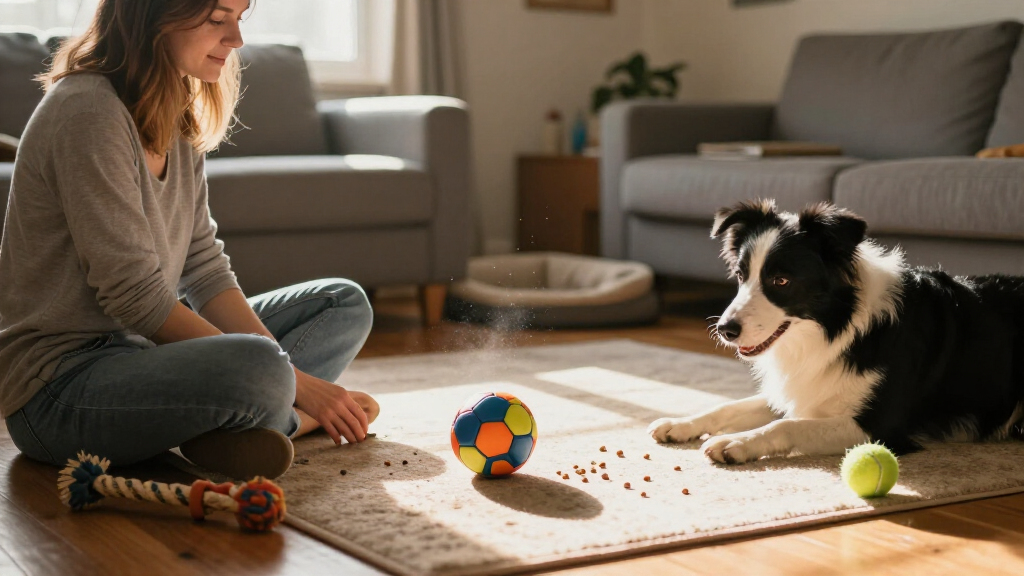
Interactive dog toys are designed to engage a dog’s mind and body without constant human involvement, and they combat the boredom behind most destructive behavior. The best approach is to start with an easy puzzle feeder, rotate toys weekly to keep novelty high, and always supervise new toys — because no toy is truly indestructible.
Your dog didn’t shred the couch cushion because he’s bad. He did it because he was bored, and the couch was the most interesting thing in the room. Most destructive behavior isn’t a discipline problem — it’s an unemployment problem. Your dog’s brain has nothing to do.
That’s where interactive dog toys come in. A 15-minute puzzle session can leave your dog as pleasantly drained as a 45-minute walk, because mental work is genuinely tiring — think how exhausted you feel after a day of exams compared to a day of errands.
In this article, you’ll learn what interactive dog toys actually are, the six benefits trainers and vets care about most, how to match a toy to your dog’s age and chewing style, and the safety rules that keep a fun enrichment session from becoming a vet visit.
Interactive dog toys are designed to engage a dog’s mind and body without constant human involvement — the problem-solving is the point, and it tires dogs out…
Use difficulty laddering: start with a level-1 puzzle your dog solves almost instantly, keep sessions to 5–10 minutes, and only level up when the current one f…
No toy is truly indestructible — inspect before every use, supervise new toys, match size to your dog, and replace anything cracked or torn before it becomes a…
A $15 natural rubber stuffable (frozen, filled with kibble) delivers most of the benefit of the category; only buy smart toys once basics have proven their wor…
Skip laser pointers for enrichment — behaviorists link them to frustration because the dog never catches anything. Give your dog something she can win.
What Are Interactive Dog Toys, and How Are They Different From Regular Toys?
Interactive dog toys are designed to engage a dog’s mind and body — often without you standing there the whole time. A regular squeaky toy asks nothing of your dog. An interactive toy asks her to solve a problem: roll it the right way, nose open a flap, or sniff out hidden kibble to earn the prize.
Picture the difference in your own life: a magazine you flip through versus a crossword you actually have to think about. Same paper, completely different experience. That’s a plush toy versus a puzzle feeder.
The main categories look like this:
- Puzzle toys and feeders — snuffle mats, treat-dispensing balls, flip-board puzzles where dogs slide lids and flip lids to reach food
- Electronic and tech toys — motion-activated toys, automated ball launchers like iFetch, and Wi-Fi cameras with treat tossers
- Chew-and-dispense hybrids — KONG-style stuffables, West Paw Toppl, Nina Ottosson puzzles
- Scent games — snuffle mats and hidden-treat searches that turn your dog’s nose into the entertainment
What ties them together is one idea: the dog has to work for the reward. That work is the whole point.
6 Reasons Trainers and Vets Keep Recommending These Toys
Interactive dog toys earn their shelf space because they solve real problems — boredom, gulped meals, pent-up energy, and anxiety among them. Here’s what each benefit looks like in an actual home.
1. Mental enrichment. A bored dog finds his own fun, and his idea of fun is usually your idea of damage. Ten minutes of puzzle work gives his brain a job.
2. Slower eating. If your dog inhales dinner in 20 seconds flat, a puzzle feeder forces her to work kibble out piece by piece. That slows the meal, aids digestion, and reduces bloat risk — one reason vets now recommend puzzle feeders as part of behavior-modification plans.
3. An energy outlet. Rainy Tuesdays, 14-hour workdays, apartment living. Puzzle toys don’t replace walks, but they bridge the gaps when outdoor exercise isn’t happening.
4. Anxiety relief. A stuffed frozen KONG given as you walk out the door gives an anxious dog something to do during the hardest first 20 minutes of alone time.
5. Cognitive aging support. For senior dogs, mental stimulation is increasingly recommended to keep the brain engaged — the canine version of doing the daily crossword.
6. Independence. Dogs who learn to entertain themselves stop demanding entertainment every waking minute.
The payoff in one sentence: fifteen minutes of sniffing and problem-solving can tire a dog out as much as a long walk, because a working brain burns real energy.
How to Pick the Right Toy for YOUR Dog: Age, Breed, and Chew Style
Interactive dog toys only work when they match the dog in front of you. The puzzle that mesmerizes your friend’s Border Collie may terrify your nervous rescue or get demolished in one bite by your Labrador. Match three things: age, energy, and chewing style.
Here’s a quick comparison to orient you:
| Your Dog | Best Starting Point | Watch Out For |
|---|---|---|
| Puppy | Soft snuffle mat, easy treat ball | Small parts — always supervise |
| High-energy breed | Ball launcher, harder-level puzzles | Toy still isn’t a substitute for real exercise |
| Fast eater | Puzzle feeder or slow-feed stuffable | Start with level 1 so she doesn’t quit |
| Senior dog | Snuffle mat, large-piece puzzles | Avoid frustration — keep difficulty low |
| Power chewer | Natural rubber KONG or West Paw Toppl | No toy is truly indestructible |
Size matters more than people think. A toy too small for your dog is a choking hazard; one sized for a Great Dane can be too heavy for a Chihuahua to maneuver. Check the packaging’s weight guidelines and take them seriously.
For the destroyer in your life: natural rubber stuffables hold up best. Skip the fuzzy electronic toys entirely — one eviscerated squeaker and you’re fishing batteries out from under the couch.
Introduce a Puzzle Toy So Your Dog Actually Sticks With It
Interactive dog toys fail most often because owners start too hard. Your dog doesn’t know it’s a puzzle — she just knows food is trapped and she can’t reach it. Frustration sets in within two minutes, she walks away, and the toy migrates to the back of the closet. Here’s how to prevent that.
- Start absurdly easy. Use the simplest setting, and leave treats half-visible so the first success is nearly guaranteed.
- Show, then let her try. Let her watch you drop a treat in, then hand it over.
- Cap sessions at 5–10 minutes. End while she’s still engaged — you want her wanting more tomorrow.
- Reward every win with praise. You’re teaching her that problem-solving pays.
- Ladder up slowly. Only increase difficulty once she solves the current level in under a couple of minutes.
This difficulty laddering approach is the same one used in professional training: win first, stretch later. A real example — a friend’s beagle ignored a level-3 flip board for weeks until they went back to a level-1 treat ball for three days. Once he understood the game, the hard puzzle became his favorite thing in the house.
Safety Rules That Keep Enrichment Fun (and Vet-Visit-Free)
Interactive dog toys are safe when you supervise the beginning and inspect constantly. Nearly every toy-related emergency comes down to three preventable mistakes: unsupervised first sessions, damaged toys left in circulation, and the wrong size. Here’s your checklist.
- Supervise every new toy. Watch how your dog attacks it before you ever leave them alone together.
- Inspect before each use. Cracks, torn rubber, loose parts — toss it. Ingested fragments are a common veterinary emergency.
- Match size to your dog. No exceptions, no “she’s fine with it.”
- Skip laser pointers as enrichment. Behaviorists warn that chasing a dot the dog can never actually catch can build frustration and compulsive habits. Give her something she can win.
- Rotate toys weekly. Novelty keeps engagement high — and lets you inspect each toy on rotation.
Keep a simple bin system: toys in play this week in the basket, the rest hidden away. When you swap them, old toys feel new again. It’s free enrichment.
Electronic toys deserve their own rule: most are not meant for unsupervised use. Automated ball launchers and treat-tossing cameras are great when you’re home or checking in on a screen — not all-day babysitters.
Budget Toys vs. Smart Toys: Where Your Money Should Go
Interactive dog toys span from $8 treat balls to $200+ app-connected cameras that toss treats over Wi-Fi. The honest answer about smart toys: they’re genuinely useful for specific situations — long workdays, checking in mid-day, dogs who need a midday activity — but most dogs get 90% of the benefit from a $15 rubber stuffable and a snuffle mat.
Start cheap and simple. A KONG or West Paw Toppl stuffed with kibble and a dab of peanut butter (xylitol-free — xylitol is toxic to dogs), then frozen, is the best value in the entire category. It’s a meal, a puzzle, and a 30-minute project in one.
Upgrade to electronics only if the basics have proven their worth in your house. If your dog ignores puzzles entirely, a $250 gadget won’t fix that — a slower introduction will.
Also worth noting: the market is shifting toward BPA-free, dishwasher-safe natural rubber and eco-friendly materials, so durability and cleanability are now standard asks rather than premium features. Check for both before buying anything.
Frequently Asked Questions
Do interactive dog toys really tire a dog out?
Yes — mental stimulation can be as tiring as physical exercise. Fifteen minutes of sniffing and puzzle-solving can leave a dog as satisfied as a long walk, which is why trainers call scent work ‘invisible exercise.’ Pair both for best results rather than replacing walks with puzzles.
My dog gives up on puzzle toys immediately. What am I doing wrong?
You’re almost certainly starting too hard. Drop to the easiest level, make treats half-visible, and let your dog watch you load the toy. Cap sessions at 5–10 minutes and end before frustration sets in. Once easy wins are routine, ladder the difficulty back up slowly.
Are electronic dog toys safe to leave running when I’m not home?
Generally no. Most electronic and automated toys — ball launchers, motion-activated toys, treat-tossing cameras — are meant for supervised or monitored use. Damaged electronics, batteries, and stuck balls all become hazards fast. Stick with durable rubber puzzles for alone time.
Can interactive toys help with separation anxiety?
They can help take the edge off, especially during the hardest first minutes after you leave — a frozen stuffed KONG is a classic tool for this. But true separation anxiety is a clinical issue that needs a veterinary behaviorist or certified trainer. Toys are a support, not a cure, so talk to your vet if the anxiety is serious.
Are puzzle feeders actually good for dogs who eat too fast?
Yes — this is one of their best-established uses. Puzzle feeders force dogs to work food out piece by piece, slowing the meal, aiding digestion, and reducing bloat risk. Vets increasingly recommend them for fast eaters. Start with a simple design and increase difficulty over time.
Conclusion
Start simple. One rubber stuffable, one snuffle mat, ten minutes a day — that’s the entire entry fee for a calmer, tired-er, less furniture-destructive dog. Build from there based on what your dog loves, not what the packaging promises.
Your dog doesn’t need more toys. She needs a problem worth solving — and a win she can actually catch.
Halloween Picks
halloween
As an affiliate, we earn on qualifying purchases.